
26.11.2026
Health under attack
What lies behind the surge of measles cases in the USA? It is not just Donald Trump and his health secretary. James Linney blames the general environment of disinformation and distrust in science
America is currently experiencing its worst outbreak of measles since 1991 and has officially lost its ‘measles elimination’ status after 26 years. As of November 19, there have been 5,838 confirmed measles infections reported in the US in 2026,1 occurring in 47 different jurisdictions. Pennsylvania is the worst-hit state, where there have been 1,600 cases so far. At least 11 deaths have been recorded (some children), but sadly this figure will inevitably keep climbing - a result of the increasing number of parents choosing not to have their children vaccinated.
Measles is a highly contagious but entirely preventable disease. Its return is a stark warning about what happens when public health becomes entangled with conspiracy theories and the systematic undermining of scientific evidence. Donald Trump’s political alliance with the American far right, including the likes of QAnon, has helped create an environment in which distrust of established scientific and medical facts has become widespread.
The Covid-19 pandemic provided fertile ground. Fear and uncertainty were exploited by those promoting everything from vaccine microchips to elaborate government plots to control the population. Who can forget that Trump himself used an early Covid-19 press conference to suggest that the virus could be treated by injecting disinfectant: whether this was the wilful spreading of misinformation or simple stupidity, who knows? Social media platforms helped these claims spread; their algorithms are designed to convert outrage and sensationalism into commercially useful data and advertising revenue.
Sharp focus
The appointment of Robert F Kennedy Jr as secretary of health and human services in Trump’s administration has brought this problem into sharp focus. Kennedy is certainly not the sole cause of America’s declining vaccination rates, nor did the anti-vax movement begin with Trump (it has been around as long as vaccines have). But Kennedy’s elevation to one of the most important public health positions in the country has given legitimacy to ideas that were previously confined largely to the fringes of the unhinged right.
A member of one of America’s most prominent political dynasties, RFK Jr has had a varied political career, changing his spots whenever that was needed to advance it. A former environmental lawyer and campaigner, he was previously associated with the Democrats before running as an independent candidate in the 2024 presidential election, but subsequently withdrew his candidacy and endorsed Trump.
Throughout his career, one recurring feature has been promoting anti-science ideas: chemtrail conspiracy theories, HIV/Aids denialism and one of his favourites: vaccination misinformation. Unbelievably, in his 2021 book, The real Anthony Fauci, Kennedy even revealed that he does not believe in germ theory, instead diseases stem from imbalances in the body’s inner ‘terrain’. Meaning his grasp of basic biology is centuries out of date. No more inappropriate a candidate could have been chosen to head America’s public health system.
Kennedy founded and led Children’s Health Defense - an organisation that has campaigned against vaccine mandates and challenged vaccine safety. Among the most persistent claims associated with the anti-vax movement is the allegation that the measles, mumps and rubella vaccine (MMR) causes autism. This particular myth has a history which begins not in America, but in Britain.
Andrew Wakefield
In 1998, the medical journal, The Lancet, published a now infamous paper authored by British doctor Andrew Wakefield which suggested a possible association between the MMR vaccine and autism in children.2 Although the paper involved only 12 children and did not establish a causal relationship, Wakefield used it to promote the idea that the combined vaccine was responsible for a rise in autism diagnoses.
The media championed and echoed Wakefield’s claims and as a consequence public confidence in the MMR vaccine fell, as did vaccination rates, and measles outbreaks followed.
The paper was eventually exposed as deeply flawed. Investigations established that Wakefield had acted dishonestly, breached ethical standards and misrepresented aspects of his research. He had also failed to disclose financial conflicts of interest. The General Medical Council found him guilty of serious professional misconduct, and he was struck off the medical register in 2010. The Lancet retracted the paper that same year. Subsequent research involving hundreds of thousands of children has repeatedly found no association between the MMR vaccine and autism.
Yet Wakefield has never abandoned his claims. Instead, he has continued to promote anti-vaccination arguments and found a receptive audience among conspiracy theorists as well as in sections of the political right in the USA. In a particularly revealing illustration of how these movements have become interconnected, RFK Jr recently spoke alongside Wakefield at an anti-vax event.
The damage caused by the Wakefield paper has therefore extended far beyond UK borders and has helped establish a template for modern medical misinformation: the manufacture of doubt, the presentation of discredited claims as suppressed truths, and the portrayal of scientific institutions as part of a conspiracy.
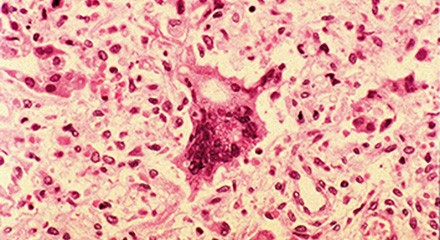
To understand what is at stake, it is worth remembering what measles is and why vaccination matters - something which needs doing only because of the success of the vaccination in the first place. Measles is a very nasty infection caused by a single-stranded RNA morbillivirus from the paramyxovirus family. It is one of the most contagious infectious diseases in the world. Measles is the archetypal childhood infection, although most cases are self-limiting, presenting themselves as a cough, runny nose, fever, sore throat and rash; in about 10%-20% of cases the infection can cause serious complications, such as pneumonia, severe diarrhoea, and encephalitis (inflammation of the brain) which can result in permanent neurological damage. It can also cause a condition known as ‘immune amnesia’, damaging immune memory cells and leaving people more vulnerable to other infections for years afterwards.
In unvaccinated children, the measles case fatality rate is typically estimated at one to three deaths per 1,000 cases (0.1% to 0.3%), but in poorer countries it can be as high as 6% - and it remains a considerable cause of childhood mortality worldwide, with estimates of more than 100,000 fatalities each year.
Up until the last few years the US, other than a handful of annual cases and isolated small outbreaks, has been free of measles for decades. It was declared eliminated in 2000, thanks to a highly effective vaccination programme.
Vaccines are among the greatest achievements of modern medicine. Their history goes back to 1796, when the English physician, Edward Jenner, demonstrated that inoculation with cowpox could protect against smallpox.
The mode of action of vaccines is simple and well understood. Basically, a vaccine uses harmless chemical signals, or a small amount of an attenuated (weakened) form of a virus, to trick a person’s own immune system into thinking it has been infected by a certain pathogen. The immune system can then identify the infection and kill cells that remain in the blood. That means that, if the person is ever infected by the actual pathogen, their immune system has an army of cells ready to prevent the infection becoming established.
The results speak for themselves. A major study published in The Lancet in 2024 estimated that vaccination programmes had prevented 154 million deaths worldwide since 1974, including 146 million among children under five3 - an extraordinary contribution to human health. Infections such as diphtheria, tetanus, whooping cough (pertussis) and polio, which were once a death-sentence for children or resulted in lifelong disability, have been completely eradicated or made vanishingly rare by vaccines.
The measles vaccine is usually delivered as part of a combined vaccine, protecting against measles, mumps and rubella (MMR). In England, children are now offered the combined MMRV vaccine, which also protects against chickenpox, at the age of 12 months and again at 18 months. The two doses provide around 99% protection against measles.
However, vaccination is not simply about protecting individuals: it is also about protecting the population. Because measles is so infectious, around 95% vaccination coverage with two doses is needed to prevent sustained transmission. This is known as population or herd immunity and it protects those who cannot be vaccinated for medical reasons, including some immunocompromised people and newborn babies.
When vaccination rates fall below this threshold, the virus finds opportunities to spread. The consequences are not confined to the families who choose to reject vaccination: they affect everyone.
It is only the massive successes of vaccine programmes that allow the likes of RFK Jr to question their safety and spread misinformation about them. Whole populations seem to have forgotten how terrible these infections are.
There is, of course, nothing wrong with questioning safety or effectiveness. Quite the opposite: large, inclusive population studies, designed to scrutinise, test and challenge, are fundamental to scientific progress.
Profit
The pharmaceutical industry has a long history of putting profits before patients - we need look no further for evidence than the opioid crisis in the US. Purdue Pharma aggressively marketed OxyContin while downplaying its addiction risks, helping to fuel an epidemic of opioid dependence and hundreds of thousands of overdose deaths. The conduct of pharmaceutical companies, their relationship with regulators and their influence over medical practice justifies distrust. As does the blurred line between drug companies, insurance companies and health services in America.
But none of this requires us to abandon science. The explanation for pharmaceutical misconduct is not some elaborate secret plot: it is rooted in the familiar workings of capitalism - the drive to maximise profits, expand markets and protect commercial interests, even at the expense of public health.
Of course, the likes of Kennedy and Trump are not really searching for safer vaccines or interested in better medical studies or stronger evidence: spreading misinformation and questioning established public health evidence is the whole point. It suits their political agenda to spread division, confusion and fear, and allows them to paint themselves in some strange way as being anti-establishment, whilst at the same time heading the establishment. It also allows them to implement their attacks on public health provision.
Aid cuts
This becomes clear when looking at Kennedy’s actions since taking office. He has implemented vast cuts to American health infrastructure: the Centers for Disease Control and Prevention (CDC) has lost a third of its staff, the National Institutes of Health has had its grants cancelled, US aid to developing countries has been slashed. Kennedy dismissed all 17 members of the CDC’s Advisory Committee on Immunization Practices (ACIP), the expert body responsible for advising on vaccine recommendations. He replaced them with people more ideologically aligned with himself. The CDC was forced to alter advice relating to vaccine safety on its website, replacing its previous unequivocal statement that vaccines do not cause autism with wording suggesting that the claim was not evidence-based and that studies supporting a link had been ignored.4 Kennedy has also pulled funding for research into the mRNA vaccine - particularly worrying, as this research is essential in preventing future Covid-19-like pandemics.
In the last week there have been calls for Kennedy to be impeached5 - perhaps a reason why he came out with a damage limitation statement on X, saying: “I continue to recommend MMR vaccination as the most effective way to prevent measles.” But this is beyond ‘too little, too late’.
It would be a mistake, however, to suggest that responsibility for the present crisis rests exclusively with RFK Jr and his ‘Make America Healthy Again’ movement, or Trump himself - as we have seen, anti-vaccination sentiments predate the current administration. Nor is America alone. In November 2026, it was confirmed that Mexico and Bolivia had also lost their national measles elimination status, following the earlier loss of that status by Canada in 2025. The UK also does not have measles elimination status and has had multiple serious measles outbreaks in recent years; this is partly a legacy of the Wakefield MMR scandal, but also as part of a general trend towards science scepticism.
Yet the scientific evidence is clear: vaccines save lives.
-
www.cdc.gov/measles/data-research/index.html.↩︎
-
www.thelancet.com/journals/lancet/article/piis0140673605756968/fulltext.↩︎
-
www.thelancet.com/journals/lancet/article/PIIS0140-6736(24)00850-X/fulltext.↩︎
-
www.theguardian.com/us-news/2025/nov/20/cdc-website-vaccines-autism.↩︎
-
www.lawcommentary.com/articles/rfk-jr-impeachment-calls-congressional-investigations.↩︎