
27.08.2026
Fraudsters, great and small
He was undoubtedly the tragic victim of an openly racist attack dog and a baying mainstream media. However, maintaining that Jason Arday was not guilty of plagiarism is worse than useless. We need the truth about him and, more importantly, the whole neoliberal university system, argues Paul Demarty
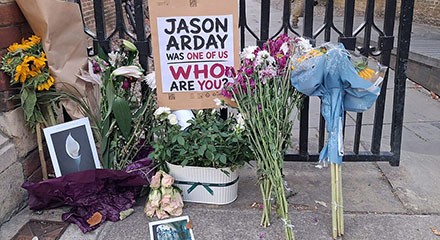
There is a general commotion to answer the question, ‘Who killed Jason Arday?’
On one level, this is a bit silly. Though we await confirmation from a coroner or some such authority, it seems abundantly clear that he killed himself. Weeks into a media feeding frenzy, in which public allegations of plagiarism fed into a detailed examination of the spectacular life story he had retailed in his career as a celebrity academic, he had already resigned from his post at Cambridge University, and it had become clear that most of the grandiose claims he had made about his biography were false.
He had not been a non-verbal autist until the age of 11, nor illiterate at 18. He had not played for Crystal Palace, or been a pro snooker player, or run 600 miles in six days, or miraculously recovered from a brain tumour. A hate crime incident involving a severed pig’s head seems likely to be fabricated, as does a subsequent report of a knife‑wielding, masked man confronting him in his office. Simply to read the list of his supposed accomplishments and brushes with death is to confront the reality that he was a fabulist of uncommon imagination. Journalists with the smell of blood in their nostrils made short work of this tissue of preposterous lies.
I start off with this rather blunt summary since, distressingly, large parts of the left in this country seem intent on - if not quite denying that this was a tissue of lies - simply refusing to acknowledge this part of the story at all. This was simply a racist crusade against a successful black man that succeeded in driving him (apparently) to suicide. Thousands gathered in Trafalgar Square, led by the SWP’s Stand Up to Racism franchise, to hear this story told again and again. It is as if there were conspiracy theorists to be found who, rather than denying that moon landings had occurred, denied instead that the moon existed at all.
Racism is, of course, part of the story. The public allegations of plagiarism were made by Nathan Cofnas - a ‘race realist’, who believes that only statistically minuscule numbers of black people are intellectually capable of high achievement except in sport and showbusiness. Cofnas had his tenuous connection to Cambridge terminated when his views on this attracted controversy, which he freely admits is his motive for dropping this bomb in the lap of the university. The rightwing press is increasingly comfortable with overt racism and, of course, did some of the digging here.
Yet so did The Guardian, even as it ran endless hand-wringing op-eds about how dreadful it all was. More than a racist crusade, this was a silly season story (which has now become less silly) of a chancer who successfully conned his way to the apex of the British academy, with endless florid details to run over. It may be objected that there was, after all, a human being at the centre of all this hostile attention, whose gift for fantastical self-mythologisation may have been evidence of psychological instability. Sure.
But the idea that, had a white person conned his way to the same job in the same way and fallen foul of some grudge-bearing mediocrity like Cofnas, it would have attracted no media attention, is simply risible. (History never gives us such exact counterfactuals, but some have mentioned the case of George Santos, an equally imaginative Republican congressman from New York, whose tall tales generated a lot of column inches and who eventually went down for fraud.)
Nor is it the case that he was even monstered particularly awfully, by the standards of the yellow press - his defenders ought to check in with Christopher Jefferies or even think back to Diana Spencer. The campaign for a special law to restrict the right of journalists to report on individuals - supported by the likes of Amnesty - is a special kind of stupidity. It would be worrying if it were not so obviously counterproductive on its own terms. If our hatred of our enemies leads us to deny the plain reality before us, then we are lost.
Academia
In reality, this story is not so much about Arday as the institutions which not only credulously boosted him up the greasy pole, but even attempted to cover up for his indiscretions. It was a source of no small excitement to the rightwing punditocracy that institutions formally committed to the pursuit of the truth should have proven so singularly unable to critically interrogate Arday’s claims, or for that matter to identify plagiarism in his published work. For such pundits, of course, the universities are enemy territory - merely so many copies of Mao Zedong’s Yenan commune scattered across the British landscape, which reject the pursuit of truth in favour of spreading ideological fanaticism.
Really, guys, look in the mirror. Yet these people are right, at least, that universities do not exactly model the pursuit of truth today (if they ever did). If we ask what makes an Arday scandal possible, we must take a closer look at this evident dysfunction, which in fact requires a historical perspective.
Cambridge, like its older brother, Oxford, and various similar institutions in Europe, has a history stretching back to the Middle Ages. In those days, higher learning was effectively the property of the clerisy; medieval universities were religious institutions, and their scholars were typically priests, friars and monks. Some residue of that history remains, particularly in the system of colleges. Yet these are now characteristically modern institutions.
The modern university is a product of state-building. The expansion of the state under capitalism - and particularly when colonial empires created demand for administrators - demanded a system for producing credentialed specialists to run everything. It equally demanded advances in the general intellect, as a matter of inter-state competition. The result, after a lot of evolutionary selection, was the dominance of the research university, in which scholars are gathered simultaneously to prepare students to enter the professions and to generate novel work in the sciences and humanities. This is an institutional structure that emerged first of all in Germany and was then widely copied.
The relevant problem here is the humanities. It is fairly clear what progress in the natural sciences looks like: the formulation and confirmation of hypotheses about nature. Progress in the social sciences is a little fuzzier, but it cannot be denied that, say, empirical anthropology has made discoveries about the forms of life of previously little-known societies, economic models have become more accurate, and the like. Within the humanities, there are some domains, like history, where straightforward progress of this sort is possible; but even there we start to run into difficulties. Historians must interpret their sources, which are often very obscure; interpretive frameworks compete. All the more so in the case of literary studies, philosophy and similar fields.
As such, the generally accepted purpose of a humanities education is, precisely, education - the formation of the student such that they adopt the specific virtues of the humanistic disciplines, of liberality with respect to diverse human others, awareness of history, subtlety in argument where no knock-down arguments are really possible, and so on. It is very difficult to measure whether such an education has been successful. It is not even clear that this result is more than a comforting ‘just so’ story for the academics; indeed, that is another thing that the academics argue about (did not a lot of cultured, humanistically-educated men serve in the officer corps of Hitler’s SS?).
The humanities were suffered to exist in this ambiguously useful state for much of the modern university’s history. However, with the transformation of higher education in the neoliberal era, that has changed in many respects. Academics have been marginalised in university governance in favour of a managerial class, substantially identical to the senior management of corporations. Tenure is harder and harder to come by: precariously employed academics must compete for grants and positions, which means proving ‘impact’, according to increasingly philistine measures. They must publish continuously, which produces an endless flood of careless and largely unread writing.
On the teaching side, things are hardly better. In this country, students are charged punitive fees, which replace the old system of state funding. Significant reductions in student numbers present serious problems for institutions - especially foreign students, for whom fees are uncapped. Classes get larger; the incentive structure is always to wave people through, and give them the degree they have paid so much money for. With the advent of large language models, coursework is increasingly fraudulent (and, of course, overworked academics are not above delegating marking to ChatGPT and friends). The result is something like an old Soviet joke: ‘We pretend to teach them, and they pretend to learn’.
Downfall
It is this world that Arday entered when he became a university professor. By his own account, he found research to be a burdensome waste of his time, and he was right in many ways. Even if his papers had not been plagiarised, they would have been slop; in that respect, they fit in perfectly with the wider system, which incentivises only a low-effort performance of the pursuit of knowledge. His now widely publicised rows with students are surely also the tip of an iceberg.
Naturally, then, it is not surprising that Cambridge’s hiring committees did not look too closely at his CV. They were out to hire someone who was, yes, black, but - more importantly - who could reproduce the required clichés about the marginalisation of black scholars, so as to meet a particular marketing requirement of the day. That he was already a minor media personality surely helped; his youth - at 37, a mere infant in Cambridge don terms - would also have sent the right message of cleaning out the cobwebs in the senior common room.
Prestige
Inadvertently, they thereby put him in danger of exposure. It is one thing to tell tall tales at Liverpool John Moores, or even Durham and Glasgow. But Cambridge has a special prestige: it turns a lot of people down, and thus breeds grudges; it is a juicy target for vexatious journalists. Not long after his appointment, David Harris of Plymouth Marjon found evidence of plagiarism and contacted Arday. The latter responded with a furious email, and reported Harris to the police, who took no action. In 2025, Jack Groves of the Times Higher Education Supplement found far more extensive evidence; when contacted for comment, Arday (and presumably Cambridge) sent a letter before action, courtesy of terroristic libel law firm Carter Ruck. Groves was also reported to the police. The Guardian got on the trail months ago, when Arday attempted to sell them the pig’s head story; but Cofnas, the gerbil-faced, calliper-waving degenerate, beat them all to it.
Fixing all this means, I think, first of all acknowledging that neoliberal managerialism has already killed the modern university. It lumbers on because human resources departments have not found a better proxy for tolerance for pointless clerical tasks than possession of an undergraduate degree. Some useful research in the sciences, to be sure, continues to take place. But the humanities were never a good fit for it, and administrators now increasingly see these departments as relics in what is taken to be a post‑literate society.
Yet the neoliberal-managerial university merely reflects the wider values of society. All education must appear to be technical - in particular marketable skills. Some education really is like that, and I am not saying that such education is bad (I am all in favour of surgeons knowing where my spleen is!). But a society that demands occupational hyper-specialisation has no room for the plumber who wants to prove or disprove the existence of god, or the computer programmer who wants to read Proust in the original French.
Loosening that specialisation opens the way to a more capacious model of higher education. The humanities and sciences alike could be made available to all curious adults in innumerable, more intimate schools; teachers in such institutions could really be teachers. Why should a Jason Arday not find a home there, indeed? Why should a few tall tales be disqualifying?
A fraud he was - but how much worse is the fraud of Cambridge?