
02.07.2026
Change and stasis
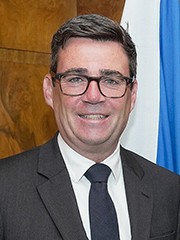
Andy Burnham will be crowned leader and become the seventh prime minster in ten years. We should not expect a mass influx into the Labour Party. Scott Evans reports on the June 28 aggregate of CPGB comrades
Last Sunday the CPGB held one of our regular all-member meetings. We discussed the direction of UK and world politics, as well as the question of the organisation’s wider periphery both in this country and internationally.
Jack Conrad opened the meeting on behalf of the Provisional Central Committee with a look back on the period of Sir Keir Starmer’s premiership and leadership of the Labour Party, capping it off with some educated guesses on the prospects for ‘Andy Burnham’s Britain’ (Burnham’s ‘coronation’ being almost certain at this point).
There had been some chatter on the left in the lead-up to the 2024 general election that Starmer was uninterested in winning power, being so myopically focused on purging the left in Labour, and anyway - so the story went - from a statistical point of view it would be unprecedented for a party to win, having suffered such a massive loss in terms of ‘bums on seats’ in parliament.1 Of course, the fact that something has not happened before does not mean it cannot happen, argued comrade Conrad, least of all when one lives in a time of turbulence like our own.
The story of Sir Keir’s fall from loveless landslide to severe unpopularity is not one of pure objective forces. There have been unforced errors. Even so, the comrade was surprised that Starmer ended up leaving so soon. But we do live in an era of ‘expect the unexpected’.
But Burnham is looking like much of the same, he said. Committing to the same spending limits, the same draconian immigration regime, and so on. There has been a good deal of speculation as to what the man actually stands for, and his ‘maybe or maybe not’ commitments include further devolution (whatever that might mean - more local Bonapartism does not mean more local democracy), scrapping the pension triple lock, increasing capital gains tax, a land value tax, scrapping green levies, and so on. The truth is, we do not know what exact policies he will commit to.
Burnham bounce
There is - as is common, especially in recent years - a pernicious presidentialist framing of the whole thing. The bourgeois media are trying to force the idea that there needs to be a general election. Labour MPs are very unlikely to push Burnham for it, given the risk of a whole mass of them losing their jobs - even if there is an actual ‘Burnham bounce’.
It is extremely unlikely that there will be any flood into the Labour Party. But, in any case, Conrad wondered what the Labour left will have to say about all this. For the moment Momentum is saying nothing - just how to vote in the national executive committee elections. The Campaign for Labour Party Democracy, nothing - also just the NEC elections. The Labour left is effectively dead, concluded comrade Conrad. It can revive, of course, but for now it is effectively dead.
What about the trade union movement? ‘Anyone but Ed’ seems to be the mood around Burnham’s pick for chancellor, given Miliband’s ‘net zero by 2050’ commitment. The workforce has gone up, while trade union membership is down. Activity is hollowed out, meetings are easily dominated by a handful of SWP or SPEW members. A lot of meetings are not even quorate. Individual sackings are transferred straight to the courts, and wages and conditions disputes are dominated by the trade union bureaucracy.
What about the wider left? SPEW is playing around, seemingly, with a ‘Trade Unionist and Socialist Coalition mark two’, leading towards a Labour Party mark two. The SWP rightly calls out Burnham as fundamentally no different from Starmer, but its call for the usual ‘streets and strikes’ response is no surprise. As for fragments from the implosion of Your Party - eg, the Socialist Federation - they are clearly not going to go anywhere. If there were 80 serious people committed to a Communist Party that would be great, but that is not the case.
There is no point, given all this, in dusting off Labour Party Marxists, concluded comrade Conrad. Timing is crucial in politics, and now is not the time to rejuvenate LPM. It seems there is very little going on in Labour branches, and we should not expect that to change in the near future.
The discussion that followed was fairly limited. Jim Nelson noted that the media’s reflection on Starmer’s administration has been remarkably inconclusive, particularly when it came to matters like Gaza.
Adding to comrade Conrad’s point about the low turnout in Labour’s wins in 2024, Mike Macnair made the point that Labour picked up fewer absolute votes than under Jeremy Corbyn in 2019, in large part because Reform split the Conservative vote. He added that the dynamic of world politics remains to the right, of course.
Carla Roberts said there is likely to be an anti-Reform coalition in parliament eventually, and it is likely the left will just tail it, as they have done in Germany for similar things. She agreed on the Socialist Federation being yet another dead end and the necessity of presenting a political alternative.
Periphery
Following this, the aggregate once again discussed the question of how to most productively relate to the organisation’s periphery.
Comrade Macnair asked in his introduction to this session why so many of our contacts were unwilling to actually join the CPGB, echoing a concern of comrade Conrad. He speculated that one element of it is probably an exaggerated conception about what we require of members. The second element is that some people have political differences with us, such as our general opposition to no-platforming, or to practising diplomatic silence in order not to damage friendly associations with this or that part of the left. They may believe that such differences exclude them from joining us. If we were to set up a “supporters’ network” (for lack of a better name), he said, we would expect them to be working alongside us, rather than just diffusely identifying with us.
The left in this country is deeply committed to ‘human resources department’ type positions on what is considered appropriate behaviour, and to intersectionalism, said comrade Macnair. The comrade continued that it is worth noting, however, that our influence internationally is considerably greater than at home in Britain.
Comrade Farzad Kamangar made the point that it is only by talking to supporters that we can convince people that we are not like the misleading picture of us as bullies who demand difficult things of members. She talked about just how easy-going we really are in comparison to her own personal political history.2
In her contribution Carla Roberts said that we come over as awfully disciplined because much of the left is just so undisciplined. A two-hour cell meeting once a week, regular dues at more than a symbolic level, attending weekly online communist forums (OCFs) and our annual Communist University - much of today’s left finds this to be all too much! Comrade Macnair’s characterisation of the Democratic Socialists as being not in political solidarity with us is not quite fair, she continued. They have been working with her (and hence us) productively in the recent period, and understand significant parts of our politics.
On our culture, it is certainly true that the PCC can be aggressively defensive, she said, and if you want to raise a difference you do have to be prepared to have shit poured over you. We have to accept that this is part of why some people do not join. The comrade implied that there is a serious brittleness in the organisation, because if Conrad got knocked over by a bus tomorrow, the organisation probably would not last very long.
Comrade Paul Cooper suggested that we should be more forthright and explicit in asking people to join, and asking why, if they did not want to. He suggested that people may like aspects of what we do - not enough to join, but enough to participate - and that is as good a reason as any to build a “supporters’ network”. The comrade is putting a lot of thought into how best to make use of online and especially social media.
Comrade Conrad made the usual point that resources are, of course, limited, but that comrades can go ahead and do what they like in terms of experimenting with this stuff. But, as he rightly said, anything which would blur the boundary between a member and a ‘supporter’ would be seriously problematic. The reality is that people, in this period, are frightened of commitment and lack seriousness, he said. It is easy to make the right noises, when it comes to our politics, but many such comrades still want to maintain friendly diplomatic relationships with opportunists and social imperialists. Anyone serious about forming a Communist Party should be talking seriously with us. Anyone committed to uniting communists with modern-day social democrats should look elsewhere.
Comrade Andy Hannah highlighted the issue as being the fact that so many Trotskyists have a kind of theorised opportunism in the form of the transitional programme. From this basis it is difficult for people to understand and defend our principled approach. Comrade Conrad later added ‘popular frontism’ - in general, 1930s Trotskyism meeting 1930s ‘official communism’ - as characterising much of the malaise.
Stan Keable made the point that our membership standards are, quite rightly, applied flexibly: the level of discipline required is proportional to a comrade’s level of understanding and experience. It would be wrong to recruit people by saying that membership is easy. It is precisely because we are serious that joining us is worthwhile. The fact that we have recruited such experienced and politically competent comrades is evidence that we are doing the right thing.
Comrade Tom Cormack said that we produce a “weekly miracle” in the shape of both the Weekly Worker and the OCFs. He thought it important to recognise comrade Roberts’ previous proposal about bringing people onto the editorial board as liquidationism. Anything we do in reaching out should be around the paper, he said. There is a real danger in getting too involved with reaching out through social media and the like; there is a risk it will never really add up to anything substantial. He made the important point that one of the big issues we face is that it is very difficult to ask a lot of people when they are getting less back than they used to in actually meeting socially, with so much being online. Most relevant to this discussion, our efforts around the cultural programme are ultimately about reaching our periphery.
Following this, comrade Moody reflected on the Socialist Alliance as a high point in real revolutionaries coming together to discuss with each other. Organisation and open debate under real democratic centralism is key.
Years ago
The supporters’ network has been discussed many times over the recent years, said comrade Anne McShane. She had drafted something about supporters distributing the paper and so on some years ago. We should consider involving comrades overseas. On culture, relating to her own recent experience, she said that the left in Ireland is very lax, a lot of it is about personal relationships and not explicitly politics, except perhaps in the abstract.
Comrade Conrad replied that it is true that our lack of social components is relevant, but socialising is not the solution - think about the RSDLP: a lot of it was just letters. Responding to comrade Moody’s point on ad hominem, he argued that in politics we actually do have to attack people as well as ideas: what about the term, “renegade Kautsky”? Was that just about his ideas? No, it was about his betrayal. It is right to be proud of what we do, he said, but we should not be complacent; we should be ambitious and look for advances.
Comrade Macnair summed up what came out of the discussion in three categories. First, go ahead with creating a supporter category - not by publicly appealing for Weekly Worker supporters, but by getting people to sign up as supporters and do practical work: eg, social media publicity, writing letters, distributing the paper locally. Second, on the Democratic Socialists: engage and discuss. Third, take up any outreach opportunities, but with no illusions that these are radically transformative circumstances. Some people have taken elements of our political line, not the whole. There have been repeated projects ending in demoralising defeats, but these do not seem to stop people repeating such projects, so we have to fight on the politics.
The aggregate ended with a discussion on the forthcoming Communist University and our annual Summer Offensive fundraising drive. Our target this year is £20,000 - and £11,000 was committed by just the members attending.