
16.04.2026
Two irreconcilable positions
Will the current ceasefire lead to a lasting peace deal, or is it merely a tactical breathing space from one phase of an unresolved war to the next? Yassamine Mather looks at the complex issues involved
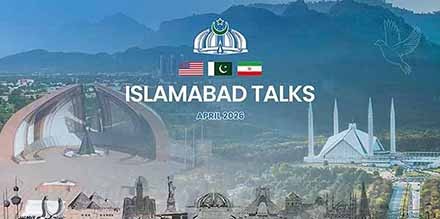
The first round of US-Iran talks was never likely to produce a settlement. The gap between the two sides was not a technical difference that could be bridged by clever diplomacy, but a political and strategic antagonism rooted in decades of conflict and irreconcilable interests. Washington entered the talks demanding an unambiguous capitulation on the nuclear question. Tehran entered determined not to emerge looking defeated after a devastating conflict and a fragile ceasefire. Under those conditions, collapse was not an accident. It was the most probable outcome from the start.
The US position was clear: it was willing to discuss de-escalation only if Iran gave a clear commitment on the issue claimed to be the most significant: the nuclear programme. Iran’s position was broader and more political. Tehran did not approach the talks as a narrow nuclear negotiation. It sought to tie them to the wider war settlement: ceasefire guarantees, sanctions relief, the unfreezing of assets, regional security arrangements, the status of the Strait of Hormuz, and the broader balance of forces in the Gulf. Iranian officials also signalled that a full agreement in the first round of talks was never realistic, because major differences remained on every decisive issue.
Sovereignty
The US needed a result that could be sold domestically and internationally as a coercive success. For Tehran, the priority was sovereignty, survival and regime legitimacy. Iran could not walk into talks after war, destruction and loss, then hand over a one-sided nuclear concession under direct pressure from its enemies. What Washington needed in order to claim victory was precisely what Tehran could not concede without appearing humiliated.
The composition of the Iranian delegation in Islamabad reflected that tension. It was no mere technocratic team designed to haggle over technical details. It was a political delegation, bringing together figures from different currents and institutions: parliamentary leadership, foreign ministry officials, elements linked to ‘reformists’, and very likely representatives of harder-line security tendencies, whether formally acknowledged or not. That matters, because no delegation of that kind could act as if Iran had suffered an unconditional defeat. The ceasefire was mutual, not a unilateral Iranian plea for mercy. From Tehran’s perspective, that distinction is politically decisive.
There was also a severe timing problem. The negotiations took place under the cover of a shaky two-week ceasefire brokered through Pakistan, while the wider regional confrontation remained unresolved and tensions around oil routes were still active. That produced immense pressure for a quick breakthrough. But quick breakthroughs are least likely when the opposing sides do not even agree on the purpose of the negotiation. After the talks, both sides also signalled that they were not closing the door entirely. That is not surprising. The combination of maximalist rhetoric with tactical openness is part and parcel of such talks, especially when both sides are preparing at once both for further talks and further escalation.
It is now likely the negotiations will resume some time soon, but there is no serious political basis for believing that Iran will accept a complete halt to nuclear enrichment. Enrichment is not merely a technical matter. It is bound up with questions of sovereignty, deterrence, scientific prestige and internal legitimacy. No faction within the regime can simply return home and announce total surrender on that question.
This is where perception and ideology intersect with material interests. The US political class, and Trump in particular, want to frame the war as a decisive victory. But the actual results are far more limited. Iran’s military capabilities have been damaged, but not destroyed. Regime change, hinted at by sections of the US and Israeli right, has plainly failed. Most importantly, the central objective of permanently neutralising Iran’s nuclear ambitions has not been achieved. Iran still retains capabilities, material and leverage. The nuclear issue cannot be solved by bombing alone.
The costs of the war have also been substantial. American casualties, immense financial expenditure, intensified domestic political division, strains with allies, and rising global energy pressure - all these questions complicate the triumphalist narrative. War has not produced a clean settlement. It has produced a more dangerous contradiction: Iran has been weakened, but not broken; the US has escalated, but has not resolved anything.
Strait of Hormuz
There is also a deeper strategic logic often missed in western commentary. Sections of the Iranian establishment view control over the Strait of Hormuz as a more immediate and effective deterrent than a nuclear bomb. The ability to threaten, regulate or disrupt one of the world’s most critical energy routes gives Iran leverage that is concrete, immediate and consequential. From that standpoint, US insistence on zero enrichment misunderstands Iran’s wider strategic calculus. Tehran does not see deterrence through one instrument alone. It sees it through a combination of geography, military capacity, regional alliances and the ability to impose economic pain on adversaries.
Mistrust has only deepened during the war. Within Iran there are claims - difficult to verify independently, but politically significant nonetheless - that the US operations two weeks ago, presented as a military mission to save the crew of a downed fighter plane, were in fact attempts to ‘steal’ Iranian enriched uranium. Supposedly that operation failed. Whether such a claim is true is not the real point. The point is that it reinforces an entrenched narrative of American bad faith. In a negotiation already poisoned by asymmetry and coercion, that matters enormously.
Trump’s own rhetoric has magnified distrust. Reports that he floated ideas of joint US-Iran control over the Strait of Hormuz, with charges imposed on international users, would have been politically toxic in Tehran, even had they been presented seriously. More important was the shift after the talks failed: Trump moved rapidly from negotiation to blockade, announcing measures aimed at Iranian ports and shipping in order to choke off oil exports and intensify economic pressure. This was not a small adjustment: it marked a clear escalation.
The blockade, as described by US officials, is meant to intercept vessels entering or leaving Iranian ports and thereby sever two of Tehran’s crucial lifelines: oil revenue and maritime leverage. Though initially framed in wider terms around Hormuz, it was later narrowed toward Iranian-linked shipping. Even so, the implications remain enormous. Such a move risks turning a fragile ceasefire into a prolonged naval confrontation with global consequences. True, two days into the blockade it might have looked like another empty gesture. After all, the Chinese tanker Rich Starry, carrying 250,000 barrels of methanol, sailed past the US navy ... but only to U-turn. It would appear that Donald Trump stared down Xi Jinping.
However, then Trump vowed to reopen the strait “for China” ... and added that the Chinese leader would “give me a big, fat hug when I get there in a few weeks” because of it. Nonetheless, at the time of writing, the strait remans closed.
As is his want, Trump presented the blockade in predictably thuggish language. Iran, he suggested, would be prevented from exporting oil, and attempts to interfere with the US fleet would invite even greater destruction. This follows in the aftermath of the threat to ‘bomb Persian civilisation back to the stone age’.
The broader geopolitical setting sharpens these tensions further. There may be frictions within the US-Israel relationship over tactics or blame allocation, but such differences should not be exaggerated. They do not alter the underlying strategic drive to contain and weaken Iran. Nor should Iranian internal politics be read in crude caricature. The Iranian state is not monolithic, but neither is it collapsing into paralysis. The fact that senior US officials engaged directly with the Iranian delegation shows that the system still has functioning channels, coordinating mechanisms and political centres of decision making.
Likewise, the Islamic Revolutionary Guard Corps should not be understood as a purely irrational ideological machine. It is a political-military institution capable of adaptation, strategic calculation and factional complexity. That does not make it progressive: it means only that western fantasies of a simple split between ‘mad hardliners’ and ‘reasonable moderates’ are analytically useless. The same applies to claims that the Iranian president has somehow lost all control. Internal tensions are real, but the structure of rule remains intact enough to block surrender and absorb punishment.
At the same time, there is a domestic ‘axis of resistance’ within Iran itself: a configuration of forces deeply hostile to US power and suspicious of any compromise. These elements do not determine everything, but they exert real pressure on the state and narrow the room for diplomatic manoeuvre. In periods of siege, coercion tends to strengthen them, not marginalise them. That is one of the basic illusions of the maximum-pressure strategy. External assault does not automatically break a regime.
The coming period is therefore unlikely to be defined by swift breakthroughs. More probable is a repeated oscillation between negotiation and escalation, with each new diplomatic opening shadowed by sanctions, blockade, military threats and regional brinkmanship.
Normal life
Inside Iran life is currently a mix of deep exhaustion, economic collapse and a tenuous ceasefire that began last week, yet many reporters arriving in Iran are surprised by how normal things can still appear. Essential services, including hospitals, some government offices and basic food shops, remain open. However, the ceasefire seems to have produced psychological relief more than real hope. The pause in bombing has reduced immediate fear, but many people remain sceptical, because the agreement is temporary and widely seen as fragile.
In Tehran at least, there are clear signs of ordinary urban routines resuming: people are back in bazaars, cafes, bakeries, barbershops and parks. At the same time, this is not a return to normality. People in Tehran describe more foot traffic in the Grand Bazaar after the ceasefire, but still weak sales and a deeply worried public mood.
Nearly 50% of Iranian jobs - around 10 to 12 million - are currently at risk due to the destruction of infrastructure and the collapse of the rial. Damage to major bridges and power facilities has disrupted travel and made daily business operations harder in certain sectors.
In the Caspian region of northern Iran, including Mazandaran, Gilan and Golestan, daily life has also been affected by the arrival of large numbers from Tehran. There is, meanwhile, an ironic contrast in air quality. On the one hand, pollution from traffic and industrial activity has decreased, because economic activity has slowed. During periods of reduced activity, Tehran’s air quality has improved, mainly because there are fewer cars on the roads and lower industrial output. At the same time, damage to oil depots and refineries has created new environmental risks, including soot, chemical pollution and contaminated rainfall. So, while ordinary smog may have eased somewhat, other forms of pollution remain a serious concern.
Managed conflict
What emerges, then, is not a path to peace, but a more unstable and militarised form of managed conflict, where violence is calibrated rather than concluded. This ceasefire is a tactical breathing space, not a resolution. It masks an ongoing war of attrition, where both US imperial strategy and the Iranian state seek to regroup, not retreat.
Washington remains trapped in a paradox: it cannot demand total capitulation without risking a global economic crisis it cannot contain. Conversely, Tehran’s survival is not a strategic victory: it is merely the persistence of a besieged elite. The result is a permanent emergency, where sanctions, blockades and ‘surgical’ escalations become normalised. For the Iranian working class, this ‘peace’ is a pincer movement: workers are squeezed between internal domestic repression and the crushing weight of external imperialist assault.
In this context, a mere ‘anti-war’ stance is insufficient. What is required is revolutionary defencism. The working class must take the lead in defending the country from being bombed into submission or dismembered by internal and external actors. This defence cannot be outsourced to the Iranian state. True defence of the country belongs to the people, and it is inseparable from the struggle to overthrow the very regime that uses ‘national security’ as a pretext to crush trade unions, break strikes, deny women’s rights and suppress democratic dissent of all kinds.