
26.11.2026
Time has run out
Antalya ended in complete failure. But the big victory scored by the oil producers and fossil fuel lobbyists underlines that the whole Cop merry-go-round has done nothing to halt the rise in global temperatures. Michael Roberts provides the damning facts and figures
Cop31, at Antalya’s Expo Center, is the “worst Cop ever”, climate activists said at a packed final press conference at the end of the November 9-22 summit. Hosted by Turkey under a joint presidency with Australia, there was no final agreement on the proposed Antalya Pact - despite it being the longest Cop ever … running 44 hours into overtime.
Delegates were locked in division over the wording of the pact. All mention of getting rid of fossil fuels had been removed from the draft communique. And it also failed to show how developing countries will receive financial help to deal with the climate crisis. “It has all the hallmarks of a deal to let carbon capture through in exchange for an electrification target that does not even require renewables-based electricity nor ensure access for the people who need it most. None of this is defensible.”1
There is an ‘adaptation fund’ that supposedly finances projects and programmes to help vulnerable communities in developing countries adapt to climate change. It has operated since 2010 and is financed largely by government and private donors. But at this Cop31 just $50 million has been pledged, compared to the $135 million in Belém, Brazil, last year. Moreover, most of these pledged funds are not in the form of grants, but loans. So poor countries trying to deal with global warming and to reduce emissions are supposed to pay back the bulk of the rich countries’ handouts. Calculations from Oxfam suggest the true level of climate-specific grants is about one-fifth of the Organisation for Economic Co-operation and Development “climate finance” figures, once loans are taken out.
António Guterres
At the beginning of Cop31, outgoing UN chief António Guterres had called on countries to push forward a phase-out of fossil fuels, rather than merely hinting at it: “The case for fossil fuels is collapsing,” he said. “Fossil fuels must go the way of the dinosaurs. And that won’t happen on its own. The dinosaurs did not have a lobby. Fossil fuels do. It’s time to kick the habit - and end the fossil-fuel addiction. It’s make-or-break time.” But the outcome of Cop31 shows that Guterres has been ignored by the organisers and the governments of the major economies.
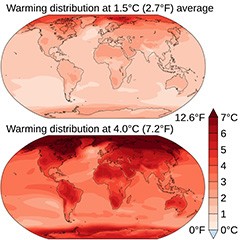
Meanwhile the world continues to get hotter and greenhouse gas emissions continue to rise. Global average yearly temperatures are at record highs, heading above the 1.5°C increase over pre-industrial levels - the target limit set 10 years ago at the Paris Cop.
CO2 emissions are projected to hit a record high of 38.1 billion tons - rising roughly 0.8% to 1.1%, compared to the previous year, according to data tracked by the Global Carbon Budget. Under current policies, the planet will heat up by 2.7°C on average by the end of the century, compared with pre-industrial times, a report by Climate Action Tracker (CAT) concluded - up again from a prediction of 2.6°C last year.2 Even in the most optimistic scenario - where all current pledges, targets and other long-term promises made by states and international organisations were fulfilled - the world would still heat up by 1.9°C by the end of the century.
The latest UN Emissions Gap Report looked at a “lowest possible” 1.5°C overshoot scenario, in which peak warming by around the middle of the century is limited to 1.7-1.8°C and global temperature returns to 1.5°C or below by 2100.3 To achieve that, global greenhouse gas (GHG) emissions would have to be reduced by 18% by 2030, 45% by 2035 and 69% by 2040 - all relative to 2025 levels. Increasing levels of carbon dioxide removal (CDR) through the century would also be needed for a return to 1.5°C. Current promises by nations would only reduce emissions by 5-8% by 2030 and 11-15% by 2035, relative to 2025 levels - leaving the world on track to only limit warming this century to 2.6°C - in other words, making hardly a dent on the expected rise in global warming.
Even before Cop31, the USA under Trump had dumped all its climate commitments. And fewer than half of G20 members are on track to close their implementation gaps for 2030. Yet the latest analyses suggest that countries need to invest somewhere around 1%-2% of global GDP in renewables and other technologies, over something like 30 to 50 years, to reach a global zero carbon economy.4 If that were done, global GDP per capita would be no lower and potentially a little higher than if we continued to rely on fossil fuels for 80% of our energy.
If nothing is done to remove fossil fuel energy production, and the average global temperature increase rises to near +3°C by 2100, the world will face additional cumulative losses equivalent to 11% to 24% of GDP between now and then - all of which could have been avoided, if governments had invested 1% to 2% of global GDP to keep global warming below 2°C. So the costs of inaction are massively higher than the cost of mitigation.
Fossil fuel
However, the fossil fuel industry and its lobbyists at Cop31 argue that rising global demands for energy make a significant move away from fossil fuels impossible. Microsoft mogul Bill Gates reckons that “the best we can do” - even with rapid technological advances - is a limit of very slightly below 3°C. But don’t worry, says Gates - such a temperature increase would not be catastrophic, and humanity and the planet can adapt!
On the contrary, only a fast elimination of the production and consumption of fossil-fuel energy can save humanity and the planet from a worsening climate catastrophe. Moreover, with clean electricity we could replace fossil fuels in end applications, and in doing so achieve a revolution in energy efficiency.
Fossil-fuel energy is highly wasteful. The losses from fuel-refining and combustion-based electricity generation reduce the potential energy produced by two-thirds. If electricity production reached 60%-70% of final energy demand over the next 30 years, it would be possible to reduce the consumption of primary energy by 36% and final energy by 24%, while increasing the consumption of useful energy by 64% and global GDP by over 100%.
But any credible strategy for limiting global warming to well below 2°C cannot rely on clean electrification alone. It must also include actions to reduce or offset emissions, where electrification cannot provide the answer. For example, the global capitalist food system has a huge detrimental impact on the environment. The 50 million square kilometres devoted to food production, of which 80% is for meat and dairy, is 100 times the land required for solar and wind power generation, 500 times the land currently allocated to mining activities, and 5,000 times the additional land allocation required to mine all the mineral resource we will need in the energy transition. Water use in agriculture is 500 times that required in all mining activity. And over 90% of annual deforestation results from agriculture, with most of that driven by cattle pasture or by the arable production of feed for various categories of animal protein production.
The International Renewable Energy Agency estimates that an average of 1,000 gigawatts of renewable power capacity needs to be built globally every year until 2030.5 But the world’s clean energy plans (and they are only plans) still fall almost one-third short of that figure. And to reach the necessary level of investment, climate finance will need to increase to about $9 trillion a year globally by 2030 (up from just under $2 trillion in 2024), according to the Climate Policy Initiative.6
Why are none of these climate targets being met? Why have the majority at Cop31 removed reference to fossil fuels and have not met promises to help global-south economies cope with the impact of global warming that affects them most? Why is the necessary finance not forthcoming?
Profit problem
It is not the cost price of renewables - those prices have fallen sharply. The problem is that governments are insisting that private investment should lead the drive to renewable power. But private investment only takes place if it is profitable to invest. And lower prices for renewables drag down the profitability of such investments. Solar panel manufacturing is suffering a severe profit squeeze, along with operators of solar farms.
This reveals the fundamental contradiction in capitalist investment between reducing costs through higher productivity and slowing investment because of falling profitability. On the other hand, investing in oil production remains highly profitable, as figures for the oil transnationals show.
At Cop31, a record 700 lobbyists argued that we should forget about ending fossil-fuel production and instead go for technologies that could reduce the amount of carbon in the atmosphere. CDR is the answer, not stopping fossil-fuel production. It is true that, as the UN recently estimated,7 an enormous 320 billion tons of CO2 will have to be removed this century in order to get back under 1.5°C. But, as Rachel Kennerley - a carbon capture campaigner at the Center for International Environmental Law - retorted, “The focus should always be on cutting emissions now. It’s very dangerous to assume that we can put more emissions into the atmosphere and then assume we will have technology in the future to just remove them again.”8
Technology alone will not do the trick. Only government intervention, investment and planning on a global scale can give humanity and nature a chance to succeed before degradation is made permanent. And time is running out - indeed, it has run out.
Michael Roberts blogs at thenextrecession.wordpress.com.
-
See www.theguardian.com/world/live/2026/nov/20/cop31-climate-crisis-talks-turkey-latest-news-updates.↩︎
-
climateactiontracker.org/publications/warming-projections-global-update-2026.↩︎
-
www.unep.org/en/publications/report/emissions-gap-report-2026.↩︎
-
www.lse.ac.uk/granthaminstitute/publication/the-economics-of-climate-change-the-stern-review.↩︎
-
glcf.climatepolicyinitiative.org/mitigation-finance.↩︎
-
Ibid.↩︎
-
www.unep.org/en/news-and-stories/press-release/new-unep-report-lays-out-emission-cuts-needed-return-15degc.↩︎
-
www.theguardian.com/environment/2026/nov/16/cop31-carbon-un-climate-talks.↩︎