
05.11.2026
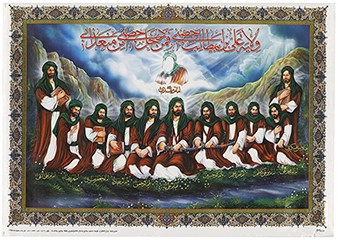
A hidden supreme leader
Irrationalist belief in divination, spirit contact, haloes and jinn armies grows above. Below, living standards are falling and protests are reviving. Yassamine Mather looks at the two worlds that make up the Islamic Republic
Iran is entering a new and uncertain phase under its supreme leader, Mojtaba Khamenei. He succeeded his father, Ali Khamenei, in early March 2026, after his death in the US-Israeli airstrikes that opened the war on February 28. Eight months into his leadership, the Islamic Republic has survived the initial military assault, which Iranians now call the “40-day war”. But basic questions remain unanswered: who actually exercises power, how far the influence of the Islamic Revolutionary Guard Corps has grown, and whether the regime can cope with a deepening economic and social crisis.
The most striking feature of Mojtaba Khamenei’s leadership is that he is completely absent from public view. He was reportedly seriously injured in the strike that killed his father. Since his appointment there has been no independently verified public appearance, photograph, video or recording of his voice.
Iranian officials insist that he exercises authority. They say he regularly consults senior officials and approves major strategic decisions. President Masoud Pezeshkian has claimed he met with him for seven hours in August. His statements and orders are published through his official website rather than delivered in person. While the supreme leader is formally Iran’s ultimate religious, political and military authority, his public absence leaves uncertain how much personal control he exercises and who acts in his name.
The official explanations for his absence vary. According to the government, Khamenei’s image, voice and public appearances are questions of national security - in particular the risk that Israeli or American intelligence services could locate and target him.
However, there is also more unusual commentary. In April, Salar Velayatmadar, a Revolutionary Guards commander and member of parliament’s National Security Committee, speaking at an event marking the anniversary of the IRGC’s founding, claimed that religious scholars in Najaf, Qom and Mashhad had advised against publishing photographs or videos of the new leader. Security officials had accepted the advice, because enemies might use occult sciences to harm Mojtaba Khamenei through his image. He referred to alleged institutions in Israel that study supernatural practices. He also cited a Revolutionary Guards member present at the attack on Ali Khamenei’s residence, who said Mojtaba had been reciting religious invocations when his father was pulled from the rubble and he himself suffered only minor injuries. That account contradicts other reports of serious injury. The episode is not an isolated oddity: as I will explain later, it follows a long pattern in the Islamic Republic’s political culture.
According to Reuters, senior Revolutionary Guards figures played a decisive role in securing Mojtaba Khamenei’s appointment, despite reservations among parts of the clerical establishment. His long-standing ties to the Guards made him acceptable to those determined to preserve continuity after his father’s death.
The result appears to be a more collective and militarised way of making decisions. The Revolutionary Guards, the Supreme National Security Council (whose secretary is major general Mohsen Rezaei) and senior political figures all exercise considerable influence. The military chain of command is now visibly at the centre of the leader’s activity. On November 1, Khamenei’s reported ‘meeting’ with the armed forces was attended by heads of the armed forces, as well as the IRGC.
Unlike his father, who built personal authority over nearly four decades, Mojtaba has inherited a system in which the Revolutionary Guards may come to dominate strategic decisions. In the ‘meeting’ with the commanders of the armed forces, it is reported that he ordered them to respond to any enemy threat “immediately and without geographical limits”. He also ordered the list of military targets to be updated, so that America’s and Israel’s “material and non-material” assets fall within range of Iranian forces. In the event of any new military or “terrorist” attack, he was quoted as saying, Iran itself would decide when and on what terms the conflict ends.
Supernatural
Meanwhile, memoirs attributed to Ali Khamenei, published after his death, describe his longstanding interest in jafr and raml - traditional forms of divination, based on letters, numbers and geometric patterns. As a young man in Mashhad, he studied esoteric writings, collected manuscripts and consulted practitioners. Although Khamenei eventually considered that mastering these ‘sciences’ was extremely difficult, he maintained that they possessed genuine value. His religious rulings permitted their study, as well as treatment by people claiming contact with spirits, provided Islamic law was respected.
Supernatural beliefs had become especially controversial during Mahmoud Ahmadinejad’s presidency. Following his 2005 UN speech, Ahmadinejad told cleric Abdullah Javadi Amoli that a companion had seen a halo of light around him. His supporter, Mohammad-Taqi Mesbah Yazdi, also portrayed his election victory as miraculous, recounting a dream in which the ‘Hidden Imam’ prayed for his success.
During the 2009 presidential campaign, Mehdi Karroubi challenged Ahmadinejad over the halo story, while Mir Hossein Mousavi rejected government by fortune-telling and palm-reading. Ahmadinejad denied the account, although Javadi Amoli’s office confirmed the authenticity of their recorded conversation.
Conservative media subsequently accused Ahmadinejad’s close adviser, Esfandiar Rahim Mashaei, of consulting mystics and using magic to influence the president. These allegations intensified during Ahmadinejad’s 2011 confrontation with Khamenei over intelligence minister Heydar Moslehi. Conservatives labelled Mashaei’s circle the “deviant current”, while Mesbah Yazdi declared himself more than 90% convinced that Ahmadinejad had been bewitched.
Abbas Ghaffari, allegedly connected to presidential associates, was accused of summoning jinn and producing talismans. In 2012, he reportedly received eight years in prison and 99 lashes, although the formal charges concerned political, religious and morality offences rather than sorcery. Another associate, cleric Abbas Amirifar, was arrested over a film linking contemporary politicians to prophecies about the ‘Hidden Imam’.
Ahmadinejad’s administration rejected the allegations as politically motivated; he mocked the supposed magicians for failing to prevent their own arrests.
In 2017, Ahmadinejad’s former deputy, Hamid Baghaei, said Revolutionary Guards interrogators had accused him of attempting to overthrow the state with a jinn army, although this was absent from his indictment.
In March 2020, Khamenei suggested that supernatural and human enemies might cooperate against Iran. Rumours about an Intelligence Ministry unit combating jinn were denied, but Khamenei’s website republished an interview with scholar Ahmad Abedi, alleging that Israeli intelligence used supernatural methods.
In 2023, Digarban published an unverified recording attributed to an Intelligence Ministry official, who claimed that “satanic jinn” had influenced participants in the 2022 protests. Religious scholars had reportedly recommended Quranic recitations, calls to prayer and religious ceremonies to counter these forces, alongside removing satellite dishes supposedly facilitating their movement.
During Israel’s 2024 attacks on Hezbollah, seminary teacher Mostafa Karami claimed that Israel employed jinn in intelligence operations. Commentator Ali-Akbar Raefipour similarly alleged that Mossad used jinn to read opponents’ thoughts, while cleric Mojtaba Azizi suggested that supernatural forces might assist both Israel and Muslims.
Following the 12-day war of 2025, former government official Abdollah Ganji claimed that talismans bearing Jewish symbols had been discovered in Tehran. In May 2026, cleric Masoud Aali attributed Israel’s killing of commander Ali Shadmani, who reportedly changed locations every 30 minutes, to sorcery and supernatural intervention rather than conventional intelligence capabilities. He also linked alleged Jewish occult practices to opposition to the Hidden Imam.
Qom scholar Mohammad-Taqi Fazel Meybodi dismissed these claims as unfounded superstition. They may also divert scrutiny from intelligence failures and infiltration.
In a December 2022 interview, Mohammad Sarafraz, former head of Iran’s state broadcaster, claimed that Mojtaba Khamenei occasionally consulted individuals professing supernatural knowledge or an ability to predict the future, and that their advice sometimes influenced decisions.
Confrontation
But back to real life. The war that began on February 28 damaged Iran’s military infrastructure, economy and leadership - without, of course, bringing down the Islamic Republic.
In recent days Donald Trump has said repeatedly that the Iran war will end “soon”. He has also raised the possibility of a “limited Epic Fury operation” - a reference to the 40-day war - and said that the USA still needs to “take care of” several Iranian sites, naming the suspected underground nuclear complex known as Pickaxe Mountain. He had said there would be no new attack before the US midterm elections on November 3. Reports say Washington has warned Persian Gulf allies to prepare for a short, high-intensity conflict soon after. Israel’s Ynet reported that Israel is preparing for another round straight after the midterms. Prime minister Benjamin Netanyahu - now leading a caretaker government after his coalition lost its majority in the Israeli elections - has spoken of a “historic, one-time opportunity” to end “the threat from the Islamic Republic” and has repeatedly said the fall of Iran’s government is near.
The confrontation has not been entirely frozen. On the night of November 2, a US fighter jet destroyed an IRGC surface-to-air missile launcher on Qeshm Island in the Strait of Hormuz. The US called it ‘self-defence’ after the IRGC fired at a US aircraft - the Guards claimed to have shot down an American MQ-9 drone. But a US official denied that the strike indicated a resumption of major combat. However, the Wall Street Journal has reported a series of limited, largely unannounced US strikes on Iran in recent weeks, while negotiations are continuing in Qatar.1
The war has also reopened debate over Iran’s declared rejection of nuclear weapons. Mohsen Rezaei, secretary of the Supreme National Security Council, told Iranian television that no new decision had been taken to change the country’s nuclear doctrine, but that the Iranian nation “has demands”:
The debate is currently being raised that if war breaks out again, whether we want to maintain the same previous doctrine or not, but no new decision has been officially or governmentally made.
The Iranian nation has demands. They are looking for logic. After all, they see that the enemy has struck all of our nuclear centres. Well, for what reason did they strike? We responded positively to all International Atomic Energy Agency inspections. They had cameras at all our sites. When people see this, their expectation of us is naturally: why do you want to continue this situation?2
A day earlier, Mohammad Javad Haj-Ali Akbari, Tehran’s interim Friday prayer leader, had called from the pulpit for the doctrine to be revised. This, he said, “is not a hasty or emotional reaction, but stems from the awareness and historical experience of the Iranian nation in dealing with American breach of promises”.
Rezaei also attacked Rafael Grossi, director general of the IAEA, calling him “a mercenary of the Zionist regime” and saying that “all our problems began during his time”. Grossi’s tenure coincided with the period after the US withdrew from the JCPOA nuclear deal. Iran answered the reinstated sanctions by raising its enrichment levels, enlarging its uranium stockpile and gradually scaling back its cooperation with IAEA monitoring.
Since the US and Israeli attacks on Iran’s nuclear facilities, the IAEA says it can no longer fully monitor all aspects of the programme. Iran’s foreign ministry has now ruled out sending enriched uranium abroad and says it is not yet discussing conditions for renewed inspections.
Before the latest war, several officials had said that Iran could develop nuclear weapons, but chose not to, citing Ali Khamenei’s position. They included Kamal Kharrazi, head of the Strategic Council on Foreign Relations, who was later killed in an Israeli strike, and Mohammad Eslami, head of the Atomic Energy Organisation. About two decades ago, the former supreme leader declared the production, stockpiling and use of nuclear weapons forbidden (haram). Officials submitted this to the UN as a “nuclear fatwa” and cited it whenever the nuclear file became critical.
Mojtaba Khamenei has not stated whether he upholds his father’s nuclear fatwa, leaving a consequential question unresolved.
Doha and Islamabad, who brokered a June memorandum approved by Mojtaba Khamenei “despite reservations”, are mediating in new negotiations. Last week The New York Times reported that US vice-president JD Vance has sent a letter, via the Qatari mediators, to Mohsen Rezaei. Vance proposes that US and Iranian officials meet soon and says he would personally lead the American side. Rezaei confirmed he had read it and said its tone was noticeably different from Trump’s earlier correspondence. Foreign minister Abbas Araghchi called it a positive step, but warned that any attempt to sow division would be a mistake.
On November 2 president Pezeshkian told Iranian media that Mojtaba Khamenei has authorised the government to negotiate with the US. It was the clearest public statement yet that the talks might have the leader’s backing. China and Russia have also called for a political solution and warn against renewed military action.
According to foreign ministry spokesman Esmaeil Baghaei, the basis for the talks is still Iran’s seven-step plan, now condensed into a sequence that could be carried out within two days:
- The US ends its naval blockade of Iranian ports.
- Iran reopens the Strait of Hormuz.
- Washington grants a waiver on Iranian oil sales, restoring those of June.
- The US cancels the sanctions it has recently imposed.
- Other issues are addressed only after these steps.
Iran’s wider demands also include:
- a reduction in the US military presence in the region;
- recognition of new Hormuz shipping routes designated by Iran and Oman;
- an end to the conflict on all fronts, including Israeli attacks on Lebanon.
Tehran says nuclear talks can begin only once it has verified that its conditions are met. It rejects any transfer of its highly enriched uranium abroad.
Despite the claims of progress in recent talks, Iranian officials reportedly consider another US attack more likely than a deal.
Iran entered the war with inflation, unemployment, sanctions, and energy and water shortages - the closure of Hormuz and the US blockade deepened the crisis. US officials believe, the longer the current blockade of Iran continues, the more likely it is that the regime will face large protests, this time challenging its survival, and subsequently accept US terms for a deal.
There is no doubt that the economic situation is dire. Iranian figures put headline point-to-point inflation in the range of 84%-89%. Food inflation is far higher. The Statistical Centre of Iran reported 128% food inflation in July. Prices of oils and fats rose by more than 260%, and dairy, eggs and meat by around 145%. The rial reached a record low of about 2.02 million to the US dollar in late August. It traded at around 1.75 million in December 2025 and about one million in March 2025. In other words, the currency has lost roughly half its value in 18 months.
Formal employment
Hundreds of thousands of people have reportedly left formal employment since the war began. Meanwhile, average monthly income is estimated at around $150. The official minimum wage for 2026-27 is worth less than $90 a month at market exchange rates, and the minimum pension about the same.
However, reliable national poverty statistics are scarce and politically sensitive. Estimates published in Iranian media even before the war put between 22% and 50% of the population below the poverty line - a sharp increase since 2022. Households are reported to spend around 70% of their income on food, while food prices have risen steeply in recent months.
Health costs make the situation worse. Prices of some medicines have risen by up to 400% amid shortages, and some treatments for chronic and serious illnesses have become several times more expensive. The importers of subsidised medical goods, meanwhile, are accused of pocketing the benefit of cheap foreign currency instead of passing it on to patients.
Fixed rial pensions, adjusted only annually, rapidly lose value to inflation. State borrowing, politically appointed fund managers and fewer contributors relative to retirees have left pension funds chronically underfunded. In February 2025, the government’s response was to raise the effective retirement age and lengthen the contribution period. Workers will have to work longer before they can claim pensions that are worth less and less. By July 2026, pensioners were telling reporters that their monthly income no longer covered basic living costs.
“The embezzlement is in dollars, our pensions are in rials” - the slogan on placards used by retired workers in protests held last week in Kermanshah contrasts the wealth of politically connected elites with the inadequate incomes of workers and retirees. Their hardship reflects not only war and sanctions, but longstanding inequality and economic decline.
Retirees, mostly pensioners of the insurance institution, the Social Security Organisation, and of large state industries, have gathered almost every Sunday for years, in what has become known as the ‘Protest Sundays’ movement. Despite the Islamic Republic’s years of disregard for their demands, and despite the war, the movement has kept a regular presence on the streets and broadened its demands. On October 18 pensioners protested outside Social Security headquarters in Tehran, as well as in Rasht, Shush and Haft Tappeh. In Tehran they chanted: “High prices, embezzlement - this is your economy.” In Rasht, protestors vowed to stand together “until the death sentences are overturned”, showing how far the movement has taken up the cause of political prisoners.
On November 1 pensioners protested again in at least six cities: Shush, Ahvaz, Kermanshah, Isfahan, Tehran and Rasht. In several places they were joined by teachers. The political significance of retirees in these protests is important. Many of them are, in fact, the generation that waged nationwide strikes that led to the overthrow of the shah’s regime. In addition, unlike those in employment, they do not fear being made redundant for waging protests that are becoming increasingly political.
Shush: Pensioners gathered outside the labour office. Their demands were:
- pensions raised in line with the real cost of living;
- free healthcare and education;
- adequate housing;
- the right to strike;
- the freedom to form independent organisations.
Kermanshah: Pensioners demonstrated outside the provincial headquarters. The slogans were openly political:
‘The embezzlement is in dollars, our pensions are in rials!’; ‘Down with high prices, poverty, war and destruction!’; ‘Imprisoned protestors must be freed!’; ‘Imprisoned teachers must be freed!’; ‘Imprisoned workers must be freed!’; ‘Solidarity and unity to end oppression and tyranny!’; ‘Poverty, corruption and inflation are destroying people’s lives!’; ‘From France to Iran, the people are out on the streets!’
Ahvaz: Pensioners ‘Enough of warmongering, our tables are empty!’ Their protest directly connected military escalation with the cost of living.
Isfahan: Retired steel and foundry workers marched to the provincial governor’s office to demand full payment of delayed pensions and the healthcare and other benefits they are legally owed. Their slogans were aimed at the clerical establishment and the president: “Hussein, Hussein is their slogan; lies and theft are their trade” and “Hey, president, you lied to the nation”. They also rejected the official claim that America alone is to blame for their situation.
Tehran: Pensioners demanded an annual bonus equal to two months’ pension and criticised the supplementary health insurers. ‘Neither cold nor heat can stop us!’, they chanted, and ‘Free education is our indisputable right!’
Rasht: Retirees and teachers held a joint rally against wages below the poverty line and against the government’s failure to carry out the pay adjustments required by law.
Pension funds were built by generations of workers, yet retirees have no direct oversight or say in how their money is managed and invested. Instead, state-appointed managers direct these assets - historically using them to fund government loans, enrich political insiders and settle state debts. Meanwhile, pensioners are forced into weekly protests just to claim their basic rights and guaranteed benefits. Demands for transparency, state compliance and elected retiree representatives on governing boards stem directly from this fundamental contradiction.
The authorities have continued to suppress dissent alongside all of this. The mass protests of December 2025 and January 2026 were met with deadly force. Thousands more arrests have been reported since the war began, and executions on national-security charges have increased. Detained protestors, teachers and labour activists remain in prison, and some face death sentences.
Political alternative
‘Solidarity and unity to end oppression and tyranny!’ points to the challenge of fragmentation among workers, retirees, teachers, nurses, students and women’s movements. Shared concerns over declining wages, public services and repression create grounds for cooperation; joint rallies in Rasht show this beginning.
The slogan ‘From France to Iran, the people are out on the streets!’ also shows that protestors are aware of the international dimension of these struggles. People in many countries are resisting austerity, attacks on workers’ rights and rising military spending. Learning from those experiences and building solidarity between movements can strengthen independent organisation and collective struggle.
The persistence of the weekly ‘Protest Sundays’ demonstrations - sustained through local gatherings, informal networks and communication between activists - demonstrates both the determination of retirees and the depth of their grievances. Yet the movement’s geographical fragmentation and limited organisational coordination continue to restrict its political leverage. Stronger links between cities, more durable forms of organisation and closer cooperation with workers, teachers, nurses and other sections of the working class could help transform these dispersed protests into a more coherent, nationwide movement.
The revolutionary left could, in principle, play an important role in bringing these struggles together around a common programme for fundamental social and political change. However, this would require more than expressions of solidarity with individual protests. It would mean developing organisational links between different sectors of the working class, connecting immediate economic demands to the broader struggle against exploitation and political repression, and raising the question of political power and what might replace the existing order.
Yet there is little evidence at present of a revolutionary left with the organisational strength, social roots or political coherence necessary to fulfil such a role. The gap between the potential of these struggles and the absence of a credible, organised, socialist alternative remains a central weakness.
What does all this mean for the future of the Islamic Republic?
The central question is not simply whether it can survive the present crisis, but what kind of political order is taking shape around the mysterious Mojtaba Khamenei and the increasingly prominent military and security establishment. The growing influence of these institutions raises the possibility of a system in which the formal structures of clerical rule remain in place, while effective power becomes even more concentrated in the hands of the security apparatus. At the same time, Qatar-mediated negotiations, the threat of renewed military confrontation and continuing economic pressures place additional strains on the leadership and its ability to maintain internal cohesion. The persistence of the retirees' protests, despite repression, economic hardship and political uncertainty, exposes the limits of a strategy based primarily on coercion and military survival.
Even if the Islamic Republic succeeds in preserving its state institutions and security structures, this would not resolve the underlying contradictions of declining living standards, deepening inequality and widespread social discontent. The crucial distinction, therefore, is between the survival of the regime and its ability to restore political legitimacy and social stability. These are not the same thing.