
24.09.2026
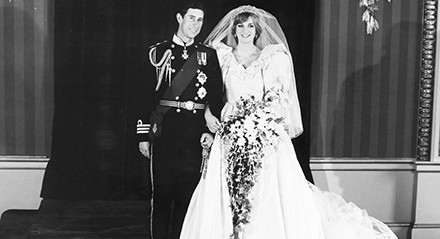
Charles vs Charles
Today’s royal family is a load-bearing institution of the capitalist state, its fate inseparable from the continuity of that state. It will not be brought down by this or that scandal, let alone an embittered former brother-in-law bent on revenge, says Paul Demarty
There is perhaps no greater worry for a king than an aggrieved earl with a controversial book to promote.
Thus it has proven with Charles Spencer’s publicity campaign. Ahead of the September 22 publication date, the younger brother of Diana, the monarch’s first wife, authorised a series of extracts, in the traditional way, in the Daily Mail. Frankly, having read them, they do not paint his royal namesake in a very good light ... allies of the king have, of course, repeatedly hit back, including with threats to sue.
Spencer says he recalls a phone call after the death of Diana with the then prince of Wales, in which he found the heir to the throne in a state of “giddy elation”. He speculates that behind all this was an eagerness to marry Camilla Parker Bowles, with whom he had continued an affair throughout his marriage to Diana, and that many in the Palace squirearchy would have been “relieved” at the results of the Paris crash. He further claims that, in a later phone call, Charles Windsor remarked: “Don’t worry, we’ll forget her soon enough.”
The strange, hyper-sentimental reaction of the British public to Diana’s death made sure that was not going to happen. This seems a good moment to note that, of course, the Palace hotly denies all this (it would be infra dig for the king himself to comment directly, of course, never mind subject himself to a press conference). The difficulty of this matter for the monarchy, even now, may be discerned in the conspicuous charity of the official statement: “While we do not comment on books as a matter of principle, His Majesty is mindful that the pain of fraternal grief can cloud reason, affect judgment and colour memory in ways others do not recognise, even many years after such a loss.”
Of course, the same is true in reverse: may not a divorcee have, ahem, complicated feelings upon the death of his ex? Could they not somehow slip out in the heat of the moment? It is the word of one Charles against another. Readers are free to take sides as they wish.
As well as his former brother-in-law, Charles has renewed hostilities with his younger son. Harry Sussex. The Sussexes have been taking a long trip over these shores, marked first of all by a brusque letter reminding the world of their diminished status as “non-working royals” (what a phrase!) and an ongoing spat over whether this status entails full security detail. (The answer, in the end, turned out to be ‘yes’, much to the annoyance of Daily Mail-poisoned would-be assassins, no doubt.) It may be remarked in passing that Spencer’s account of Charles’s state of mind after Diana’s death rather rhymes with the one offered by Harry in his blockbuster memoir, Spare, which came out a few years ago.
Celebrity
All of this was unfortunate timing for the king, who had roused himself to hold a summit on AI with various worthies, industry leaders and so forth. His warnings about the possible dangers of the technology could not but be nostalgic for Brits of a certain age, who had to entertain his earlier anxieties about genetically modified crops, and the possibility that nanotechnology would reduce us all to a puddle of “grey goo”.
One rather suspects he got the idea from the pope, who earlier this year published an encyclical on the matter in a grand event featuring a similar stable of ‘stakeholders’, including Anthropic co-founder Chris Olah. Charles may well have thought himself a good fit for such a role: his is, after all, similar, a matter of soft rather than hard power. His philosophical and religious obsessions are well-known. He could therefore make a pitch for British ‘leadership’ on AI without committing the ‘efficient part’ of his state to any particular action. What’s not to love?
Popes
Pope Leo has an advantage over Charles, however, which is that basically nobody except seasoned Vaticanologists and Peruvians had even heard of him before his election. His past does not linger over him (although it is always possible that some mishandled abuse case will come to light). But Charles has been a celebrity for half a century or more, apart from his various titles, and in that time, he has been through the divorce of the century. We have all had to wade through his catastrophically-bizarre phone-sex lines - and, of course, the catastrophic response of the monarchy to the death of Diana is now part of British folk mythology.
It was Charles’s generation who perfected the union of the cult of the monarchy with modern celebrity culture, steadily growing at least since the Victorian era - and every step of the way leavened with scandal. It was as much Edward VIII’s abdication crisis (and later Nazi sympathies) that excited the public gallery as the serene progress of his niece, Elizabeth, through seven decades on the throne. Charles’s infidelity and political pugnaciousness, Andrew’s relentless priapism - such were always grist to the mill (and Andrew’s indiscretions have been a source of many headaches in recent years, of course).
The wholly-mediatised celebrity monarchy is a strange old phenomenon. On its face, of course, it works well enough. The monarch is necessarily famous; his family are easily made so. In that respect, they fit nicely in the tabloids between pop stars and footballers. Yet the choice to go in this direction - and it was, very definitely, a choice - introduces friction. The monarchy, on paper, is the principle of continuity of the British state, an institution that can be imagined, with enough violence to the historical record, to stretch back a thousand or more years. We have only to leave out of account minor matters like the Norman conquest, the fierce dynastic struggles of the late Middle Ages that terminated in the Wars of the Roses and, of course, the Civil War and Glorious Revolution later on. Given the appalling general level of historical education, this is easily done.
Its ideal mode of existence, then, is probably summed up by the taciturn Elizabeth, patiently enduring the duties of state. By opening her family up to more ‘personal’ attention, by selling the royals as a family more or less like any other, the dignity of the institution was made a hostage of the press, and the explosion of tabloid scandal-sheets - especially after Rupert Murdoch’s purchase of The Sun - ensured that the Palace would periodically find the severed finger of one of the ‘hostages’ in the mail.
Its present strategy is to rein things in a little. Royal duties, henceforth, would be centralised in the households of the king and the prince of Wales. Harry’s and Meghan’s ‘non-working’ status is, partly, a result of their public and acrimonious rift with the Palace, but also a well-planned piece of downsizing. Andrew’s disgrace is deeply embarrassing, but likewise convenient from a strategic point of view.
It was poor fortune that Charles and Catherine, princess of Wales, should immediately fall foul of serious health problems; but the idea is sound. A small circle of reliable people will serve the institution better in the end. It is very striking that other monarchies on the continent suffer far less in the way of scandal, and indeed barely play much of a non-ceremonial public role at all (Spain, with its own recent abdication scandal, would be an exception, and maybe Norway).
One wrinkle in it is Charles himself, as illustrated by the AI summit: he clearly fancies a more public role than merely collecting rents and sinecures, and reading government programmes off a teleprompter. But he will die off sooner or later, and I am not aware that William has ever expressed an opinion about anything. His rule is shaping up to be as boring as a bread sandwich.
Core function
The monarchy, then, slowly returns to its core function: representing the unity and continuity of the British state. It is the formal object of loyalty for both the government and ‘His Majesty’s most loyal opposition’; of the armed forces and civil bureaucracy. Its late difficulties cannot be unrelated to the underlying decline of Britain - crucially the loss of empire. A lack of realism about the UK’s straitened condition - essentially an outpost of the United States - has poisoned the functioning of the parties of the state. The military forces, likewise, have tended to decline, and the promises of greater military spending, to be obtained at the expense of the unemployed, sick and retired, will likely be gobbled up by American arms firms rather than seriously reviving British military capacity.
Great controversies rage over the Falklands - with Argentine sabre-rattling over the South Atlantic islands renewed probably for internal consumption but also without any objection from Washington - and the fate of the Chagos islands. In each case, a matter of American military projection is interpreted absurdly as one of British power. The Chagos islands only attract so much attention because the Americans lease Diego Garcia from the UK (which did the dirty work of clearing out the inhabitants). As for the Falklands, what importance can they have except as leverage for the madmen in DC over the British?
The structural role of the monarchy is possible only because of the ideological factor. It is necessary for people to believe in the continuity and unity and all that. The celebrity soap-opera of the last half century sat, as we said, a little athwart this goal, but it did at least build up a certain kind of parasocial loyalty in the general population. Sometimes it can backfire, as with the Diana event, but it is plain that Charles has won out over Harry. Some other source of such loyalty must be found for the institution to proceed in good order.
Roman empire
That is not to say that it will simply die off, otherwise, of its own accord. How long can a royal family truck on with only past glories to feed it? Well, the last Roman emperor was only deposed in 1453, and then only by the cannon-fire of the Ottomans. The Roman empire did not simply peter out - these things never do. However, ‘official’ republicanism in this country is rather prone to such wishful thinking. After the fiasco of Diana’s death, many hoped that the hated institution would simply lay down and die; and, as Elizabeth aged, some thought that the British would never tolerate the pompous and cruel Charles.
In fact, despite even the scandals surrounding Andrew’s friendship with Jeffrey Epstein, Charles is broadly popular. Anti-monarchy sentiment is held by a robust minority of Brits, but it is still a minority. Everything hinges on that becoming the majority, which in turn demands a political form that can actually weaken the monarchy by deliberate action.
It also demands that we have a more capacious view of republicanism. It is not merely the absence of a hereditary monarch (the papacy, after all, makes the point that it is by definition not hereditary). American rightwingers are fond of saying that America is a republic, not a democracy, but it is quite arguable that it is neither. The power of the executive is monarchical in essence; America’s written constitution, as does the UK’s unwritten one, defines and defends oligarchic capitalist rule, which is in substance antithetical to the freedom from domination essential to republican thought.
It falls, then, to the socialist left to be the true, or truest, republicans. The British monarchy is not, as far-left philistinism often has it, a mere ‘feudal relic’, still less a ‘waste of money’. It is today a load-bearing institution of the capitalist state, and its fate is inseparable from the exploitation and oppression conducted by that state. Continuous propaganda against the monarchy, on a sound basis, is indispensable to the socialist project.
paul.demarty@weeklyworker.co.uk