
10.09.2026
Notes on the war
Trump’s second peace plan has had the same success as his first. Jack Conrad warns that not only is the war set to continue, things will probably get ever more painful. But what about the possibility of revolution?
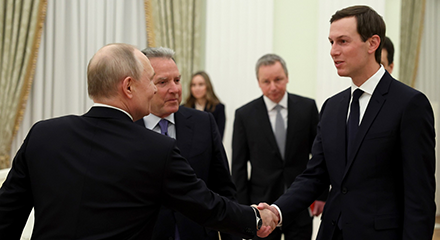
Steve Witkoff and Jared Kushner went to Moscow and talked with Vladimir Putin. Steve Witkoff and Jared Kushner then went to Kyiv and talked to Volodymyr Zelenskyy. The two emissaries came with a peace plan that neither side wanted and went home with only “top of it all” memories.
That does not mean there is nothing more to say. Far from it.
The Trump administration has fielded two peace plans. The first, presented in November 2025, had 28 points, the second just 20. Basically, though, both plans can be summed up in a single sentence. Whereas under Joe Biden there was an insistence on Ukraine regaining every lost inch of territory and seeing the back of every last Russian soldier, Trump insists on Ukrainian territorial concessions.
Indeed, Ukraine is expected to relinquish all of what Russia holds. In return, Russia would pledge not to invade neighbouring countries and Ukraine would be given “security guarantees”. There would too be an international recovery fund to help put Ukraine back onto its feet. But no Nato expansion, no Nato troops in Ukraine and no Ukrainian Nato membership plan.
The original 28-point proposal - put together in Miami by Steve Witkoff and Russia’s envoy, Kirill Dmitriev - was heavily criticised in Kyiv and European capitals as being too pro-Russian.1 Intensive pushback and months of rewriting successfully “fine-tuned” the framework down to the current 20-point version. In substance there are though four key structural differences.2
1. Nato and security guarantees: the original 28-point plan required Ukraine to permanently amend its constitution to bar itself from ever joining Nato. It strictly prohibited any Nato troop deployments or western military assistance within Ukraine’s borders too. The current 20-point plan swaps permanent exclusion for a robust, legally binding “article 5-style” security guarantee from the US and European allies.3 It explicitly includes the positioning of ‘neutral’ international peacekeeping forces along the front line to prevent any further Russian expansionism.
2. Territorial sovereignty versus de facto concessions: the original 28-point plan required Ukraine to formally recognise Russian sovereignty over the five oblasts annexed into the Russian Federation (Crimea, Donetsk, Luhansk, Zaporizhzhia and Kherson). It also mandated Ukraine to withdraw from its 20% of Donbas that Russian forces have failed to win on the battlefield and allow it to become a free economic zone. The current 20-point plan shifts away from immediate territorial cessions. It focuses instead on freezing the conflict. Crucially, it insists that the long-term issue must be decided via a Ukrainian referendum.
3. Force size: the original 28-point plan imposed a 600,000 cap on the size of Ukraine’s armed forces. The 20-point plan raises it to what it actually is at this moment in time: an active 800,000-strong fighting force.
4. Elections and governance: the original 28-point plan imposed a rigid timeline that would have forced Ukraine to hold elections within 100 days of signing. The current 20-point plan acknowledges the huge logistical issues involved in what is after all a war-wrecked country. The current framework simply states that Ukraine will hold presidential and parliamentary elections “as soon as possible”, once a stable, legally binding ceasefire is securely in place and civilian return/family reunification programmes have begun.
National betrayal
It is easy to appreciate why Zelenskyy prefers the 20-point plan to the 28-point plan. He can chalk it up as a diplomatic success. But that does not mean he positively likes it. Doubtless he loathes it. Nevertheless, he has to pay lip service to whatever Donald Trump and his administration are saying. Ukraine, after all, is dependent financially, logistically and militarily on the west - in the last analysis on the imperial hegemon, the United States itself. Of course, behind the scenes Zelenskyy lobbies, lobbies and lobbies. Despite that, the ‘everything back’ doctrine promulgated by Joe Biden’s administration is dead and buried. Now Ukraine is expected to submit itself to the dissecting table. That carries huge political risks for any Ukrainian government.
The vast majority of the Ukrainian population yearn for an end to the war and want peace. There can be no doubt about that. Simultaneously, however, they, particularly the frontline troops, strongly oppose any plan that requires formally surrendering or permanently ceding land to Russia.
Polling conducted by the Kyiv International Institute of Sociology shows an “outright” (that is, a 75%) rejection of Trump’s initial plan. In spite of the increasing war weariness and a willingness for compromise, some 54% are still categorically opposed to any permanent or official surrender of territory.4
As for the military, they express bitter opposition to any trading of land for a peace deal. Frontline troops constantly refer to the numbers who have died for the sake of defending the mother country. They combine feelings of “defiance, anger and resignation”.5 Speaking on their behalf, former commander-in-chief of the Ukrainian Armed Forces, general Oleksandr Syrskyi, bluntly told Sky News that giving up land is “unacceptable”.6
As things stand today, Zelenskyy looks highly vulnerable. Between US demands for a territorial amputation and a population that wants peace, but is prepared to endure a prolonged war for the sake of territorial unity7, he walks a tightrope. Mired in one corruption scandal after another, sacking potential rivals - ministers, generals and advisors - Zelenskyy is expected to lose the second round of any presidential election by a wide margin. Though he is feted in the west, polling in Ukraine itself, from late 2025 to mid-2026, indicates that in a direct head-to-head run-off, Zelenskyy would face heavy defeats against prominent wartime figures such as former commander-in-chief Valeriy Zaluzhnyi, former defence minister Mykhailo Fedorov or former HUR military intelligence chief Kyrylo Budanov.
Naturally Zelenskyy has rejected all talk of wartime elections. There is after all martial law … and those occupying Russian troops and daily strikes by incoming drones and missiles. But if there was a ceasefire and a US-brokered deal, he would not only have to organise a referendum, but elections in which he and his Servants of the People party could easily lose big time.
Of course, a ‘peace referendum’ might well be suitably worded to secure the ‘right’ outcome. But in that case, the far right will accuse him of cheating, trying to fool voters, betraying the sacred Ukrainian nation … and serving his fellow Jews. Perhaps led by Mykyta Nadtochiy, Banderite mobs, guarded by Azov units, pre-empt the vote. They storm the presidential palace, arrest Zelenskyy and seize the Rada. Their central demands would be national unity and no concessions to Putin and his hated Orcs. Why, they would ask, give away Ukrainian land that the enemy has failed to take by force? Why have 140,000 good Ukrainian patriots sacralised their lives?
What a third-term Donald Trump - or a president JD Vance, Marco Rubio or Pete Hegseth - would make of any of that is beyond me. The Banderites are, after all, their kind of people. But, as with Zelenskyy, a Banderite regime would still have to come to terms with US global interests … that or fight an asymmetrical war with Russia and risk total defeat and the incorporation of the whole of Ukraine into Putin’s neo-tsarist empire.
Many similar scenarios could be presented of veterans’ fury. There are certainly plenty of embittered former generals and ministers awaiting their moment. Otherwise a junta of serving generals might take the lead. But the point has been made. Conditions are ripe for a Ukrainian version of the ‘stab in the back legend’ (Dolchstoßlegende).
As readers know, Germany’s far right - crucially the high command - insisted that they had suffered no defeat on the battlefields of 1914-18. Instead they had been betrayed on the home front by communists and social democrats. Almost instantly, the idea was given an anti-Semitic twist - not least by Adolf Hitler and his chief ideologue, Alfred Rosenberg. The fall of the Weimar republic was already in sight.
There are precious few communists and social democrats in Ukraine today, but Zelenskyy is Jewish and its army has successfully fought for four long years now seemingly against all the odds. And, inevitably, there are already all manner of absurd conspiracy theories doing the rounds: Trump has been a Russian agent since 1987; the Ukrainian government acts under the control of the “Jewish oligarchy”; Volodymyr Zelenskyy is in cahoots with Vladimir Putin in the attempt to replace Ukraine’s indigenous Slavic population and create a ‘new Khazaria’, a new Jewish homeland; Zelenskyy was in cahoots with Jeffrey Epstein to ensure that the war benefitted the Rothschilds and other Jewish bankers, etc.8
Ukraine, note, has a deeply ingrained history of anti-Semitism. During tsarist times there were frequent pogroms. White forces slaughtered tens of thousands of Jews in the 1918-21 civil war. And to this day Stepan Bandera - Ukraine’s foremost fascist and, in the early 1940s, a Nazi collaborator - is venerated as a national hero. His anti-Semitism combined with anti-Bolshevism: “The Jews are the most faithful prop of the Bolshevik regime and the vanguard of Muscovite imperialism in Ukraine.”9 There are statues and streets, bridges and squares named after him, postage stamps bear his image … in other words Banderism is the ideal ideological vehicle for a reactionary national revolution in Ukraine.
While parallels with Weimar are easy enough to draw, Ukraine cannot, of course, give birth to its version of the Third Reich. Empire, national independence, even neutrality are all chimeric. Small and medium countries are dependent countries. Switzerland and Ireland are dependent on the EU; Belarus is dependent on Russia and Brexit UK is dependent on the USA. Without powerful outside backers a post-Zelenskyy regime can do nothing serious militarily, that is for sure.
Will Europe ride to Ukraine’s rescue and prevent a 1938-style betrayal? No, it can only act with US permission. Europe can pay for US arms deliveries to Ukraine, it can send peacekeepers, it can complain about US bullying. But without centralised political unity it is doomed to impotence.
Explaining Russia
Just a year ago Z-bloggers - people like Tatyana Montyan, Ilya Remeslo, Roman Alekhin and Oksana Kobeleva - pictured Russia as making steady, albeit frustratingly slow, advances that would, given the will, so it was said, eventually overwhelm the west’s Ukrainian puppet.
The reason for the snail’s pace advance of Russian forces was, as might be expected, put down to incompetent defence ministry officials, conservative military strategists and endemic corruption, not Ukraine’s determination to resist.10 The essential line of reasoning is based on simple arithmetic: Russia has a population three or four times bigger than Ukraine and a considerable military-industrial complex to boot. Ukraine can therefore, so runs the argument, be soundly beaten, if the war is conducted with sufficient aggression, if supply problems can be sorted out by putting the entire economy onto a war footing.
Certainly, while Vladimir Putin is regularly praised as one of history’s ‘great men’, he must stop believing the ‘beautiful reports’ routinely received from high-ranking military commanders. These reports typically exaggerate Russian advances and minimise Ukraine’s defence capabilities. They amount to ‘shameless lying’, say the Z-bloggers, but create a “self-sustaining disinformation loop”, which leads to ill-considered ‘meat grinder’ attacks on heavily-fortified Ukrainian positions.11 Instead Putin should order a general mobilisation, dramatically increase arms production and even countenance the use of tactical nuclear weapons.
For what it is worth, the pro-Kremlin left in the west echo not the Z-bloggers, but the ‘beautiful reports’ landing on Putin’s desk, which are then amplified by Russia’s foreign ministry and government and semi-government outlets. Hence the insistence that Russia’s February 24 2022 invasion was no invasion, but a ‘special military operation’ designed to oust the Nazi, Volodymyr Zelenskyy; that the March-April 2022 scuttle from Kyiv was no scuttle, but a well-ordered troop redeployment; that the fall of Bakhmut in May 2023 would lead to sweeping Russian advances; that Russian commanders would never even consider using human wave tactics; that there was no Wagner coup attempt in June 2023; that the Ukrainian government will fall in the new year of 2023, 2024, 2025, 2026, 2027.
The Z-bloggers make uncomfortable reading for the pro-Kremlin left. They provide a voice for Russia’s military, including the poor grunts on the front line. The Z-bloggers also pour cold water on the ‘beautiful reports’. So, no surprise, they were the subject of a recent crackdown by an insecure Russian state which, having effectively silenced the liberal opposition, can no longer tolerate any criticism of the feeble performance of the armed forces, even from ‘ultra-loyalists’. Tatyana Montyan and others have been officially designated “foreign agents”.12
True, at the rate of advance seen in 2025 - barring a political earthquake, such as the withdrawal of western support - Russia would eventually take the whole of Ukraine. But not by the new year of 2027. No, it would take well over a hundred years (and millions of casualties). Eg, Russia gained 0.77% of Ukraine’s existing territory in 2025, so we can then easily arrive at a neatly rounded 130 year result.13 Even to seize the entirety of the four oblasts - Donetsk, Luhansk, Kherson and Zaporizhzhia - which were formally annexed in October 2022, would take some six or seven more years by the same calculation.
Of course, that ignores little matters like international sanctions, technological innovations, fortress belts, wide, fast-flowing rivers, marshes, etc … and, at a higher level of abstraction, the fact that war is not linear. It involves both quantitative and qualitative development and intangibles such as civilian morale and the role of ‘lucky’ generals, who, as explored by Lawrence Freedman, possess charisma, show empathy for subordinates and can persuade the rank and file to perform heroic miracles.14
No less importantly, almost across the whole of the mainstream bourgeois media we now have excited stories of Ukraine more than holding its own, of Russia suffering unsustainable manpower losses, of its economy being at near breaking point.
Beautiful reports
This month the Institute for the Study of War confirms once again that the pace of advance of Russian forces noticeably declined in 2026. Any territorial gains are now incremental, and come with heavy losses. Indeed here and there Ukraine has regained territory. The ISW concludes that Ukraine has proven that it can “contest the tactical initiative in several areas of the frontline and hinder Russian logistics”. Hence, neither the “trajectory nor any likely dynamics of the current conflict suggest that Russian forces will be able soon to accelerate their rate of advance dramatically, as long as western support for Ukraine continues at roughly current levels.”15
Nonetheless, perhaps because he believes those ‘beautiful reports’, Putin still thinks that Russia can win. Apparently he has set the goal of taking the whole of Donbas by the end of 2026 (a goal he has previously set 15 times before).16 That is why despite the hugs with Kushner and Witkoff, the 20-point peace plan got nowhere.
A Russian victory would not only involve taking the whole of Donbass, it would involve regime change in Kyiv too. Putin wants at the very least a neutral Ukraine that is strongly aligned with Russia along similar lines to Alexander Lukashenko’s Belrus.
Hence reports that Russia is preparing a 500,000-troop general mobilisation to “break the backbone” of Ukraine’s forces and “strike deep into Kyiv”. According to Finnish MEP and retired general Pekka Juhani Toveri: “Putin knows that the war isn’t going well”, that the frontline is “basically frozen - there’s been very little movement this year”. “The challenge,” says Toveri, “is to break the stalemate.” He predicts that Putin will probably “throw in everything he has this winter”. That means more ballistic missiles, more drones and more frontline troops.
Moscow has denied rumours of a general mobilisation for months now - a decision that would pose a risk for Putin ahead of the Duma elections over September 18-20. Hundreds of thousands of young men fled Russia after Putin decreed a partial mobilisation in 2022 and the idea of raw conscripts fighting in Ukraine is deeply unpopular. Thus far only volunteers are deployed (though that has included many prisoners and foreign dupes). Toveri therefore expects that Putin will conduct some kind of mobilisation: probably not announced publicly; rather a “silent mobilisation”.17
In this context, it is worth quoting Sir John Sawers, the former head of MI6 (2009-14). Speaking to the FT Weekend Festival in London, he maintained that an enduring peace between Ukraine and Russia is “not really conceivable” while Vladimir Putin remains in office. Note, while such figures as Sir John speak as private individuals at such events, they often retain close contacts with the securocracy.
Not that the war will run and run in perpetuity. Returning to post-2014 levels of violence is perhaps feasible, he reckons. Despite that bleak assessment, Sawers suggests that a ceasefire, or even successful peace negotiations, might possibly come onto the agenda with the onset of the spring 2027 rainy season. The bezdorzhzhia or rasputitsa makes military operations extraordinarily difficult. Such negotiations depend on two conditions, he says: firstly, “if the pain on both sides continues to rise”; and, secondly, if “the progress that the Russians had been making on the ground … doesn’t resume”.
Sawers referred to the “increasing voices inside Russia raising questions about the Ukraine war and Russia’s need to find a way out of it”. Presumably amongst those ‘voices from above’ he had in mind was Andrei Klepach, the chief economist of VEB.RF, one of Russia’s largest state-run financial institutions, who was sacked by the Kremlin after he frankly admitted that losses from Ukrainian strikes were “already becoming a noticeable macroeconomic barrier to Russian economic growth”.18
There are, though, other ‘voices from above’ whom the Kremlin can neither silence nor sack. Xi Jinping reportedly told Donald Trump at their Beijing summit that Putin “might end up regretting” his invasion (subsequently flatly denied).19 Likewise Indian premier Narendra Modi, another friend of Russia. At the Shanghai Cooperation Organisation summit in Kyrgyzstan’s capital, Bishkek, he unequivocally urged Putin to move away from “endless war” for the sake of humanity.20
Other important trading, military and lifeline partners of Russia have delivered the exact same message. Kazakhstan’s president, Kassym-Jomart Tokayev, proposed freezing the conflict between Russia and Ukraine to halt the bloodshed, stating that a prolonged war only benefits the opponents of both countries. Belarus president Alexandr Lukashenko, perhaps Putin’s closest international ally, has repeatedly called upon both Russia and Ukraine to negotiate an immediate end to the war. While he blames the west for wanting Russia and Ukraine to “destroy each other”, Lukashenko has publicly expressed anxiety over the conflict spilling into Belarus. President Recep Tayyip Erdoğan has positioned Turkey as a key mediator, routinely calling for a “just and lasting peace” that respects Ukraine’s sovereignty and borders. While maintaining deep trade and energy ties with Moscow, Turkey has continuously offered to host formal direct peace talks in Istanbul.21
Thus far Putin and the FSB regime in Moscow have been deaf to all such entreaties. Come 2027 and the rainy season, we shall see.
Economy, stupid
This war was never a Russian Goliath versus a Ukrainian David conflict. Behind Ukraine there has always been the west, namely the EU, Nato and the US (despite the trials and tribulations brought about by the Trump administration).
Leave aside a combined population of 960 million, the Nato counties are massively, 24.5 times, bigger economically than Russia. In terms of nominal GDP - that is, at the exchange rate of the US dollar - Nato weighs in at $46 trillion in terms of economic output. When adjusted for purchasing power parity - which supposedly accounts for the cheaper local cost of producing military hardware and other goods inside Russia - the gap shrinks, but remains vast, with Nato’s economy still estimated to be roughly eight times bigger than Russia’s. Not surprisingly, Nato vastly outspends Russia in military spending. In dollar terms Nato’s military budget is 8.3 times bigger than Russia’s.22
So in reality the Ukraine war pits Russia against the western giant, in what is, in fact, a proxy war. Hence Ukraine has been able to rely on considerable military, intelligence, economic, logistical and communications support. The latest example being the massive €90 billion loan package from the EU for 2026-27. Supposedly this will be repaid by reparations due to Ukraine from Russia (so do not hold your breath on that one).23 Ukraine is thereby renewing its stock of artillery shells and ammunition and obtaining spare parts for its F-16 fleet. Besides that Kyiv has its eyes set on Swedish Gripen fighter jets, British Storm Shadows, and more and more of those desperately needed American Patriots.
Moreover, as Andrei Klepach suggests, the Russian economy shows distinct signs of faltering. True, all such health warnings should be treated with caution. After all we have heard it many times before and Russia has a war-orientated economy, not a total war economy. Note, Russia devotes 6.3% to 7.5% of its GDP to ‘defence’, while during World War II British war spending reached a 62% high in 1944‑45.24
Till recently, as far as the lives of the mass of the ordinary Russian population are concerned, the war in Ukraine has hardly touched them. Even those whose fathers, sons or partners have been killed are supposed to have their grief assuaged by compensation payments and other additional benefits worth up to $68,000. But now, of course, with Ukraine’s long-range drone and missile strikes, that is beginning to change. There are snaking queues for petrol and some consumer goods are now in short supply or unobtainable. On top of that, despite higher global oil and gas prices, caused by the Iran war, Moscow got a measly $1.52 billion windfall - much, much smaller than originally predicted.25
Hence Russia’s GDP is expected to barely grow in 2026.26 There is, then, a danger that the country could formally enter a recession in 2027. Inflation is roaring too and the central bank has set high interest rates accordingly. Russia is also experiencing a chronic labour shortage. In part this is accounted for by the demands of the war industries, in part by those sent to fight in Ukraine and in part by those fleeing abroad (since the beginning of the war more than half a million conscription-age men have left the country27). A general mobilisation would surely turn the labour shortage into a full-blown economic crisis, with perhaps all manner of unforeseeable consequences.
In this context it is worth quoting another spy chief - this time a serving one - Estonia’s Kaupo Rosin. Interviewed by the Telegraph, he says that “Russia is in a very bad place at the moment”, with discontent growing across all tiers of society - from ordinary citizens to the economic elite and the so-called oligarchs. There are “only bad options”. Rosin thinks Putin has backed himself into a corner, where every choice carries severe personal and political risks:
- If he continues the war, heavy battlefield losses, economic sanctions and tightening resource constraints will continue to mount, intensifying internal domestic pressure.
- If he stops the war, any compromise or peace treaty would frame him as weak, making it impossible to justify the immense cost in blood and treasure to his inner circle.
Rosin believes that there has already been a crack in the elite consensus over the war. While Putin outwardly projects absolute confidence in victory, his inner circle is no longer aligned. Voices - and not just that of Andrei Klepach - urging an end to the war are getting more numerous and more confident.
While subsequent headlines dramatically claimed a revolution could happen “overnight”, Rosin’s assessment is much more nuanced. He certainly sees no immediate prosect of what he calls a “grassroots-led, street-led revolution” (that is his version of February 1917 and the overthrow of tsarism).
Moreover, we can add, the popular masses are not politically organised at the present moment, let alone organised in a revolutionary party. There are only disorientated micro-sects and Kremlin-loyal parties such as the Communist Party of the Russian Federation.
February 1917
Despite the organisational weakness of the revolutionary parties immediately before February 1917, brought about to a considerable extent by wartime tsarist oppression, that was not the case back then. Though operating underground, the Bolsheviks, Mensheviks and Socialist Revolutionaries exerted considerable influence in the big cities - crucially in Moscow and Petrograd. Because of deep social roots, established over many years of prior ideological, factional and class struggles, they were always present in the consciousness of the advanced sections of the working class. So, when the masses moved, beginning on International Women’s Day - tsarism collapsed exactly seven days later - the revolutionaries quickly assumed leadership.
This was therefore no spontaneous revolution, as the liberal myth would have it. It was not led by nobody. It did not occur by itself. It happened because of prior training - not least that provided through papers such as Iskra, Vperod and Pravda. By the end of summer 1917 the Bolsheviks had won themselves a solid majority in the Petrograd soviet.
No, what Rosin considers more likely is what he calls the ‘overnight’ collapse mechanism. He points out that regimes like Putin’s appear highly rigid and stable until political, financial and military faultlines converge. Then the collapse suddenly happens and “takes the world by surprise”.
Showing his own elite mindset, Rosin says that what matters most now is what the “people who have access to money, weapons and information think”. Political change is “far more likely to manifest if those surrounding Putin decide the state’s future is better off without him”.28
Of course, the February Revolution happened because of a combination of factors. Deep discontent below over war rationing, high prices, bread shortages … and a seemingly endless war. That, and splits and divisions above. Trotsky depicts Nicholas II as clueless, delusional and pathetic. He did not surrender directly before the revolutionary workers and soldiers. Nicholas II abdicated because he had lost the confidence of the army commanders, government ministers and court advisers he had himself appointed. They demanded that he step down in a futile attempt to save the monarchy and to prevent the revolution fatally undermining the war effort.
After the final abdication document was signed, the former tsar, now under house arrest, bitterly complained of there being “no justice amongst men”. But, as Trotsky says, “those very words irrefutably testify that historic justice, though it comes late, does exist”.29
Though separated in time by 11 decades, the similarity between Putin and the last Romanov is strikingly obvious. Putin is self-made, Nicholas was born to rule, but Putin is still a tsar, albeit an uncrowned one. He too lives in the lap of rococo imperial luxury. He too presides over a frightful tyranny. Rivals, critics and opponents find themselves stripped of their wealth, serving long prison sentences, in exile or strangely throwing themselves from high windows. Putin too seeks philosophical guidance from half-mad gurus and finds spiritual solace in the mumbo-jumbo blessings provided by the Orthodox Church. Putin too surrounds himself with flabby-minded ‘yes’ men. Putin too has plunged Russia into an unwinnable, insane and contemptible war.
Vladimir Putin deserves historic justice … and let me add for the sake of political clarity, that goes for all the other warmongers too.
-
1commonslibrary.parliament.uk/research-briefings/cbp-10411.↩︎
-
2news.sky.com/story/trumps-28-point-ukraine-peace-plan-in-full-including-land-kyiv-must-hand-to-russia-and-when-elections-must-be-held-13473491.↩︎
-
3Article five of the Nato treaty commits members to regard any armed attack on the territory of one member as an attack on all and requires a collective response (www.nato.int/en/what-we-do/introduction-to-nato/collective-defence-and-article-5).↩︎
-
zmina.info/en/news-en/majority-of-ukrainians-oppose-trading-donbas-for-western-security-guarantees.↩︎
-
4The Kyiv Independent December 6 2025.↩︎
-
www.russiamatters.org/analysis/between-inevitable-and-unreliable-why-ukrainian-society-considers-territorial-concessions.↩︎
-
See foantisemitism.org/introducing-the-anti-slavic-jewish-conspiracy.↩︎
-
en.wikipedia.org/wiki/Organisation_of_Ukrainian_Nationalists.↩︎
-
carnegieendowment.org/russia-eurasia/politika/2025/12/russia-z-loyalists-repressions.↩︎
-
Financial Times December 23 2025.↩︎
-
The Guardian November 6 2025.↩︎
-
A linear calculation, based on data collected by the hawkish Institute for the Study of War. Eg, it reckons that Russia took just 0.77% of Ukraine’s total area in 2025 (www.lvivherald.com/post/how-long-would-it-take-russia-to-occupy-all-ukraine).↩︎
-
L Freedman Command: the politics of military operations from Korea to Ukraine Oxford 2022, pp3-4.↩︎
-
understandingwar.org/research/russia-ukraine/russian-offensive-campaign-assessment-september-6-2026.↩︎
-
Ibid.↩︎
-
The Sun September 7 2026.↩︎
-
Financial Times September 7 2026.↩︎
-
Financial Times May 19 2026.↩︎
-
www.politico.eu/article/india-nerendra-modi-tells-vladimir-putin-end-ukraine-war-for-the-sake-humanity.↩︎
-
The i Paper September 1 2026.↩︎
-
www.worldeconomics.com/Thoughts/NATOs-Combined-GDP-Dwarfs-Russias.aspx.↩︎
-
www.consilium.europa.eu/en/press/press-releases/2026/04/23/council-finalises-90-billion-support-loan-to-ukraine.↩︎
-
articles.obr.uk/300-years-of-uk-public-finance-data/index.html.↩︎
-
The Moscow Times September 1 2026.↩︎
-
uawire.org/up-to-540-000-conscription-age-men-have-left-ukraine-since-the-full-scale-invasion.↩︎
-
The Daily Telegraph August 29 2026.↩︎
-
L Trotsky History of the Russian Revolution Vol 1, London 1967, p100.↩︎