
16.07.2026
Return of the military option
Trump is threatening to dramatically escalate attacks. In return Iran strikes against America’s regional allies. There is a distinct danger, warns Yassamine Mather, of a wider conflagration
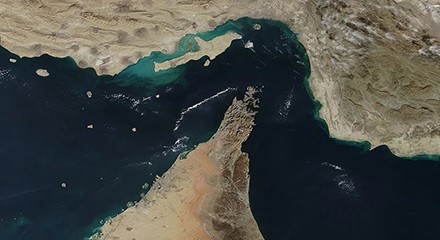
The renewed military conflict between Iran and the United States is no accident. It arose from the vagueness of the Memorandum of Understanding that had temporarily reduced hostilities, especially over the status of shipping going through the Strait of Hormuz. The MoU did not settle who would police the waterway, what counted as ‘safe passage’, or whether either side could impose fees or restrictions on commercial vessels. Those unresolved questions created the conditions for a rapid return to military action.
On July 13, Donald Trump announced that the US was reinstating its blockade of shipping to and from Iran and presented the US Navy as the “guardian” of the strait. He also proposed charging passing vessels a fee equal to 20% of the value of their cargo. The proposal was extraordinary: Washington has traditionally justified its naval presence in the Gulf in the language of freedom of navigation, not as a toll-collecting operation.
The proposal was reversed on July 14.1 Ironically, US secretary of state Marco Rubio had earlier said: “It’s an international waterway. No country is allowed to charge tolls on an international waterway. That’s international law. That’s the way it is all over the world, and that’s the way we expect it will be here.” But Iranian foreign minister, Abbas Araghchi, responded by insisting that Iran, not the United States, had historically protected the strait. He mocked the proposed charge as excessive, while repeating Tehran’s own argument that whoever guarantees security should be compensated. Behind the exchange of sarcasm lay a serious struggle over sovereignty, commercial power and control of one of the world’s most important energy routes.
On July 15 Iran announced formal withdrawal from the MoU with the US, signed four weeks ago. In fact, verbal confrontation has been accompanied by renewed military action. US forces have attacked Iranian air-defence systems, coastal radar sites and missile and drone facilities. Iran retaliated against American military installations and warned neighbouring states that bases used for attacks on Iranian territory could themselves become targets. The danger is therefore not confined to Iran and the US. Saudi Arabia, Bahrain, Kuwait, Qatar, the United Arab Emirates, Oman and Jordan are all exposed to the consequences of hosting US forces or assisting US operations. Indeed, on July 14 Saudi forces launched attacks on Yemen: Sanaa airport was hit. In return the Houthi regime struck back against Saudi Arabia. A general conflagration looks like a distinct possibility.
Meanwhile, Trump’s demand that the Persian Gulf monarchies reimburse Washington for their protection also exposes the irony at the heart of US policy. The states hosting American forces are expected not only to accept the risks created by bases, but also to finance the military system that turns them into targets. The result is not regional security, but a chain of dependency, in which Washington’s allies are drawn ever more deeply into a war whose results are impossible to predict.
In Iran itself the killing of supreme leader Ali Khamenei and the succession of his son, Mojtaba Khamenei, has created a highly unusual political situation. Mojtaba’s continued absence from public view has encouraged rumours about his health, his political authority and even whether he is capable of exercising power. Some reports suggest that he was severely injured during the strike that killed his father. In the absence of clear evidence, however, claims that he is permanently incapacitated or whatever should be treated as speculation rather than fact.
The more important issue is institutional. The Islamic Republic has spent decades constructing overlapping centres of power: the Revolutionary Guards, the Supreme National Security Council, the judiciary, the presidency, clerical bodies and the leader’s own office. These institutions may allow the state to function for a period, even when the supreme leader is weak, hidden or incapacitated. This does not mean that the regime believes Iran no longer needs a supreme leader: it means that the office has become embedded in a wider security and bureaucratic structure that can ‘preserve continuity’ during a crisis.
Calls for revenge during Ali Khamenei’s funeral ceremonies were unmistakable. They came not only from some officials, but from sections of the crowds, many of whom carried images of Trump and demanded retaliation. Yet the presence of such slogans does not prove that the government is able or intends to carry out spectacular assassinations abroad. Iranian officials understand that an attack on a senior American political figure could provide Washington with the justification for a much wider war.
The funeral gatherings nevertheless demonstrated a real political shift. Before the war, the Islamic Republic faced deep hostility over repression, corruption, economic decline and the subordination of social life to the security apparatus. The external attack has allowed the state to mobilise national feeling and to present itself as the defender of the country. People who remain opposed to the regime may still rally against foreign bombardment and the threat of national disintegration. Opposition to the Islamic Republic and opposition to US-Israeli war are not contradictory positions.
This is the central political effect of the war: it has, at least temporarily, stabilised a government that was previously losing legitimacy. The killing of Khamenei has strengthened the regime’s claim to embody national resistance, even among sections of society that had little sympathy for him. The mourning ceremonies combined Shia symbolism with Iranian nationalism and defence of the homeland. Palestine and Lebanon were less prominent than the language of Iran’s survival.
That stabilisation, however, has strict limits. National unity produced by bombardment cannot repair a collapsing currency, unpaid wages, destroyed workplaces or mass unemployment. A state may gain support as the victim of foreign aggression, while simultaneously losing support, because it cannot meet the elementary needs of its population.
Catastrophe
The social consequences of the war are already severe. This week’s estimates, cited by Iranian officials and international reporting, suggest that roughly two million jobs have been lost directly or indirectly. Around one million are associated with damaged factories and businesses, while a further million may have disappeared through disrupted supply chains, shortages, transport problems and falling demand. These numbers remain difficult to verify, but the direction of the crisis is clear.
Thousands of factories and firms have reportedly been damaged or disrupted. Refinery workers, textile workers, lorry drivers, airline staff, journalists and employees in online businesses have all been affected. Factory closures in one sector quickly spread to others: manufacturers cannot obtain steel, food producers cannot secure packaging, transport firms lose contracts, and retailers face shortages and collapsing consumer demand.
Internet shutdowns have added another layer of destruction. Millions of Iranians depend on stable connectivity for freelance work, online retail, transport, communication and small businesses. Academic research on the 2026 shutdowns found that the disruption was centrally coordinated and that most Iranian network prefixes became unreachable. These measures were intended to restrict communication and political organisation, but they also devastated incomes and made the scale of unemployment harder to document.2
Official unemployment figures may therefore give a misleading impression. Informal workers, women, migrants, freelancers and those placed on unpaid leave are especially likely to disappear from official statistics.
Wages have been crushed by inflation and currency depreciation. Even a large nominal wage increase cannot protect workers when food, rent and basic goods rise faster.
The International Monetary Fund’s projected consumer-price inflation of about 68.9% in 2026 alongside a severe contraction in real output point to an economy experiencing both rapidly rising prices and shrinking productive capacity. Millions of households are therefore forced to reduce basic consumption, postpone medical treatment, or exhaust savings simply to meet daily needs. Even those who remain employed often face delayed salaries, partial wage payments, or months without pay, reflecting the acute liquidity problems confronting both private firms and state-owned enterprises. The combined effect is a deepening humanitarian and social crisis in which inflation, unemployment and declining incomes reinforce one another, leaving a growing share of the population unable to maintain previous living standards.
The labour unrest spreading across Iran must be understood in this context. There are reports of 135 separate protests, strikes, and demonstrations across Iran during June 2026 alone, involving nearly every sector of society. Pensioners are demanding payments and legal entitlements; healthcare workers are protesting against wage discrimination; drivers are striking over pay and costs; farmers are protesting over water shortages; and laid-off workers are demanding unemployment insurance. These struggles are not marginal disturbances. They are the social expression of an economy in which the burden of war, sanctions, inflation and state mismanagement is being transferred to the working class.
Iran does not permit independent trade unions, so much of this activity takes place through informal syndicates, retiree associations and spontaneous work stoppages. The state continues to treat labour organisation as a security threat. That approach may suppress individual protests, but it cannot eliminate the material causes of unrest.
Structural issues
Long before the military escalation of 2026, energy experts classified Iran as suffering from a severe, structural energy crisis. Despite holding some of the world’s largest natural gas reserves, the country has chronically failed to supply enough electricity to its population due to several core factors.
Iran relies on natural gas to generate roughly 79% of its electricity. However, domestic gas consumption in the residential sector is so heavily subsidised and inefficient that during peak winter months the government routinely chokes off gas supplies to power plants and heavy industry to keep homes warm, forcing plants to burn highly polluting mazut (low-quality fuel oil) or cut output entirely.
Severe international sanctions have locked Iran out of global capital markets and blocked the import of modern, efficient gas turbines (like combined-cycle systems). The domestic power sector has struggled to maintain, upgrade or expand existing plants to keep pace with growing demand.
Intense droughts and record-breaking heatwaves over the last several years have severely depleted Iran’s hydroelectric capacity. At the same time, rising summer temperatures drive up air conditioning usage, pushing the fragile grid past its breaking point every summer and triggering predictable, localised rolling blackouts.
The baseline fragile state of the grid was completely fractured following targeted military strikes on essential energy infrastructure during the heights of the conflict. The balance completely shifted when precision strikes targeted critical nodes. Notably, the March 2026 strikes hit vital natural gas infrastructure at the South Pars Gas Field in Asaluyeh, instantly choking off the primary feedstock for the country’s thermal power plants. Additional airstrikes on refineries and oil depots severely limited the availability of back-up middle distillates and fuel oil.
While major thermal plants like Damavand (supplying Tehran) are heavily guarded, strikes on regional distribution hubs and transmission towers have created cascading destabilisation of the main grid. Unlike localised generation shortages of the past, physical destruction of high-voltage transmission architecture prevents power from being rerouted effectively from unaffected regions.
The destruction of the electrical architecture has triggered severe humanitarian and economic consequences this year. Heavy manufacturing sectors - including steel, cement and petrochemicals - require completely stable energy environments to run. The combined effect of structural deficits and bomb damage means these sectors have faced forced, prolonged shutdowns.
Power and water are inextricably linked in Iran. Striking power facilities instantly disabled water treatment systems, pumping stations and regional desalination plants. This has triggered acute water shortages for dozens of municipalities, compounding an already severe climate-driven drought.
While essential services like hospitals rely on diesel generators, banking and telecommunications have buckled under the 2026 blackouts. Mobile phone network towers in Iran generally rely on backup batteries that last only a few hours. This dynamic - layered on top of state-enforced national internet blackouts, implemented during domestic protests - has left large swathes of the civilian population entirely cut off from communications and financial systems.
This week, president Masoud Pezeshkian told Iranians: “I ask my people, please reduce your electricity consumption. What would happen if two lamps were lit at home instead of ten? The US and Israel targeted our infrastructure, they are putting us under siege.” Of course, the reality is that the problem is far more serious than this - switching off lamps is unlikely to make much of a difference.
Meanwhile, the slogan of the most conservative factions of the regime is ‘War, war until victory’. However, this is totally delusional.
The external attack has strengthened the Islamic Republic politically, but this should not lead the left to prettify the regime or exaggerate its strength. The government remains authoritarian and capitalist. It represses independent workers’ organisation, protects powerful clerical and military interests, and forces ordinary people to bear the cost of its economic failures. Nevertheless, the crimes of the Iranian state do not justify the US-Israeli war, blockade or regime-change operations.
A serious internationalist position must oppose the attempt by Washington and Jerusalem to reorder Iran through military force, while also supporting Iranian workers, women, national minorities and democratic movements against repression from their own state. The alternative to the Islamic Republic cannot be imposed by foreign aircraft, naval blockades or intelligence operations. It must emerge from the independent political organisation of the Iranian people themselves.
The immediate danger is that both Washington and Tehran will misread temporary political advantages as permanent strength. Trump may believe that military pressure can force Iran to surrender control of the Strait of Hormuz. On the other hand, Iranian leaders may believe that the nationalist response to foreign attack has solved their crisis of legitimacy. Both conclusions are false. A wider war could devastate Iran militarily and economically, even if the state survives. It would also spread across the Gulf, deepen global inflation and expose millions more people to displacement, unemployment and death.
The decisive question is whether the anger generated by unemployment, inflation and repression can develop into independent working class politics - one that opposes imperialist aggression without subordinating itself to the Islamic Republic.
Iran and Israel
In a surprising development drawing international attention, reports published on July 13 - spearheaded by a joint investigation from The New York Times and Haaretz - alleged that former Iranian president Mahmoud Ahmadinejad has been placed under house arrest. The detention is reportedly being enforced by the highly powerful intelligence wing of the Islamic Revolutionary Guard Corps (IRGC). The investigation details an astonishingly complex, multi-year espionage saga that reads like a political thriller.
According to leaked intelligence files, Israel’s national intelligence agency, Mossad, spent years actively recruiting and cultivating Ahmadinejad as a high-value intelligence asset. Code-named ‘Operation Puss in Boots’, the covert regime-change strategy was designed to exploit Ahmadinejad’s populist appeal. Israeli planners allegedly envisioned installing the former president as a stabilising leader to head a transitional government if the Islamic Republic collapsed under external military pressure or internal uprising.
The reports outline a sophisticated logistical network designed to keep Ahmadinejad in contact with Israeli operatives without triggering the alarms of Iran’s pervasive internal security apparatus. Mossad operatives - allegedly including former head David Barnea - met with Ahmadinejad under the guise of international academic and environmental summits. These secret rendezvous allegedly occurred in Guatemala (2023) and Hungary (2024 and 2025), leveraging Ahmadinejad’s frequent travels to global forums. The investigation claims Israel covertly financed Ahmadinejad’s travel expenses and routed secret payments directly to his personal spokesperson to secure cooperation and maintain the channel.
The plot escalated dramatically early this year during a major military escalation in the region. In February 2026, as US and Israeli forces initiated targeted military strikes inside Iran, Israeli special forces took advantage of the chaos. A precision airstrike targeted Ahmadinejad’s compound, successfully disrupting local IRGC surveillance. Under the cover of the strike, Mossad operatives extracted Ahmadinejad and moved him to a pre-established, highly secure safe house deep within Iranian territory. The alliance quickly deteriorated. Ahmadinejad reportedly became deeply disillusioned with the realities of the Israeli plan and the mechanics of being installed via foreign intervention. He ultimately abandoned the safe house under circumstances that remain highly opaque.
Last week, after months in hiding, Ahmadinejad made a high-profile, unexpected public appearance at the funeral of Ali Khamenei. According to these reports, this public re-emergence proved to be his undoing. Having painstakingly reconstructed his movements, timeline and alleged communications with Israeli intelligence over the preceding months, Iranian authorities moved quickly. Ahmadinejad was arrested shortly after the services and transferred to an IRGC-controlled facility, where he remains.
While western audiences remember Ahmadinejad for his fiery, anti-western rhetoric during his presidency (2005-13), his relationship with Iran’s ruling clerical establishment dramatically soured during his second term. He frequently clashed with supreme leader Khamenei and the IRGC, attempting to claw back executive power from the clergy. In the decade following his presidency, Ahmadinejad repositioned himself as a populist critic of the regime’s economic mismanagement and corruption, earning him deep suspicion from the IRGC. He was repeatedly disqualified by the Guardian Council from running for president again.
The resurfacing of Ahmadinejad at Khamenei’s funeral is highly significant. The former supreme leader’s passing marks the end of an era and has thrown Iran into an intense, behind-the-scenes succession crisis.
In the meantime, western and Israeli intelligence agencies have sought to cultivate ‘reformist’ or moderate factions within Iran. Attempting to install a hardline populist figure like Ahmadinejad suggests a radical shift in strategy: exploiting nationalism. If the regime collapsed, a known nationalist leader might be seen as more capable of preventing total anarchy than an exiled intellectual or a western-style ‘democrat’.
In an official statement, Ahmadinejad’s office rejected the entire New York Times and Haaretz reports as “completely false” and made up of “Hollywood-style claims”. His team accused The New York Times of publishing fabricated narratives, designed to “mislead public opinion” and stoke internal factional divisions within Iran. They also vehemently denied that he is currently under house arrest or in the custody of the IRGC’s intelligence wing, insisting that he continues his work as normal.
To support this, Iranian state media broadcast footage of a wan-looking Ahmadinejad attending a memorial service in Tehran. The veracity of the specific operational details - whether the Mossad truly whisked him away in a black Peugeot or met him during his bizarre trip to a climate conference in Budapest - is, in many ways, secondary. The real significance of this episode lies in what it exposes about the mechanics of foreign-backed ‘regime change’ and the domestic illusions surrounding it. The fact that Mossad planners - even tentatively - viewed Mahmoud Ahmadinejad as a viable vessel for a ‘democratic’ or ‘post-theocratic’ Iran exposes the sheer, desperate hubris of external engineering.
Ultimate paradox
For years, Ahmadinejad was the poster child of hardline anti-Zionism, holocaust denial and domestic crackdowns (especially during the 2009 ‘green movement’). That intelligence services could convince themselves that a deeply divisive, populist hardliner could smoothly become a western-friendly transition leader reflects the same strategic myopia that characterised past disastrous interventions in Iraq, Libya and Afghanistan. It assumes a nation’s political landscape is a chessboard, where pieces can be exchanged in a vacuum, entirely ignoring domestic legitimacy and the inevitability of a chaotic power structure.
This episode also deals a severe blow to the narrative pushed by Iranian monarchists and supporters of Reza Pahlavi, the son of the last shah. For decades, the royalist diaspora has operated under the assumption that Pahlavi is the west’s - and specifically Israel’s - natural and preferred choice to lead a transition if the Islamic Republic collapses. They have structured their entire lobbyist strategy around presenting him as the sole credible alternative.
The revelation that Israeli intelligence was actively looking elsewhere proves that foreign intelligence agencies do not share the romanticised, nostalgic illusions of the royalists. When push comes to shove, foreign powers seeking regime change prioritise pragmatic disruptors who already possess established networks of domestic power (even compromised ones within the security apparatus) over exiled figures who have spent decades abroad and lack an organic, organised boots-on-the-ground apparatus inside Iran.
The entire saga serves as a sobering reminder: foreign-led transition plans are almost always built on ‘wild fantasies’. They ignore the complex realities of Iranian society, bypass genuine democratic movements and rely on backroom deals with figures whose domestic credibility has already been thoroughly spent.
-
See apnews.com/article/iran-us-hormuz-strait-war-july-14-2026-abd060c55feea216625689e57d8f76be.↩︎
-
Academic studies by Giuseppe Aceto, Valerio Persico and Antonio Pescapè, and by Ali Sadeghi Jahromi and Jason Jaskolka, on Iran’s 2026 internet shutdowns are available at www.semanticscholar.org/paper/Iran’s-January-2026-Internet-Shutdown%3A-Public-Data%2C-Aceto-Persico/289dff849784c17d4729d914ae8ba941ccb55795.↩︎