
04.06.2026
Looking for an off ramp
Tump is in trouble. Congress has voted to embarrass him, Israel is determined on aggression and, far from collapsing, the Tehran regime continues to resist. Meanwhile, as Yassamine Mather reports, ordinary Iranians are suffering terrible deprivation
War between the United States, Israel and Iran has drawn in Lebanon, the Gulf states and global energy markets. It has exposed not only the fragility of Middle Eastern security arrangements, but also the limits of American power. On June 1, Jeremy Bowen, writing for the BBC, summed up the current situation: “Trump needs this war to end, but Iran is not backing down.”1 A situation which has caused some considerable unrest in the ranks of the GOP.
Worried eyes are on November’s mid-terms. Not only did the Senate vote to curb Trump’s war powers in May. The House has just done the same by 215 votes to 208. But it is important not be carried away by such developments. They are acts of symbolic protest, not the outbreak of peace. The president can simply use his veto and there is not the two-thirds majority needed to override it. So he is no lame duck - yet.
Nonetheless, it is clear that Trump is in trouble. He is caught between the possibility of military escalation on the one hand and the need for a diplomatic exit on the other. His administration had hoped that sufficient pressure on Iran would produce a rapid victory, or at least force Tehran into accepting American and Israeli terms. But, no surprise, Iran has not collapsed. Meanwhile, the Israeli government, led by Benjamin Netanyahu, continues to push for military action that threatens to derail Washington’s attempt to regain control of the situation.
Furious reaction
The reported confrontation between Trump and Netanyahu captures all this. According to accounts from US officials, Trump reacted furiously after Netanyahu ordered preparations for major strikes on Hezbollah targets in Beirut’s southern suburbs. For Trump, the timing was disastrous. Washington was attempting to preserve talks with Iran and reach a broader regional understanding that could reopen shipping routes. A major Israeli assault on Beirut was pushing Iran away from the negotiating table altogether.
Apparently the phone call between the two men became explosive. Trump is said to have accused Netanyahu of endangering US diplomacy, isolating Israel internationally and undermining the very American support that had kept his government afloat. Whatever the precise wording, the political meaning was clear: Washington feared that Israeli escalation in Lebanon could wreck its attempt to reach a new arrangement with Tehran. Netanyahu may still insist publicly that Israel’s strategic position remains unchanged, but the reported pause in planned Beirut strikes suggests that, at least for now, American pressure has imposed limits.
This does not mean that the crisis has been resolved. On the contrary, the confrontation reveals a deeper problem. The US and Israel are allies, but their immediate priorities are no longer identical. Netanyahu’s government seeks to maintain military dominance and prevent any political or diplomatic recovery by Iran and its allies. Trump, however, needs a visible success. He needs to claim that he has forced Iran into a deal, reopened Hormuz and protected the global economy. Any concession to Tehran risks angering Republican hawks and pro-Israel hardliners. Yet, without concessions, the war may continue, oil prices may surge and the claim of victory may become impossible to sustain.
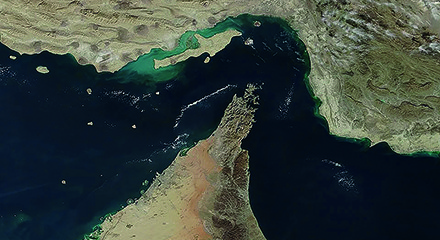
The most urgent economic issue is the Strait of Hormuz. The global market survived the first months of the conflict, but only through a massive drawdown of strategic and private reserves. Some commentators have taken this temporary resilience as proof that the disruption was manageable. But that is misleading. The market did not absorb the shock because it was relatively minor. It survived because oil reserves were used on a historic scale. The loss of supply through Hormuz cannot be offset indefinitely. Nearly 15 million barrels a day cannot be permanently replaced through emergency releases or improvised rerouting. As summer demand rises in North America and Europe, the pressure will intensify. International organisations and energy specialists have warned that oil prices could spike again, with serious effects on inflation, transport, production costs and global growth. If prices continue to rise sharply, the result could be a renewed inflationary wave and possibly a global recession.
Paul Horsnell of the Oxford Institute for Energy Studies has argued that the scale of the current shock is larger than past oil crises. During 1978-79, the world faced a shortage of around 640 million barrels; during the first Gulf War, the figure was around 420 million. The present disruption, by contrast, is estimated to exceed 1.1 billion barrels. The fact that reserves initially softened the impact does not mean there was no shock: it means the shock was temporarily hidden.
There is another danger. Government intervention in energy markets can buy time, but it can also distort the normal processes through which markets adjust. If prices are held down artificially for too long, demand does not fall enough. When reserves become too depleted to continue the intervention, the eventual price correction may be even more severe. The old saying that “the best cure for high prices is high prices” remains harsh, but relevant: if consumption is not reduced by price signals, the imbalance will eventually return in a more painful form.
Even if the war ended immediately, the global energy order would not simply return to its previous state. The assumption that energy trade can flow freely through chokepoints such as Hormuz has been shattered. Governments will now play a larger role in securing supplies, managing reserves and directing trade. This points towards a less globalised, more fragmented and more expensive energy system. Instead of an open market, the world is moving towards competing political blocs, strategic stockpiles and state-led intervention. Energy will become less efficient, more politicised and more costly.
Impact
The military dimension of the conflict has also expanded far beyond the first battlefield. Iranian strikes on US bases across the Middle East have shown that Tehran still has the ability to impose regional costs. Investigations using satellite imagery have reportedly documented attacks on US bases, or bases housing American personnel, in Kuwait, Bahrain, Saudi Arabia, the United Arab Emirates, Jordan, Iraq and Oman. The number of affected bases may be higher than has been officially acknowledged.
This is politically important. Before the war, Iran’s leadership warned that any new conflict would become regional. That has now become a reality. Iran and its allied groups have launched missiles and drones not only at Israel, but also at American military infrastructure across the region.
Satellite imagery, used by BBC Verify, shows damage to hangars, helipads and logistical facilities. Air bases such as Ali Al Salem and Camp Buehring in Kuwait have reportedly suffered visible damage. These attacks do not, of course, mean Iran can defeat the US militarily. But they do show that a war with Iran cannot be contained easily or fought without consequences for the whole region. The US can escalate its attacks against Iran. However, a state that believes its survival is at stake is unlikely to give in simply because more bombs fall. Each escalation creates new risks: attacks on US bases, deeper disruption to oil flows, pressure on Gulf allies, and growing international hostility to Israel’s conduct. Trump needs a diplomatic way out, but any such arrangement will require some form of compromise.
That is where Iran’s demands matter. Tehran has reportedly raised the questions of compensation, reconstruction funds, frozen assets and security guarantees. A figure of $300 billion has circulated in discussions of a possible post-war reconstruction or investment programme. It is not always clear whether this is being described as formal war reparations, a reconstruction fund, sanctions relief or a broader package of economic normalisation. But, politically, the issue is clear: Iran wants to claim that it has not been defeated and that any settlement must include material concessions.
This creates a problem for Washington. If Trump agrees to reconstruction money, sanctions relief or the release of frozen assets, his critics will accuse him of rewarding Iran. If he refuses, Iran may refuse to reopen Hormuz or to resume full cooperation in negotiations. The gap between military rhetoric and diplomatic necessity is widening. The more Trump insists that he has won, the harder it becomes for him to make the compromises needed to end the crisis.
Inside Iran, there are those who argue the country should not accept any deal and ‘pursue war until victory’. This is also an illusion. The economic situation is disastrous. The country’s inflation report (April-May 2026 - published later than usual), shows a further deepening of an already severe crisis. For the third month in a row, the official 12-month inflation rate broke its long-standing record, rising by four percentage points from the previous month to 57.7%.
Yet even this figure does not fully capture the pressure households are facing. The report’s detailed breakdown suggests that inflation is being felt far more sharply in daily life than the national average implies - roughly one and a half times the official rate; in rural areas and in provinces such as Kurdistan, Ilam, Kermanshah and Lorestan, it is above 100%; food prices have risen far faster than other consumer goods; and some basic staples, including imported rice, chicken, eggs and cooking oil, have seen extraordinary increases over the past year.
Food prices give the clearest picture of the crisis. Over the past 12 months, food prices rose by an average of 130%, far above the overall rate for consumer goods and services. But even that average hides huge differences within the food basket itself. Potatoes rose by less than 20%, while imported rice increased by 223%, chicken by 287%, eggs by 343%, etc, etc.
Roaring inflation
The monthly pace of inflation has also become unusually fast. In April-May it reached 8.8% - roughly three times the rate seen in the same month in each of the previous four years. Even if this pace does not continue and price growth returns to the average of recent years, the official inflation rate would still likely pass 70% by the end of summer.
A rise in fuel prices quickly pushes up transport and food costs. A fall in the value of the rial can mean medicine shortages or higher prices for imported goods. Power cuts interrupt work, spoil food and reduce income for small businesses and agricultural producers. Inflation is not experienced evenly. It weighs most heavily on households with little or no savings, no access to foreign currency, no property and no secure employment. For low-income families, food takes up such a large share of income that rising prices directly reduce nutrition. For tenants, rent absorbs money that might otherwise go towards healthcare, education or transport. For pensioners and people with long-term illnesses, higher medicine costs can make treatment unaffordable.
Wages have not kept pace. Even where people remain employed, work no longer provides stable security. Nominal wages may rise, but they lag behind prices, rents and exchange rates. Many households now depend on several forms of income: formal employment, informal work, delivery jobs, home-based production, borrowing from relatives, selling possessions or relying on the earnings of children.
Informal workers - including street vendors, day labourers, construction workers, drivers, cleaners, workshop employees and home-based workers - are especially exposed. They often lack stable contracts, insurance or any protection against closures, shortages or transport disruption. In such conditions, even a short slowdown in local markets or a power cut can mean not only an immediate loss of income, but possible destitution.