
28.05.2026
Art of not doing the deal
Talks about talks, draft memorandums, shuttle diplomacy, strange rumours and threats of escalating military strikes. Yassamine Mather explains what is going on
After months of military confrontation, political theatre and indirect diplomacy, the outlines of a possible agreement are beginning to emerge. Yet nothing is settled. The talks remain fragile, contradictory and vulnerable to renewed escalation.
Although Israel played a central role in the opening phase of the war, the current negotiations are formally between Washington and Tehran. In practice, however, the talks involve a wider regional and international cast: Pakistan, Qatar, China, Oman and, offstage, Israel and Lebanon.
The most striking feature of the past week has been the extent of shuttle diplomacy. Senior Pakistani officials have travelled to Tehran, Qatar and Beijing, carrying messages between Iran, the US and China. Pakistani prime minister Shehbaz Sharif has been in Beijing for a four-day visit, joined by Asim Munir, Pakistan’s army chief, who had recently visited Tehran. Their presence in China suggests that Pakistan is acting as the front-line mediator, while Beijing is playing the role of strategic overseer.
In the 21st century, this kind of diplomacy can look almost medieval. With secure phones, encrypted communication and video conferencing available, it is remarkable that so many officials still need to fly thousands of miles to deliver messages. But the very fact of these journeys shows the depth of mistrust. Neither side appears willing to rely entirely on electronic communication. Messages have to be carried, repeated, verified and politically guaranteed by third parties.
After weeks of war, the Islamic Republic has not collapsed. The expectation in Washington and Tel Aviv that a decapitation strategy would weaken the Iranian state so severely that it would either surrender or fragment has been proven to be illusory.
Iran’s military and security structure had spent years preparing for precisely this kind of war. Its decentralised defence system, often described as the ‘mosaic defence’ doctrine, was designed to allow provincial and military units to continue operating, even if central command was disrupted. So, despite major strikes and the loss of senior figures, the regime has not lost control. Tehran has also managed the information war with discipline.
The result is that Iran enters the negotiations not as a defeated state begging for terms, but as a damaged regime trying to convert survival into political leverage. Its main argument is simple: the US and Israel used enormous military force, yet failed to destroy the Islamic Republic or impose regime change.
As of May 27 2026, a day after US airstrikes on Iranian military targets in southern Iran, the talks appear to be close to a framework, but not to a final agreement. US officials and regional sources suggest that progress has been made. Iran, more cautiously, says there has been movement but no final deal.
The likely deal would be built around seven connected issues.
- There would be an extension of the ceasefire, possibly for 60 days, while more detailed negotiations continue.
- The Strait of Hormuz would be reopened to shipping. This is the most urgent economic issue. The US wants the strait open, safe and free for global shipping. Iran wants recognition of its role in managing security and passage through the waterway.
- The US would lift or ease its naval blockade of Iranian ports. Tehran sees this as a necessary condition for any serious de-escalation.
- There would be measures to deal with mines and maritime security. Washington rejects any Iranian toll regime or coercive control over shipping. Iran frames the issue as lawful management of its own waters and regional security responsibilities.
- The nuclear question would be separated into a later (but urgent) stage. The US wants Iran’s highly enriched uranium removed, destroyed, diluted or placed under strict verification. Iran rejects surrendering its nuclear programme outright, but may accept down-blending, suspension or tighter monitoring.
- Sanctions relief and the release of frozen Iranian assets would be phased. Iran wants broad sanctions removal and access to blocked funds. The US appears to be offering conditional relief, tied to Iranian steps on Hormuz, uranium and verification.
- There is the question of sequencing: who moves first? Washington wants verified nuclear and maritime concessions before major relief. Tehran wants sanctions relief, access to assets and respect for sovereignty before making irreversible concessions.
Regional effects
On May 25 an Iranian delegation led by parliament speaker Mohammad Bagher Ghalibaf and foreign minister Abbas Araghchi made an unannounced trip to Qatar as part of the Pakistan-mediated diplomatic process. The presence of central bank governor Abdolnaser Hemmati suggests that the release of frozen Iranian assets is a central part of the negotiations.
Qatar’s role appears to be financial and diplomatic: Doha may help manage the release and transfer of funds. Pakistan’s role is political and security-based: it has direct ties with Iran, a close relationship with China and sufficient links to Washington to act as a messenger. China’s role is larger. Beijing is not necessarily conducting every negotiation directly, but it appears to be the power behind the mediation architecture.
This resembles China’s earlier role in the Saudi-Iran ‘normalisation process’. Regional actors do the difficult preliminary work; China enters as the guarantor, organiser and final diplomatic stage-manager.
The fragility of the process was shown again on May 26, when the US carried out further strikes in southern Iran, while negotiations were still underway. US officials described the attacks as defensive, targeting missile launch sites and mine-laying vessels near the Strait of Hormuz. Whatever Washington’s justification, the strikes strengthened Tehran’s claim that it is being asked to negotiate under military pressure.
The emerging framework is not simply a return to the 2015 nuclear deal. The Joint Comprehensive Plan of Action was primarily about uranium enrichment, sanctions and international verification. The current talks are about much more: war termination, maritime control, frozen assets, sanctions, regional ceasefires, Lebanon, Hormuz and the future balance of power in the Gulf. A narrow nuclear agreement might be technically possible, but a war-ending regional settlement is far more complicated.
Iran reportedly wants any agreement to include Lebanon and to restrain Israeli attacks on Hezbollah. The US and Israel have resisted making Lebanon part of the same package. Iran also wants regional non-aggression guarantees and recognition of its security role in the Persian Gulf. US hawks and Israel, by contrast, want Iran’s missile programme and regional allies included in any deal. Yet current reports suggest that missiles and Iran’s regional network may be left out, at least for now.
If the reported framework is accurate, Donald Trump faces a serious domestic problem. The deal could be attacked by hawkish Republicans as too similar to, or even weaker than, the Obama-era JCPOA. To protect himself, Trump appears to be seeking regional cover. By involving Saudi Arabia, Qatar, Pakistan and China, he can argue that regional allies pushed for the agreement and that he is responding to realities on the ground. Contrary to what sections of British media reported, this has absolutely nothing to do with Haj (the annual Muslim pilgrimage to Mecca) and everything to do with the dire economic consequences of the war for the countries of the Persian Gulf.
The region’s service-and-transit economy, which includes aviation, tourism, luxury retail and high-spending expatriate life, has been interrupted. That is because Dubai and Doha are not just local cities: they are major international hubs. Dubai welcomed 18.72 million international overnight visitors in 2024, and Dubai International handled 92.3 million passengers in the same year. Qatar’s travel-and-tourism sector also reached a record 81 billion Qatari riyal in economic contribution, while Hamad International Airport passed 50 million passengers in a rolling 12-month period.
Confidence
Now that these places look unsafe and inconvenient, airlines have been forced to reroute, tourists have cancelled trips, and business travellers avoid stopovers, in what remains a dangerous zone. The visible result is seen in empty airports, empty malls, empty attractions. But the deeper effect is economic. Fewer visitors means lower hotel occupancy, lower retail sales, fewer jobs and less tax and fee income for governments and firms. In places built around consumption and transit, even a short conflict can cause a sharp drop in confidence and spending.
The same would apply to the wealthy mobile groups that help keep these economies vibrant: ‘tax exiles’, influencers, financiers and other high-spending residents. If they leave, or stop coming, you lose not only their rents and restaurant bills, but also the wider halo effect that fills luxury districts, branded malls and premium real estate.
So the war has damaged the business model of the Persian Gulf as a safe, frictionless global stopover for money, movement and spectacle.
At the same time, Trump has emphasised that he spoke with Benjamin Netanyahu and that the call “went well” - suggesting that he is trying to reassure Israel, while moving towards a deal Iran might accept. Israeli media are reporting serious disagreements with US plans, with Israeli officials warning that the proposed deal may stabilise oil shipping and pause the war, but leave Iran’s nuclear infrastructure, missiles, proxies and regional influence insufficiently weakened. Israeli officials are warning that the emerging US-Iran agreement looks like “a bad deal”.
The main Israeli concern is that the agreement gives Iran time to recover. The Times of Israel reported that senior Israeli security officials said the deal “does not serve Israel’s interest” and warned that after Iran gets time for “economic and military recovery” it may be difficult for the US and Israel “to go back and fight”. Another key fear is that the deal could limit Israel’s military freedom, especially in Lebanon. The same newspaper reported Israeli ‘concern’ that the agreement could restrict action against Hezbollah.
Israeli opposition leader Yair Lapid has attacked the deal even more directly, saying: “The deal is bad for Israel, bad for the region, bad for the citizens of Iran.” He also accused Netanyahu of failing to influence Washington, saying Israel is “not a vassal state and we are not a protectorate”.
Changed image
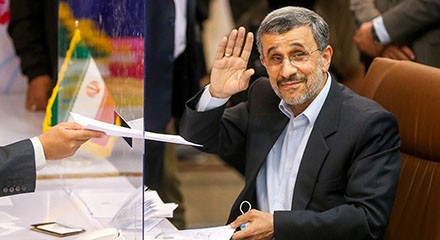
Alongside the negotiations, a strange political story has emerged around former president Mahmoud Ahmadinejad. According to reports, before the war some US and Israeli officials considered the possibility of Ahmadinejad becoming an asset in the scenario following the assassination of supreme leader Ali Khamenei. The idea was that, if the Iranian state fractured, a familiar insider who had fallen out with the supreme leader might be used to divide or redirect the system.
Ahmadinejad was once one of the most aggressively anti-Israel figures in Iranian politics. His inflammatory speeches and confrontational nuclear policy helped Israel and the US present Iran as a global threat. Former Israeli officials have even described him as useful to Israel’s public diplomacy, because he made Iran look dangerous.
After leaving office, however, Ahmadinejad changed his image. He clashed with the security establishment, was blocked from running for office and tried to rebrand himself as an anti-system populist. He used social media in English, appealed to ordinary Iranians and presented himself as a ‘man of the people’. Although there are no credible reports of Ahmadinejad secretly meeting with Israelis before 2026, he has himself claimed that Mossad deeply infiltrated his government. His ties to Hungarian prime minister Viktor Orbán are well documented: in May 2024, he was invited to speak at Budapest’s National University of Public Service and he also visited Hungary in 2025. Yet he lacks the organisation, military support and institutional backing needed to take power.
That is why many reject the idea that Ahmadinejad could seriously lead a post-war Iran. The Revolutionary Guards would not trust him. Opposition forces would not rally behind him. Some Iranians may remember his populist style. However, nostalgia is not a political machine. If the US and Israel really consider him as the next leader, it reveals less about Ahmadinejad’s strength than about their misunderstanding of Iranian politics. Iran’s power structure is not a seamless apparatus that can be captured simply by inserting a familiar face: it is fragmented, factional, coercive and deeply institutional. A missile strike cannot produce a new regime.