
26.03.2026
Talks, bluff and oil
Doubtless negotiations are happening, but certainly not directly. Those negotiations might be about quickly ending the war, or about bringing down the price of oil and reassuring markets. Yassamine Mather explains what is probably going on
Donald Trump’s claims of ongoing negotiations with Iran and an impending “present” from Tehran should be viewed as strategic political signalling. Not a factual account of real diplomatic progress.
The rumoured 15-point US ceasefire plan follows the same approach as seen previously. It reportedly demands that Iran fully dismantle large parts of its nuclear programme, stop uranium enrichment, limit or end its missile development and scale back support for allied groups across the region. In return, the US offers to lift sanctions and possibly allow a tightly monitored civilian nuclear programme - this is presented as a reward rather than a basic condition for fair negotiations. Iran, meanwhile, claims the US is talking to itself, adding that any deal must provide compensation for past economic damage.
As a result, the situation remains stuck. Public claims of diplomatic exchanges hide the reality that the two sides are far apart. This dual approach - threatening force, while claiming to pursue peace - makes a real agreement less likely and keeps the conflict unstable. Although I believe Iran’s categorical denial of direct talks, there are reports of indirect contacts through various intermediaries (more on this later).
Political pattern
The outcome is not just a contradiction, but a distinct political pattern: war and diplomacy are separate stages of a single process, operating at the same time in tension with each other. Military attacks continue - missiles are launched, infrastructure is damaged or destroyed, civilians are killed, industries crippled, medical supplies disrupted and markets thrown into uncertainty. This is not confusion or inconsistency: it is deliberate policy. Coercion and negotiation are fused into a single tool of imperial strategy, aimed in part at stabilising and reassuring volatile markets.
Trump’s threats on March 21 marked a qualitative escalation in the nature of US war aims. Earlier phases of the conflict focused on nuclear facilities, missile systems and military infrastructure. Now the targets expanded towards civilian-linked systems: power stations, energy grids, industrial zones, and the broader infrastructure that sustains everyday life - exerting systemic pressure on society itself. It is no longer simply about weakening Iran’s armed capacity: it is about undermining the material basis of social reproduction.
Warnings have included the possibility of “massively blowing up” major features of Iranian gas infrastructure, such as the South Pars field, which Israel has already hit. The US has itself conducted strikes on Iranian military facilities on Kharg Island, with reports even suggesting the possibility of American marines landing as part of a limited ground operation.
However, the attacks of the last four weeks go well beyond ‘strategic’ military sites. In Qom province, an entire lightweight concrete factory, employing over 100 workers, was destroyed, leaving all workers unemployed. In Qazvin, at least 12 workers were injured in a strike on the Abgineh glass factory. In Isfahan, 15 workers were killed in an attack on an industrial plant. In Naqadeh, at least 11 more workers were killed in a single factory strike.
These are not isolated incidents. They are part of a pattern: the extension of war into the sphere of production itself. The strategic logic is clear. If a state cannot be rapidly defeated militarily, pressure is extended into economic life, labour and infrastructure. Factories are destroyed, workers are displaced and supply chains collapse. This follows the logic of systemic degradation.
The risks are equally clear. On March 21, Iran targeted the city of Dimona in Israel’s Negev Desert - an area linked to its undeclared nuclear programme. This attack followed Israeli strikes on Iranian energy infrastructure near Bushehr, the site of Iran’s own nuclear power plant.
It also emerged on March 21 that Iran fired two missiles toward the joint US-UK base at Diego Garcia in the Indian Ocean, approximately 3,800 kilometres from Iran. Although these missiles did not reach the atoll, the incident has sparked fresh concerns regarding Iran’s capabilities. Previously, it was widely believed that Iran’s missile range was limited to roughly 2,000 kilometres.
Whether this reveals a previously undisclosed capability or one developed during the heat of the conflict, the conclusion remains the same: military pressure has failed to force Iran to capitulate. On the contrary, Iran is now threatening retaliation against energy infrastructure across the Persian Gulf. The Strait of Hormuz - through which a good percentage of oil flows - has already been effectively blocked, producing a tremendous lurch in global prices.
Five-day pause
Arguably that produced the sudden shift and Trump hailing the “very good talks” with Iran and that a deal might be close. He declared that negotiations had made significant progress, suggested agreements had already been reached on key issues. He even announced a five-day pause in planned strikes to allow talks to proceed.
On the surface, this produced a contradiction: the threat of devastation as well as the claim of imminent peace. The proposed ‘deal’ is not just diplomacy - it is about spectacle, messaging and economic signalling. These have many purposes. For the domestic audience, wary of this war, Trump can present himself as both strong (willing to bomb) and reasonable (seeking peace). In terms of global markets, the very suggestion of talks lowered oil prices, calmed markets and reassured global capital - at least temporarily. The announcements also contain deliberate strategic ambiguity. By claiming it is pursuing negotiations, the US obscures its intentions and creates space for the continuation of war aims, including the potential use of marines.
Then we have Iran’s denials. The regime refuses to play along with Trump’s narrative of a ‘negotiated peace’. Iran’s responses have been unequivocal. The foreign ministry explicitly rejected Trump’s statements, adding that there has been no communication since the bombing campaign began and asserting that negotiations under attack are impossible. The Iranian regime is also claiming that any pause reflects US weakness.
Here we do not just have disagreement, but a battle over public perception. If Iran admits to talks, it will appear that it has been forced to bend under military pressure. While there are strategic benefits for the US to conclude the conflict, admitting this risks appearing weak. The Trump administration is hesitant to look as though it is backing down against a country already destabilised by decades of sanctions and domestic unrest.
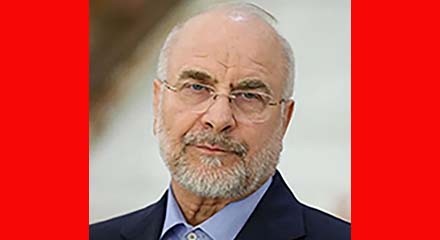
Despite the denial of direct talks, reports suggest possible indirect channels involving Oman, Pakistan, Egypt and Turkey. At the same time, rumours have circulated around the current speaker of parliament, Mohammad Bagher Qalibaf, suggesting possible backchannel negotiations.
These rumours are not new. Similar speculation previously surrounded former parliamentary speaker Ali Larijani. Such stories encourage western and diaspora media to construct narratives of internal fractures within the Iranian state: the ministry of foreign affairs was kept in the dark, while the US has found its ‘strong man’. Qalibaf’s clear denial undermines these claims. Either they are speculative projections or they function as part of a broader ideological strategy: to produce the appearance of division.
Following the recent killing of Ali Larijani, Qalibaf has taken a more central role and may be seen as a possible interlocutor. In the past Qalibaf was sometimes referred to as the ‘perpetual candidate’, having presented himself frequently as a presidential contender, running in 2005, 2013 and 2024 (and briefly in 2017, before dropping out). He is a former mayor of Tehran (2005-17). His legacy as mayor is polarising: while he was praised for modernising the wealthy northern districts, critics say he ignored the city’s poorer southern neighbourhoods. Meanwhile, The Islamic Revolutionary Guard Corps commander, general Ahmad Vahidi is apparently in charge of the actual tactical war effort, while president Masoud Pezeshkian remains focused on the day-to-day functions of the government. So far there are no obvious signs of rupture at the top.
Social devastation
The most decisive evidence of the war’s character lies in its social effects. The World Health Organisation confirmed that at least 18 medical centres were hit in the first 10 days of attacks, including Gandhi Hospital in Tehran. WHO has also warned of disruptions due to the breakdown of medical supply chains. Care centres for children, the elderly and patients have also been damaged or shut down. This reveals a deeper logic: the production of crisis through what can be described as indirect killing. Exactly like Gaza, deaths are not only caused by bombs, but by lack of medicine, collapse of healthcare systems, unemployment, poverty and disruption of essential services.
Even before the war, Iran faced severe shortages of medicine due to sanctions, currency shortages and policy changes. Inflation had reached around 60% and large sections of the population lived below the poverty line. Under these conditions, the destruction of pharmaceutical infrastructure risks producing a cascading humanitarian crisis: reduced access to essential drugs, incomplete treatments, worsening chronic illness, rising mortality over time and, at the end of the day, systemic healthcare collapse.
At least 40% of the population were already below the poverty line before the war. The current trajectory suggests further deterioration. At the same time, state resources are being redirected towards the military, further reducing the capacity for social support. Workers are not the agents of this conflict, but, of course, they bear its consequences.