
12.03.2026
Within the circle of fire
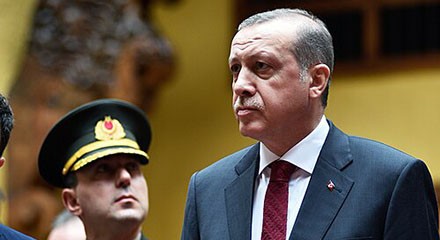
Recep Tayyip Erdoğan faces acute problems on every front. Now there is the US-Israel assault on Iran. How will Turkey respond? Esen Uslu gives his take on regional rivalries and the challenges faced by the left
Since October 2024 the ruling classes of Turkey have been desperately trying to ‘consolidate the inner front’ by finding a kind of resolution to, or an accommodation with, the ‘Kurdish problem.’ On May 12 2025, the Kurdistan Workers Party (PKK) announced its intention to disarm and dissolve, ending its four-decades-long armed struggle. That followed the call by the PKK’s imprisoned leader, Abdullah Öcalan, for militants to lay down their arms. Whether or not the Turkish state will reciprocate by granting the Kurds autonomy or constitutional recognition is, of course, an open question.
Now, though, Israel has shown its shark’s teeth once again and dragged the region into war … and Turkey and Iraq, and especially Iraqi Kurdistan, are the obvious choices for any land operation into Iran. The provocations began early on, but currently Iraqi Kurds are not willing to be used: Nechirvan Barzani, the region’s president, stated that they “will in no way be part” of the conflict. Nevertheless, US bases within the region have come under Iranian missile attack.
Conversely, Iranian Kurdish forces - though highly fragmented - appear willing to turn the region into a battlefield: the Coalition of Political Forces of Iranian Kurdistan was formed by six organisations on February 22 2026. The coalition has expressed a definite interest in working with the US and Israel to take advantage of the weakened condition of the Iranian regime. Reports indicate that the CIA and Israeli intelligence are considering or actively arming them. However, for the moment at least, the coalition remains on the sidelines.
Black Sea
To the north of Turkey, the never-ending war in Ukraine has upset the delicate balance in the Black Sea region. Turkey depends on Russian oil and gas supply, as well as its grain exports. The sanctions regimes and precarious exceptions obtained by begging to the western powers are a severe handicap.
Turkish air space has been violated by drones from Russia and Ukraine - some of which have penetrating as far as Ankara in central Anatolia - and have been shot down or crashed. Several anti-shipping mines have detached from their moorings and unmanned naval vehicles have gone astray and ended up on the Turkish Black Sea coast.
The legal regime governing passage in the Turkish Straits, which constitute the gateway between the Black Sea and Mediterranean, has been framed by the Montreux Convention since 1936. This is once again being tested. The convention blocks the passage of warships in the case of a war. This prevented Russia from providing maritime support for the former Syrian Ba’ath regime and from bringing its Mediterranean warships into the Black Sea. The straits were also closed to Nato navies (except those of Black Sea nations).
This caused ructions in Nato, forcing the US to expand the port of Alexandroupoli on the Aegean coast of Greece near the Turkish border, to use it as a prime supply depot. They also upgraded the rail link to the north through Greece, Bulgaria and Romania into Ukraine. Turkey being seen, of course, as a ‘bad’ Nato member.
Greece has used the brownie points it earned for being a ‘good’ Nato member to upgrade 83 of its existing F-16s fighters and obtain up to 40 new F-35s - giving it a clear edge over Turkey. Its Achilles Shield initiative will also see Greece ploughing roughly €25 billion over the next decade into high-tech weapons, including AI-powered missile systems and drones to counter Turkey. Then there is purchase of French and Italian frigates and corvettes. This new naval muscle has allowed Greece to militarise the Aegean islands under the guise of a new Nato defence posture. That despite old treaties between Greece and Turkey prohibiting it.
Cyprus
Almost simultaneously, a consortium of Israel, Egypt, Greece and Greek Cypriots is developing the oil and gas fields in the south-eastern Mediterranean. This cooperation has expanded to include naval exercises in the region, with the participation of Indian navy. The US has lifted its long-standing ban on exporting arms to the Greek Cypriots.
More recently, when the British sovereign bases in Cyprus came under missile attack, the UK government changed its attitude towards the Israel-US war, opening its bases to the US planes for “defensive” operations. Greece simultaneously sent F-16s to bases in Cyprus, prompting Turkey to retaliate by sending its own planes and air defence units to the Turkish Cypriot bases. The Greek navy has sent its latest frigate, the HS Kimon, to Cyprus, while France sent its Charles de Gaulle nuclear-powered aircraft carrier group there too.
Meanwhile, Nato naval assets shot down two missiles heading towards Turkish airspace, presumably en route to the Incirlik US airbase near Adana. When Turkey protested, the Iranians vehemently denied responsibility for the missiles. The claim is that it may have been a false-flag operation by the Israelis.
In any case, Turkey sought Nato’s assistance, and a German army Patriot missile battery was sent and deployed in Malatya, ostensibly to protect the US Kürecik THAAD radar station. This long-range early-warning radar covers countries east of Turkey and provides real-time data to the anti-ballistic missile defence systems. This is one of two Patriot missile batteries deployed in Turkey - the other one is an Italian unit protecting Incirlik air base.
In the past Turkey has wanted to purchase Patriot missile defence systems, but the US refused to sell them. So the Erdoğan government went against the wishes of Nato by purchasing an S-400 anti-aircraft missile system from Russia. They were delivered in July 2019. As a result, the US and Nato refused to sell advanced aircraft and missiles to Turkey, despite its attempts to placate them by not deploying the S-400 missiles. In the intervening years Turkey has been trying hard to develop and deploy a series of indigenous land-based and naval air defence missile systems. They are still being developed and tested, but it will take years for them to be integrated into the defence system. Currently the Turkish armed forces have no effective anti-ballistic missile capacity.
North-east
In our north-eastern neighbourhood, a truce and almost a peace has existed between Azerbaijan and Armenia since the end of the Nagorno-Karabakh war. While Armenia has maintained good relations with Iran, Azerbaijan has good relations with Israel, regularly supplying it with oil via a pipeline going through Turkey. There is also a maritime connection between southern Turkish ports and Israel.
However, the war could jeopardise this truce, as there is now a project to open up the Zangezur corridor, which would connect Azerbaijan and its exclave, Nakhchivan, through Armenia’s Syunik province along the Iranian border. As a part of the peace deal, the 27-mile-long ‘Trump Route for International Peace and Prosperity’ corridor would be controlled by the US. This corridor would form a barrier between Iran and Armenia, cutting off Iranian land corridors into the Caucasus and Russia.
When the current war began, Nakhchivan air space was violated by Iranian missiles, as was Turkey’s. President Aliyev of Azerbaijan was one of first heads of state to convey condolences for the death of Ali Khamanei by visiting the Iranian embassy in Baku. The missile strikes in Nakhchivan occurred immediately afterwards, and soured relations with Iran. When the Azerbaijani government protested, Iran once again denied firing the missiles, and accused Israel once more of carrying out a false-flag operation.
In the north-east, Georgia’s former Abkhaz autonomous republic, which has been under virtual Russian occupation since 2008, has decided to extend the small coastguard harbour at Ochamchire into a major port for the Russian navy, which has difficulties using other facilities along the northern shore of the Black Sea. Ochamchire is less than 100 miles from the Turkish border. The new naval base will also be very close to the Anaklia deep-sea port, which is being developed by the Chinese as a part of its Belt and Road Initiative, despite growing pressure from western powers not to allow China access to the Black Sea.
Eye of storm
As any of the above flashpoints could draw Turkey into open conflict, the regime is trying to maintain a steady course. It is trying to maintain good relations with all parties involved in the conflicts, while keeping a firm grip on any internal opposition.
Leftwing forces in Turkey have been unable to adopt a unified anti-imperialist policy beyond opposing wars. Even the unprovoked Israeli-US attack on Iran was not enough to make some sections of the left change their stance, because of their negative attitude towards the Iranian regime. Meanwhile, the drawn-out peace negotiations with the Kurds, which have yet to produce any concrete results, have fuelled the nationalist tendencies within the Turkish left.
While the economy is deteriorating, and the oil price rise and other negative impacts of war are putting more pressure on the living standards of working people, the various strikes in many different factories and facilities has yet to prompt the working class to make political demands, such as a radical change to trade union legislation.
Fake negotiations on pensions or the minimum wage, where state-appointed representatives and employers’ organisations hold a built-in majority against the workers’ organisations, have yet to prompt a campaign for political change.
The militarist and bureaucratic state, with its ever-increasing millions of ‘civil servants’ receiving their salaries for doing nothing (in addition to uncontrolled state spending), has resulted in an unbearably high cost of living for working people. These conditions have been exacerbated by the regime’s insistence on downgrading state education and health systems, while extending religious administration.
Meanwhile, the politics of the parliamentary opposition remain squarely focussed on the legal case against their main candidate for the 2028 presidential election. Ekrem İmamoğlu, former mayor of Istanbul and a leading member of the Republican People’s Party (CHP) has already been in jail for a year. His trial began on March 9 2026 and he faces a 2,430-year sentence if convicted! As for the Peoples Equality and Democracy Party (DEM) - the Kurdish-led left opposition - it is still awaiting the outcome of the ‘peace process’.
Certainly a regional war involving Turkey could easily be used by the Erdoğan regime to extend its life and further curtail democracy.