
26.02.2026
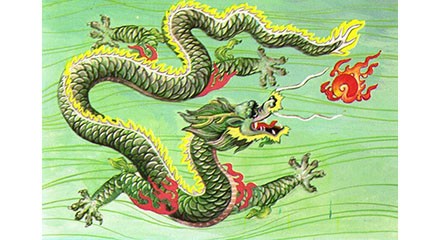
Eagle vs dragon
Artificial intelligence has moved beyond fancy software and millions of chips. Today it is about geostrategic competition between the US and China. Yassamine Mather investigates how these two countries have adopted two different approaches
China’s recent progress in artificial intelligence shows a clear change in direction. In the past, the main goal was to catch up with western countries. Now the goal is bigger: to compete worldwide, while building its own technology, so it does not depend on others. In early 2026, China’s AI strategy can be described in two simple ideas: working more efficiently and becoming more independent.
One reason China’s AI sector gained attention was the rise of a startup called DeepSeek. The company showed that it is possible to build very capable AI systems at much lower cost than similar western models. In early 2025, it released a model called DeepSeek-R1 that could solve complex problems at a level similar to leading American systems. By 2026, the company expanded this approach into new tools, including systems that can understand both text and images, while keeping costs relatively low.
Another major player in Chinese AI is Alibaba, with its Qwen AI models. Qwen has become the most widely used open-source AI system in the world, with more than 700 million downloads. It has become popular with developers and companies globally, because it offers different model sizes for different needs.
All this should be seen in the context of the US-China rivalry regarding computer sovereignty. AI has moved beyond the domain of software innovation and entered the core of geopolitical competition. In this respect it should not be seen as just a clever new computer programme. It is part of a much bigger change. When we look at the rivalry between the US and China, it helps to see AI as part of a new economic system, built around computing power, energy and strong government involvement. It depends on large data centres, huge amounts of electricity, advanced computer chips and even military systems. So this competition is not only about who creates the smartest AI model: it is also about who controls the most important parts needed to build AI - especially advanced computer chips - and about how governments and large companies work together.
AI requires enormous computing power, and that means large data centres that consume huge amounts of electricity. It also has military uses, from intelligence analysis to weapons systems. So the real issue is how deeply AI is built into industry, energy systems and the military - especially at a time when the world is becoming more divided and politically tense.
A key issue is what experts call ‘semiconductor chokepoints’. Semiconductors are the tiny chips inside computers and AI systems, cars, weapons and power grids - almost all modern technology depends on them. A ‘chokepoint’ means a bottleneck: a place where only a few companies or countries have control. Today, only a small number of firms can produce the most advanced chips, and only a few countries make the highly specialised machines needed to manufacture them. If you control these bottlenecks, you can restrict others from getting the chips they need. That gives you economic and political power.
Another important difference between the US and China is how governments and businesses work together. In the US, private companies usually lead innovation. The government supports them by providing funding, buying their technology for the military and setting regulations. But companies remain largely independent. In China, the government plays a much more direct role. It sets national goals and instructs major companies to follow a broader national plan. Some companies are private, but the state has stronger influence over the overall direction of technology and industry.
In short, the US and China are not just competing over technology: they are using two different ways of organising their economies and their relationship between government and big business.
In the tech world, people talk about ‘frontier models’ - which is just a fancy way of saying the most powerful AI systems currently in existence. However, ‘winning’ the tech race is not just about who has the smartest AI sitting in a lab. What actually matters is integration, or how well a country can plug that computer power into the real world. For example, can you use AI to make factories run faster? Can you put it inside weapons systems? Can you use it to manage electricity grids or ship goods across the world? Essentially, a cool demo is useless if you cannot use it to run the ‘real’ parts of a country.
All of this is happening while the world is becoming more fragmented. Instead of ‘free trade’ we are seeing bitter rivalries (especially between the US and China), trade wars and sanctions, where countries try to block each other from getting the best tech. There is also increased military tension. In other words there is high-stakes competition to see who can actually use the best technology to run their country, while the world is split into rival big powers and blocs.
New foundations
People who study this question usually describe AI as a contest to build the ‘ultimate’ model. They measure success by the number of data points a system has, its test scores and its ability to handle text, images and video all at once. However, this way of thinking ignores what AI actually is. AI systems are not just ‘floating brains’ in the cloud: they are physically tied to the complex factories that manufacture chips, data centres, electricity generation, the web of shipping and trade that moves parts around the world, the rules and laws made by governments, the systems that control how military forces give orders and operate weapons.
What we need to consider is the fact that AI presents new foundations for the entire economy - much like how the invention of electricity or the use of shipping containers changed everything. It is not just one small part of the tech industry: it is a basic layer that everything else will be built on.
The maths behind AI is simple: if you want a smarter system, you have to feed it more data and use more computer chips. Because of this ‘rule’, building a top-tier AI now requires hundreds of millions of dollars spent on ‘clusters’ of specialized chips, massive amounts of electricity (enough to power thousands of homes), an advanced tech to keep the machines cool and move data quickly, as well as extremely skilled and expensive engineers.
From an economic view, this means that only the richest can participate. AI is becoming a system where it is almost impossible for new, smaller companies to start from scratch: a small number of players own all the ‘thinking power’, while everyone relies on a few rare pieces of hardware. Computer power is the new ‘railroad’ or ‘oil refinery’. In the past, whoever owned the tracks or the oil controlled the world - today, that power comes from owning the computers.
In the US, AI is controlled by a few massive companies: eg, Microsoft, Google, Amazon and Meta. Their business model depends on: owning the ‘cloud’ (the giant computers everyone else rents), gathering as much data as possible, selling ads and business tools, investing in smaller, high-tech labs.
In China, however, things are different. They have big tech companies too (like Alibaba and Baidu), but the government tells them what to do. The state decides where the money goes and makes sure the companies’ goals match those of the state. This controls their speed of growth and what they choose to build.
Military role
AI affects military power across four domains:
- Intelligence analysis (ISR automation).
- Autonomous weapons systems.
- Cyber warfare.
- Logistics and predictive maintenance.
As Lawrence Freedman argues in The future of war: a history, technological revolutions in warfare reshape not only weapons, but doctrine and tempo. AI compresses decision cycles and enhances battlefield data processing capacity. The US leads in advanced ISR integration, human-machine teaming systems and AI-enhanced command architectures, while China leads in mass drone production, industrial-scale manufacturing, and the rapid scaling of dual-use AI technologies. This contrast reflects differing industrial capacities: the US emphasises technological sophistication; China emphasises manufacturing throughput.
China’s military-civil fusion doctrine integrates civilian AI firms into defence planning. This reduces transaction friction between state and industry. In the US, however, military AI procurement requires negotiation with private firms and may face internal resistance. The relationship between Silicon Valley and the Pentagon remains politically contested.
From a political economy perspective, the US model reflects a historically privatised defence-industrial complex, whereas China’s model represents a more centralised state-capital alignment.
AI-enabled drone swarms reduce the relative cost of force projection. Expensive platforms become vulnerable to saturation attacks by autonomous systems. The key question becomes: does qualitative superiority outweigh quantitative scale? Historically, industrial wars have favoured scale. AI may reintroduce scale as decisive in high-tech warfare - especially if autonomy reduces marginal unit cost.
Because these drones are cheap, they make big, expensive things (like aircraft carriers, tanks and planes) vulnerable to attack. The big question is this: is it better to have one ‘perfect’ weapon or 10,000 ‘Okay’ robots? In the past, the side that could build the most stuff usually won the big wars.
Energy
To build and use AI, you need four physical things:
- Non-stop, high-voltage electricity: the machines can never be turned off.
- Advanced cooling: these computers get so hot, they would melt without massive industrial fans or liquid cooling systems.
- Super-fast memory: special hardware that allows data to move at lightning speeds.
- Last but not least, the industry depends on a strong power grid: the buildings must be plugged directly into the main ‘spine’ of a country’s electricity system to stay stable.
Today’s AI data centres look more like heavy-duty factories than quiet offices. They eat up as much power as an entire city. From an economic perspective, this shows a major shift in how wealth is created. Instead of just paying for workers or simple machines, companies are now pouring all their money into ‘energy-hungry’ digital equipment. You cannot grow your computer power unless you also grow your energy supply. In the AI world, owning the ‘brains’ (the code) is useless if you do not also own the ‘lungs’ (the electricity).
The US energy landscape includes abundant natural gas, advanced nuclear research and expanding renewables. Yet regulatory fragmentation and grid congestion constrain expansion. Big tech firms are increasingly negotiating private energy arrangements, effectively acting as quasi-utilities. AI intensifies the privatisation of energy planning, with corporations securing long-term power contracts to sustain their data centres.
China’s state-directed grid expansion and rapid nuclear construction enable the strategic siting of AI data centres, integration with hydro power and coal baseload, and coordinated infrastructure scaling (scaling refers to the rule that more data/chips equals smarter AI). DeepSeek’s success suggests these laws can sometimes be ‘hacked’ or made more efficient, which subtly changes the ‘only the richest can play’ argument. Of course, China’s political structure reduces delays and local opposition, thus facilitating rapid infrastructure rollout: energy sovereignty becomes computer sovereignty.
Divided world
The process of making computer chips is spread across the entire globe, with different countries owning different ‘pieces’ of the puzzle.
- Nvidia (USA): They draw the blueprints for the most powerful AI chips.
- TSMC (Taiwan): They own the world’s most advanced factories that actually ‘print’ the chips onto silicon.
- ASML (Netherlands): They build the only machines in the world capable of printing the tiniest, most complex circuits.
- Korea and USA: They lead in making the specialised ‘memory’ these chips need to think fast.
Right now, demand for these chips is so high that, even if you have the millions of dollars needed to buy them, you often have to wait six to eight months for delivery. This delay creates a considerable bottleneck for any country or company trying to compete in the AI race.
In the last few years China’s response has been to break away from this dependence and ‘unplug’ from US-led systems. They are spending huge amounts of government money to design their own chips, to find clever ways to make ‘slower’ chips work more efficiently, and to build their own factories, so they do not have to rely on other countries.
Throughout modern history, the most powerful countries have usually been the ones that controlled the most important technology of their time. In the 19th century, that was steam power and industrial machinery. In the 20th century, it was oil, mass production and later computers. These technologies did not just improve business: they reshaped the world; they changed how goods were made, how wars were fought, how money moved, and how governments ruled.
Now artificial intelligence could well be the next turning point. AI is not just another industry. It does not produce just one product: it helps run entire systems. That makes it extremely powerful.
If one country controls the key parts of AI - advanced computer chips, massive data centres, software platforms and technical standards - it gains more than a commercial edge. Other countries may become dependent on its systems to manage their own economies. That creates influence. It creates leverage.
Military strength still matters when it comes to men and firepower. But today’s military power depends heavily on technology and industrial capacity. Precision weapons, drones, cyber systems, satellite networks - all rely on advanced computing. Armies depend on production. And production depends on technology.
Control
But the real issue is not ‘smart robots’: it is control.
AI connects directly to four foundations of modern power:
- First, the military. AI can improve surveillance, coordination, logistics and targeting. It can make force projection faster and more efficient.
- Second, energy. AI systems require enormous amounts of electricity. Data centres consume vast power. A country that controls energy production controls how far AI can expand.
- Third, factories. AI-driven automation allows companies to replace human workers with machines. This lowers labour costs and increases profits. It also changes the balance between capital and labour.
- Fourth, government. AI can analyse large amounts of data about populations. It can help manage services, but it can also expand monitoring and social control.
AI is not just a new gadget. It may reshape how the global economy works. All this is why the AI rivalry between the US and China matters. As competition intensifies, global trade is becoming more divided. Countries are trying to protect supply chains and secure resources. This weakens the global economic system they all rely on.
In this unstable environment, the real question is not who builds the most impressive AI model. The real question is which country can keep its economic system running during crisis - secure energy, control production, and preserve order at home. The ‘winner’ will not simply have the smartest code. It will be the one whose system is strong enough to survive the instability of the world it helped create.