
12.02.2026
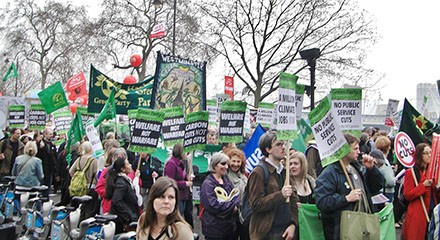
Not red on the inside
Corbyn’s faction cannot provide clear voting advice. Nor can SPEW. Zarah Sultana urges a Green vote. So does the social-imperialist ACR. The SWP calls for election deals with ‘principled leftwing Greens’. Jack Conrad calls for independent, working class politics
Gorton and Denton exposes the backwardness, the muddle, the flabby softness that characterises Your Party. Across the piste, evasion and confusion reigns. From the Fonthill Road HQ, here is the official line:
The greatest single threat to this country right now is a far-right government … It is imperative that Reform is defeated in Gorton and Denton and the far-right tide is beaten back. To that end, we will actively mobilise against the far right, even as we continue to build a mass party that can elect socialist and anti-war candidates across the country.1
What stands out from the waffle is the studied ambiguity. Voters are left in the dark about how to vote on February 26.
Looking at the Gorton and Denton poll of polls we find Reform out on top with 30.6%, Labour next on 28% and the Green Party on a surprisingly good 21.7%.2 With the sitting Labour MP, Andrew Gwynne, forced to stand down on ‘health grounds’ (ie, in disgrace), with Sir Keir Starmer mired in the Mandelson scandal and with Anas Sarwar calling upon him to quit, such polling numbers are hardly surprising. Note, in the July 2024 general election Labour secured 50.8% of the vote.
Given the first-past-the-post system, that gives Reform a good chance of winning. However, if the priority is to see “Reform defeated”, then a clear recommendation is imperative. Logically, given the numbers, it ought to be voting Angeliki Stogia and Labour. We should certainly expect tactical voting on a considerable scale. Who anti-Reform voters opt for on the day will depend on who emerges over the next few weeks as the most credible challenger against Matt Goodwin and Reform. It could be the Greens, but at the moment it still looks like Labour. The Tories, the Liberal Democrats and the fringe parties have no chance.
It is not just Your Party HQ, Jeremy Corbyn and his The Many faction. Grassroots Left takes the opportunity of Gorton and Denton to complain, rightly, about the disastrous launch of Your Party. How there “should have been a principled socialist candidate on the ballot”. How branches should have been “recognised months ago”. How they should be given the “local data” and “resources” they need. Yes, yes, again yes … but then we are told that Grassroots Left “should not lend unconditional support to the Green Party candidate”. A formulation, which I take to mean that Grassroots Left will ‘lend conditional support’ for Hannah Spencer (though, apparently, many, for their own peculiar reasons, take the statement as ‘lending no support’).
To leave no shadow of doubt, Zarah Sultana (and husband Craig Lloyd) drafted a personal statement announcing that she would give the Greens her “critical support”. Nothing wrong as a matter of principle with voting Green, or Labour, or Communist League … as long as the ‘Vote X’ call is solidly based on clear programmatic perspectives. Voting is a tactical question, and tactics, while being flexible, should be designed to serve the programme. Either way, what are the criticisms? Grassroots Left says the Green Party is “pro-capitalist, pro-Nato and has been enforcing cuts in councils all over the country”.3 So why is comrade Sultana urging a Green vote in Gorton and Denton?
She says Hannah Spencer is the “strongest challenger to Labour and Reform”. Undeniably the case (see the above poll of polls). But the strongest challenger to Reform is Labour. So why not vote Labour? After all comrade Sultana was a Labour member since she was 18. As a career politician she got herself elected and re-elected as a Labour MP (Coventry South in 2019 and 2024). Did Labour undergo some transmogrification with her departure in July 2025? Frankly, not a credible argument.
Labour connections
In fact, the Labour Party continues to be a bourgeois workers’ party. Bourgeois, not simply because of the bought and bribed servants of capitalism in the Parliamentary Labour Party. There is also the organic connection with the trade union bureaucracy (merchants in the commodity, labour-power). Neither Neil Kinnock, nor Tony Blair, nor Sir Keir Starmer have changed that. Hence the continued relevance of our strategic perspective of engaging with, challenging, the Labourite left and fighting to transform the Labour Party into a united front of a special kind - a permanent united front of all working class organisations.
Perhaps the call to vote for Hannah Spencer comes from privileged inside information about Zack Polanski’s plans to give the Green Party an eco-socialist makeover. Artistic license admittedly, but entirely plausible. Polanski is a left populist shape-shifter. One day he is a “strong Zionist”, the next “certainly not a Zionist”; one day he is a Liberal Democrat, the next a Green; one day he accuses the Labour left of being rife with anti-Semitism, the next he apologises for the slur. However, what really matters is not headline-grabbing, verbal pronouncements against the evils of capitalism. No, it is a proven commitment to the programme of extreme democracy, working class rule and the transition to communism.
However, some in Your Party appear to view the Green Party as natural allies (maybe future coalition partners in a ‘progressive’ anti-Reform government). That is certainly the case with Anticapitalist Resistance. The social-imperialist Mandelites want “working alliances with Green activists”, which would “help efforts to make the Green movement more [sic] anti-capitalist”.4
Not a few in Grassroots Left seem to share a similar perspective. Typical is the article written jointly by Candi Williams and Anahita Zardoshti - both comrades are candidates for the central executive committee. The title says it all: ‘The Green Party is great, but it’s not enough’.5 What is “great” about the Greens goes entirely unexplored. Could it be their pro-capitalism, their pro-Nato stance, their willingness to impose cuts? Obviously not.
The comrades write of the Greens “using the word, socialist”. News to me. News to Green Party members we have asked. What is actually featured in Green Party manifestoes, election addresses and conference resolutions is the usual ‘social justice’, ‘environmental justice’ and creating a ‘fairer society’ goop. Meaningless platitudes, not socialism.
Nonetheless, supposedly: “Fascism knocks at the door, with far-right marches drawing hundreds of thousands onto the streets”. If the claim is that fascism stands on the threshold of power, this is a thoroughly misconceived assessment. However, panicking oneself (and others) does provide a convenient excuse for cross-class politics - ie, popular frontism - on what passes for the left. Hence ACR’s Red-Green alliance.
There is, in fact, no immediate prospect of fascism. Reform is a right-populist party, not fascist. Tommy Robinson is a fascist, but leads a rabble, not a party. Crucially, in terms of definition, fascism is counterrevolution which uses non-state fighting formations to smash, to pulverise the organised working class. Of course, there is today, no revolutionary situation to negatively resolve. The organised working class is no threat to the capitalist system. The ruling class can continue to rule without losing political control by elevating fascist goons into state power.
Anyway, according to comrades Williams and Zardoshti, the problem with the Greens is that they are “an exclusively electoral party trying to solve … issues at the ballot box, a strategy which, at best, kicks the fascist can down the road.” But “reforms alone”, they say, “cannot change the source of the fascist problem, which requires a rebuilding of class power”.
Leave aside today’s phantom “fascist problem”. Working class power that does not take state power invites a real “fascist problem”, ie, counterrevolution. Therefore, their formulation about “rebuilding class power” is painfully inadequate. To begin with, what golden age do the comrades have in mind? The 1970s, the 1950s, the 1920s? No, it will not do. Marxists learn from the past, but we are committed to the future. And that through fighting for “reforms” - ie, high politics, which alone point towards working class rule. We have in mind demands such as the abolition of the monarchy, House of Lords and MI5, and the replacement of the standing army by a popular militia. Demands such as ending all anti-trade union laws, unrestricted freedom of assembly and speech, the disestablishment of the Church of England, withdrawal from Nato, a federal republic of England, Scotland and Wales, a united Ireland and a United States of Europe.
When it comes to programmatic horizons, the sights of comrades Williams and Zardoshti are lowered to the point of banality by the thoroughly internalised assumptions of intersectionalism, spontaneity and streets, strikes and ballots economism. Hence they say:
We need a party which both fights in elections and organises in communities all year round, not just mobilising for elections. We need a bridge between the ballot box and the streets, a party of the whole working class.
We need a party that brings together disparate liberation struggles under a single banner. A party that brings anti-war activists onto the streets with tenant organisers and anti-racism campaigners. Where striking workers are joined on the picket line by queer liberation movements. We need a party that doesn’t just talk about causes, but actually fights for them.
High politics are entirely absent. Of course, we should vote for the Grassroots Left slate … but we are doing that critically.
The problem does not stop with Your Party’s two big factions. Take the Socialist Party in England and Wales. When it comes to Gorton and Denton, there is no advice about how to vote - we phoned to double check. However, there is again a definite softness towards the Greens.
Blockheaded SPEW loyalists say that here, on this subject, we are talking ‘absolute rubbish’ (the polite version). SPEW is an uncompromising opponent of the Green Party. Sad to say, a much exaggerated claim. The comrades, along with their Trade Unionist and Socialist Coalition outriders, are in the midst of running a petition campaign, designed to get the Greens to commit to their ‘no cuts’ shibboleth.6 You would not do that with Reform, the Tories or the Liberal Democrats.
From the scratch to the gangrene. The Socialist, in a ‘What we think’ editorial, wants the Greens to be “invited to affiliate” by Your Party.7 An outrageous suggestion, not because of the sure-fire certainty that, if ever made, any such invitation would be flatly rejected. After all, the Greens boast of being on track to get 30 MPs at the next general election and wanting to “replace the Labour Party”.8 No, what is politically outrageous is the suggestion itself.
Class lines are abandoned, forgotten or rejected … and in pursuit of what? A Labour Party mark two, a cross-class, federal party and the forlorn hope of SPEW receiving an official YP invitation to affiliate! Such a thoroughly opportunist strategy - and that is what it is - inevitably culminates in paying no more than lip service to establishing “an independent working class party”.9 That is, sadly, what the much vaunted ‘transitional method’ amounts to in practice. Paradoxically, tactics become all.10
Editorials in The Socialist must be regarded as authoritative statements on behalf of SPEW (which, of course, publishes, finances and tightly controls the paper). Perhaps the final edit was done by the ‘newspaper team’ (six HQ-based full-timers). But, whoever actually wrote the damned piece advocating affiliation, prime responsibility for what is class treachery must be placed on SPEW’s leadership as a whole.11 And class treachery it is. After all, for good reason The Socialist says: the “Greens are not a party rooted in or emanating from the workers’ movement …. The party also - consciously - does not have a socialist ideology, a vision of an alternative system to capitalism.”
Origins
Historically the Greens are rooted in Young England conservatism and Malthusian overpopulation theories, propounded by the likes of Paul R Ehrlich. In January 1972 Edward Goldsmith published ‘A blueprint for survival’ in his magazine, The Ecologist. Shortly thereafter issued in book form by Penguin, it sold 750,000 copies.
Goldsmith and fellow author Robert Allen have, unfairly, been described as ‘blackshirts with green welly boots’. Even so, they ominously argued for cutting the British population by 50%, repatriating immigrants, small-scale farms, tight-knit communities, living in harmony with nature, establishing a social order based on the patriarchal family and something resembling the Indian caste system.12
On such foundations, Michael Benfield, Freda Sanders, Tony Whittaker and Lesley Whittaker established the PEOPLE party in November 1972. Goldsmith merged his Movement for Survival with PEOPLE and became one of its leading figures. A year later it morphed into the Ecology Party and, 10 years after that, the Green Party (UK).
Today, the Green Party in England and Wales has moved considerably to the left. Its 2024 general election manifesto, Real hope, real change, contained more than a few worthwhile demands: public ownership of energy, water and railways, build council houses, end right-to-buy, abolish all the post-1979 anti-trade union laws, proportional representation, self-determination for Scotland and Wales, brand Israel guilty of genocide.13 Plainly more radical than Sir Keir’s offer, that is for sure - and this comedy duly produced a crop of leftwing, ‘big name’ endorsements: eg, Jennie Formby, Jamie Driscoll, George Monbiot, Owen Jones, Grace Blakeley, Laura Parker14 … and, in the ‘small name’ league, the blogger, Phil Burton-Cartledge, formerly of this parish.15
Hence rightwing accusations that the Greens are a ‘watermelon party’: green on the outside, red on the inside. A tired joke: Green perspectives remain firmly located within the narrow confines of capitalist society.
True, there is an implicit rejection of monopoly capitalism, state hypertrophy and the ecologically destructive logic of production for the sake of production. However, sole traders, local businesses, mutual banks, cooperative enterprises are upheld as the alternative. Towards that end the Bank of England is to be given a mandate to fund the transition to a “fairer”, green capitalism based on small and medium businesses: apparently the “lifeblood of our economy and our communities”.16 Finance capital is, at least in the imagination, reigned in, but continues, albeit in responsible form. Essentially the same happens with industrial capital.
Electorally, the Greens are disproportionately young, student, female, well-educated and renting.17 Reportedly there are now some 190,000 members. Programmatically, however, it is unmistakably a petty bourgeois party which wants to repair current capitalism in the interests of the petty bourgeoisie … and that, if the need arises, makes it eminently buyable by the big bourgeoisie. Already there are a few biggish donors.18 But, the more MPs and the nearer to coalition politics they come, there will come those ‘no strings’ donations generously provided by billionaires.
Note, in 2021, Germany’s Greens “received more large donations than Angela Merkel’s party”.19 They duly abandoned their pacifism and adopted militarism, neo-liberalism and established foreign policy. Green ministers in the 2021-24 traffic light coalition proved themselves by unconditionally supporting the Israeli war in Gaza. They even opposed calls for humanitarian aid. No surprise then, the Greens spearheaded demands to supply Ukraine with heavy weapons, including long-range Taurus missiles. You can see why ACR wants a Red-Green alliance in today’s Britain.
Federalism
So why on earth does SPEW want the Greens invited to affiliate to YP?
Psychoanalysis might possibly suggest that the answer lies in a collective desire to return to the comforting womb of Labourism ... and, as the Labour Party itself is now, wrongly, spurned as just another capitalist party, we have the repetitive, obsessive and self-destructive commitment to various ‘Labour Party mark two’ projects and elevating federalism into a cardinal principle.20 Not that we would propose a course of therapeutic treatment. No, we would urge comrades to study, openly rebel and join us in the struggle for a mass Communist Party.
A mark two Labour Party and federalism as a cardinal principle also sees SPEW calling for YP trade union affiliation, even describing trade unions - and therefore under current conditions the trade union bureaucracy - as not just representing “the interests of their members in the workplace, but the general interests of working class people”.21 A categorical error revealing a stunning ignorance of the ABCs of Marxism.22
In the absence of communist leadership - and strict accountability - trade unions will, at best, represent the sectional interests of their members in securing better terms in the sale of labour-power. At worst, trade unions represent the sectional interests of the trade union bureaucracy itself!
No, it is the Marxist party, the Social Democratic Party, the Communist Party - call it what you will - which alone can represent the general interests of the working class as a whole: not just in relation to this or that employer, but in relation to all classes in society. Alone such a party is built around a principled minimum-maximum programme. Alone such a party combines democracy with centralism. Alone such a party imposes collective control over elected officials - in parliament, in the council chamber and in trade union committee rooms.
As an exception, we can advocate federalism at a state level: eg, a federal republic of England, Scotland and Wales. We can also accept as a historic fact the Labour Party as a federal party made up of affiliated trade unions, cooperatives and socialist organisations (and demand an end to the anti-communist bans and proscriptions). But our overriding principle is democratic centralism. Without that we have no chance of overthrowing and superseding capitalism.
Triumvirate
Under its Lewis Nielsen, Tomáš Tengely-Evans, Sophia Beach ‘renewal’ triumvirate, the SWP proposes that, while socialists and Greens “need to avoid running against each other in some constituencies to boot out Labour … there should be no blanket policy of standing aside for all Greens - only principled leftwing ones”.23 By the way, this formulation reveals that the SWP argues not just for “standing aside” for so-called “principled leftwing” Greens … but, one presumes, voting for them.
Does that mean voting for Hannah Spencer in Gorton and Denton? Is she a “principled leftwing” candidate? What about Labour? It does, after all, remain, as argued, no matter how attenuated, a bourgeois workers’ party. Nothing in Party Notes, nothing in Socialist Worker. We repeatedly tried to contact the comrades to get a definite answer, but all we got is a “cannot accept new messages” automated response.
Whatever the reason for that logjam, the SWP appears to be just as confused as SPEW. This can be seen in spades with Socialist Worker editor Tomáš Tengely-Evans. Writing an ‘in-depth’ article, he rightly excoriates Sir Keir and his rotten government over welfare cuts, the priority given to Britain’s war machine, the blind eye turned to the Gaza genocide, the scapegoating of illegal migrants.24 This, he says, stems from the very DNA of Labourism. It is not simply the result of the centrality given to the election of a Labour government (what might be called electoralism).
Besides treating the Labour Party as a lucrative career ladder, receiving all manner of juicy perks - that and fear of falling foul of an omnipresent capitalist mass media - there is, amongst Labourites, a thoroughly internalised commitment to the existing state and its constitution. When it comes down to it, that means subordination to what is commonly called the national interest (ie, the continuation of capitalist exploitation).
Time and again, this has seen Labour governments junk even mild-mannered election promises in the name of ‘fiscal responsibility’ and restoring national economic fortunes. So it was with the first two minority governments of Ramsay MacDonald. So it was with Clement Attlee’s majority government and those of Harold Wilson, James Callaghan, Tony Blair, Gordon Brown and Sir Keir Starmer that followed.
However, the problem with comrade Tengely-Evans’ account is threefold.
Firstly, he, along with the SWP as a whole, is committed to YP as being no more than an umbrella. We take that as just another way of presenting ‘federalism’, albeit not as a cardinal principle. Secondly, while comrade Tengely-Evans sees the Labour right as committed to the nation-state, he sees the Labour left as committed to the working class: “the contradiction between class and nation within Labour leads to the party’s left-right divide”. Another categorical error, this time an SWP one, which again reveals a stunning ignorance of the ABCs of Marxism.
The Labour left, even in exile, is just as committed to the nation-state as the Labour right. Their ‘socialism’, if you can call it that nowadays, remains very much of the national sort. Jeremy Corbyn’s For the many, not the few (2017) promised and promoted the illusion that the country could be taken back to a future where the social democratic consensus once again reigns. But, while Corbyn peppered his programme with countless references to peace and justice and the occasional reference to class, there can be no doubt about his commitment to the nation-state. Comrade Tengely-Evans clearly fails to understand that salient fact.
Thirdly, he seems to have turned being organisationally outside the ranks of the Labour Party into a cardinal principle - presumably because today that describes the SWP and Corbyn, Sultana, etc. He seems totally unaware that the first generation of SWP leaders, under the initial guise of the Socialist Review Group, then the International Socialists, were to be found deeply ensconced in the bowels of the Labour Party throughout the 1950s and well into the late 1960s. Supposedly, they were under no “illusion … about transforming the Labour Party into a revolutionary party”. They were there to maintain “regular contact with people in the labour movement” … and “to recruit”, mainly from Labour’s youth section.25
While comrade Tengely-Evans is surely living proof of the SWP’s current philistinism, there can be no doubt about its origins. Tony Cliff - the SWP’s founder leader - publicly prided himself in having “one rule”, a rule he “always followed”: do not read the “sectarian literature” of rival organisations. He apparently took great satisfaction in “never” having read Gerry Healy’s paper, nor that of the Mandelite International Marxist Group (now Anticapitalist Resistance). Instead he “avidly read” the “wider left press”, not least Tribune, which had “significant influence on the left in general”.26 Note, Tony Cliff’s biographer, Ian Birchall, usefully tells us that this is, in fact, simply untrue.27 No surprise - Healy’s Socialist Labour League was then the biggest Trotskyite organisation in Britain and for a time controlled Labour’s youth section, the Young Socialists. Not to have read its press would have been imbecilic.
It has to be admitted, the SWP’s third generation of leaders - comrades Nielsen, Tengely-Evans and Beach - are hardly distinguishable from left Labourism ... certainly when it comes to elections. Look at the platform on which their Maxine Bowler stood as an independent candidate for Sheffield Brightside and Hillsborough in July 2024: Palestine, Palestine, Palestine … that and vague opposition to government “anti-migrant racism, attacks on working class people, and all their rotten policies”.28 Recycled left Labourism, in other words.
Meanwhile, in the pages of Socialist Worker, chosen SWP writers (eg, comrade Tengely-Evans) will, when it suits, pose as r-r-revolutionaries by proclaiming that the “real struggle of the working class” is “more important than winning elections”.29 As if elections cannot be made into a form of the real class struggle. Frankly, such a statement either displays a complete lack of self‑awareness - that or it reveals out‑and‑out hypocrisy. The reader can judge.
Second generation
It’s not just the third generation of SWP leaders. The second generation - John Rees, Lindsey German, Alex Callinicos and Martin Smith - ensured that the Socialist Alliance of the early 2000s limited itself to almost entirely economic demands, when it came to our “priority pledges”. Indeed, whereas we in the CPGB wanted high politics - such as a federal republic, self-determination for Scotland and Wales, Irish unity, the abolition of the monarchy, etc, etc - the SWP used its majority to present the Socialist Alliance as ‘old Labour’ during election campaigns.
Officially it characterised the SA as a “united front between revolutionary socialists and left Labourites”.30 Suffice to say, there were precious few actual ‘old Labour’ exiles. ‘Independent’ comrades, such as Mike Marqusee, Dave Church, Nick Wrack and Anna Chen, generally self‑identified as Marxists of one sort or another. But the largely imaginary ‘old Labour’ exiles set the programmatic limits of the Socialist Alliance.
Worse was to come. In the Respect “united front between revolutionary socialists and Muslim activists” the SWP once again used its majority - this time to vote down motions advocating international socialism, republicanism, replacing the standing army with a popular militia, abortion rights, opposition to immigration controls, etc. The electorate must not be put off. Such was the SWP’s almost Blairite argument. This time it was, though, George Galloway, Yvonne Ridley, Salma Yaqoob, the Muslim Association of Britain and various British-Asian businessmen who set the programmatic limits … the result being that Respect stood on a left Labourite platform in elections.
By contrast, for communists, standing in elections and using our MPs as ‘tribunes of the oppressed’ to expose government lies, secrets and intrigues is most definitely a real form of the class struggle. Our forces can thereby be educated, organised … and “multiplied”.31
If we were to rank different forms of the class struggle in terms of their importance, we would place routine economic struggles at the bottom and making revolution at the top - elections coming somewhere in the middle. Meanwhile, Tweedledum-Tweedledee elections such as Gorton and Denton, where voters are asked to choose between lesser evils, do nothing to challenge the system.
But, if we can get our act together, if we can form a real party of the “whole working class” - in other words, a Communist Party - elections can become one of our most effective weapons, especially in non-revolutionary times.32 Hence we “consider it obligatory for the Communist Party” to stand candidates, not least because we want to use “every avenue” to propagate our ideas, in the struggle to form the working class into a class for itself - a class that is ready to take state power.33 Indeed success in elections could quite conceivably be the antechamber for social revolution.
-
The Independent February 5 2026.↩︎
-
Anticapitalist statement: ‘Why we back the Greens in Gorton and Denton by-election’, February 5 2026 - anticapitalistresistance.org/why-we-back-a-green-in-gorton-and-denton-by-election.↩︎
-
novaramedia.com/2026/02/03/the-green-party-is-great-but-its-not-enough.↩︎
-
‘Greens must pledge no cuts to services!’ The Socialist February 5-11 2026.↩︎
-
‘What we think’ The Socialist September 11-17 2025.↩︎
-
See C Joyce ‘Trotsky’s transitional method: how to win workers and youth for socialism?’ (www.socialistparty.org.uk/articles/121337/21-02-2024/trotskys-transitional-method-how-to-win-workers-and-youth-for-socialism).↩︎
-
For the last of my many critiques of the so-called ‘transitional method’ see ‘Programmatic starting point’ Weekly Worker February 27 2025 (weeklyworker.co.uk/worker/1527/programmatic-starting-point).↩︎
-
Gensec Hannah Sell and SPEW’s exec should definitely not escape blame. We are told, after all, that the “editorial team works closely with the executive committee of the Socialist Party and others at the national centre to check the content of articles when necessary” (www.socialistparty.org.uk/articles/27528/20-06-2018/how-do-we-produce-the-socialist). One presumes that includes editorials on the Greens and YP.↩︎
-
See E Goldsmith and R Allen A blueprint for survival Harmondsworth 1972.↩︎
-
greenparty.org.uk/app/uploads/2024/06/Green-Party-2024-General-Election-Manifesto-Long-version-with-cover.pdf.↩︎
-
bright-green.org/2024/06/19/who-are-the-high-profile-figures-who-have-endorsed-the-greens.↩︎
-
averypublicsociologist.blogspot.com/2024/06/the-green-partys-leftism.html.↩︎
-
A phrase repeated 69 times in the 2024 Green Party manifesto - greenparty.org.uk/app/uploads/2024/06/Green-Party-2024-General-Election-Manifesto-Long-version-with-cover.pdf.↩︎
-
yougov.co.uk/politics/articles/49978-how-britain-voted-in-the-2024-general-election.↩︎
-
The Guardian September 7 2021.↩︎
-
See S Freud Beyond the pleasure principle London 1961.↩︎
-
‘What we think’ The Socialist September 3-9 2025.↩︎
-
Most famously, of course, Lenin’s ‘What is to be done?’, where he describes the “[t]rade unionist politics of the working class” as the “bourgeois politics of the working class” (VI Lenin CW Vol 5 Moscow 1977, p426).↩︎
-
Socialist Worker September 10-16 2025.↩︎
-
T Tengely-Evans ‘Why the left must break from Labourism’ Socialist Worker March 26 2025.↩︎
-
T Cliff A world to win: life of a revolutionary London 2000, pp59-60.↩︎
-
T Cliff A world to win: life of a revolutionary London 2000, p62.↩︎
-
Letters Weekly Worker September 2025.↩︎
-
Socialist Worker May 31 2024.↩︎
-
Revealingly this formulation almost instantly disappeared online. It was changed in the print version from this: “A break from Labourism would mean seeing working class struggle as more important than winning elections. It means subordinating electoral calculations to boosting the real struggles of the working class” (my emphasis - T Tengely-Evans ‘Why the left must break from Labourism’ Socialist Worker March 26 2025). After being up online for no more than a few days, it became this: “A break from Labourism would mean seeing working class struggle as most important in winning change. It means subordinating electoral and parliamentary calculations to boosting the confidence and organisation of the working class to fight” (socialistworker.co.uk/in-depth/labourism-is-holding-us-back-the-left-must-break-with-it). Presumably, some senior comrade(s) saw Tomáš’s screamingly obvious blunder and went ballistic. Humiliatingly, TTE had to agree to the change formulated by the real editor(s) - presumably Alex Callinicos, Charlie Kimber and Judy Cox.↩︎
-
See J Conrad Towards a Socialist Alliance party London 2001, p25.↩︎
-
J Conrad In the enemy camp London 1993, p18.↩︎
-
Despite the absurd claims of this, that or the other confessional sect, there is, of course, no real Communist Party today (certainly not the Morning Star’s CPB, the Brarite CPGB-ML or the Woods-Sewell RCP).↩︎
-
J Conrad Which road? London 1991, p97.↩︎