
11.12.2025
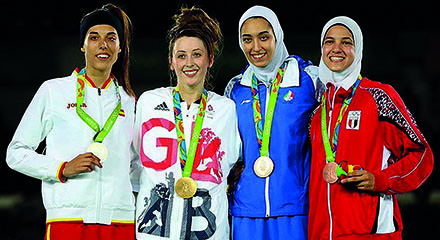
Casting aside the veil
Women are openly flouting laws imposing the hijab. The regime is split on how to respond. Yassamine Mather argues that the fight for women’s liberation must be linked to anti-imperialism and the working class struggle
In contemporary Iran, a gradual but significant social shift is taking place, with women playing an important role. Across universities, sports environments and everyday public spaces, many women continue to test and push the limits set by the religious state. Their actions reflect a complex dynamic, in which intellectual aspiration, physical determination and forms of civil disobedience intersect. As in previous decades, the conflict shows the deep fractures within Iranian society and the state.
One could argue that a major factor in achieving this change is education. In universities across Iran, women are not just participants, but are increasingly becoming a significant force. Today, they constitute about 60% of all university entrants - a staggering figure that signifies an important demographic shift in higher education. Their ambition extends into the most demanding academic subjects, with women making up a remarkable 70% of graduates in the science, technology, engineering and mathematics fields (the proportion is less than 37% in the US and just under 40% in UK). Literacy is approximately 99% for young women.
As women gain education and confidence, they develop forms of social power that challenge existing structures. Today, Iranian women work in engineering, medicine and technology, yet they remain subject to restrictive social rules that limit their autonomy. The tension between their modern professional lives and the expectations imposed by the state has become a significant factor behind current forms of resistance.
Defiance
In early December, almost 2,000 women took part in a marathon on Kish Island, and many of them ran without the mandatory hijab. It was a public act of collective defiance - and the state, powerless to stop the marathon, reacted by detaining two of the main organisers after the event had taken place.
Meanwhile, female singing in public is officially prohibited, yet a woman singer, Parastoo Ahmadi, live-streamed a concert, where she performed without a hijab and with an all-male band - breaking two major taboos simultaneously. She was arrested, then released on bail. The official national musicians’ association publicly condemned her, but the video of her singing has gone viral.
Beyond these headline-grabbing incidents, everyday resistance has become normal, especially in cities like Tehran. Many women - especially ‘generation Z’ - walk through streets, sit in cafes and travel on the metro without headscarves. This ongoing civil disobedience, which began after the 2022 protests following Mahsa Amini’s death, has already forced the state to rethink how it responds - with general pressure and targeted punishment.
Confronted by a decentralised cultural movement, the Iranian regime has shifted from targeting individual women to applying indirect pressure. A key new tactic is the punitive targeting of businesses. Often cafes and restaurants that serve unveiled women are raided and sealed by the ‘morality police’, with owners facing fines of $3,000 or more - a significant sum, given Iran’s strained economy.
At the same time, a major political split has emerged inside the regime. Reformist president Masoud Pezeshkian has openly refused to approve a harsh new ‘Chastity and hijab’ bill, saying that “people have the right to choose”. He has also warned that strict enforcement would trigger widespread anger. But hardliners in the judiciary, led by chief justice Gholamhossein Mohseni Ejei, have ordered security forces to hunt down and suppress what they call “organised groups promoting immorality and not wearing the veil”. This clash at the top has created a chaotic and uneven pattern of enforcement across the country.
Iran’s current struggle over women’s dresswear is part of a long history of state-imposed rules: during the Pahlavi era in the late 1930s, Reza Shah banned the veil in public as part of his top-down ‘modernisation’ programme. Many people deeply resented this forced unveiling. By contrast, after coming to power in 1979, the religious forces in charge of the newly created Islamic Republic moved to enforce the hijab and, once they had consolidated their authority, made head-covering for women compulsory. The official regulations set out fines - and lashes - for women accused of showing their hair.
Over the past three years, however, the legal situation has become less clear. Successive governments have increasingly turned a blind eye to women’s dress choices. In 2024, hardline institutions approved a new hijab law, imposing heavy fines and possible jail sentences, but the Supreme National Security Council suspended it, fearing it would trigger new protests. As a result, Iran is now in a legal limbo: the old law remains in place, yet its enforcement is inconsistent, because officials are divided and concerned about a public backlash.
In addition to external pressures, Iran is confronting a deep and widening internal contradiction. On one side are millions of educated and determined women, seeking basic personal freedoms. On the other side is a divided state, trying to defend a central element of its ideology - the mandatory hijab - through indirect and economically punitive measures rather than open confrontation.
This tension is happening amid broader uncertainty, intensified by the threat of conflict and the possibility of airstrikes by Israel or the United States. In this environment, the dispute over the hijab has become a key faultline in the wider struggle over Iran’s political direction - between a state attempting to maintain its vision of ‘Islamic purity’ and a new generation asserting its demands for autonomy, dignity and choice.
Human rights
The Kish all-female run happened on December 10 - UN Human Rights Day, which marks the 1948 adoption of the Universal Declaration of Human Rights (UDHR). Every year around this day a plethora of Iranian human rights activists, including our two Nobel peace prize winners (Shirin Ebadi - she won the Peace Prize in 2003; and Narges Mohammadi, who won it in 2023), voice their concern for human rights and present solutions for ‘regime change’ in Iran.
What these individuals fail to acknowledge is that their calls for foreign intervention - whether by the US, Israel or the United Nations - do not protect the Iranian people from the Islamic Republic’s human-rights abuses. Instead, such appeals risk opening the door to even more severe violations, accompanied by the humiliation of foreign domination or the devastation of prolonged internal conflict. For decades, even before the Trump era, the west’s human-rights discourse was shaped by a liberal-bourgeois framework that limited its scope. In the last few years, however - especially since the beginning of the genocide in Gaza and Trump’s brazen promotion of far-right policies - the idea that western powers genuinely support human rights has become impossible to take seriously.
2003 Nobel Peace Prize winner Shirin Ebadi has openly called for US military intervention (mirroring the Venezuelan laureate, who has been doing exactly the same thing). Her fellow Nobel winner, Narges Mohammadi, calls for a transition to a secular democracy through a UN-supervised referendum. Yet this approach relies on the same international system that has repeatedly backed coups, sanctions and wars - often against democratic movements themselves.
This global system is not a neutral defender of rights. It serves the interests of powerful imperialist states - most notably the US, which has imposed devastating sanctions on Iran and has waged wars across the region. Appeals to this system for ‘solidarity’ overlook its role in creating instability and supporting authoritarian governments.
During the past year, under Donald Trump’s administration, even the pretence of defending liberal human rights has largely disappeared, as the president and his cabinet openly promote far-right nationalism. In a recent speech, Trump described Europe as a “decaying civilisation” and warned of “civilisational erasure” - rhetoric drawn from white-nationalist narratives that portray migration (implicitly from non-white regions) as an existential threat. He frames migration, sparked by war and the exploitation of the global south, as a symptom of European “weakness”, echoing racialised stereotypes and reinforcing language used to justify exclusion, border militarisation and xenophobic nationalism. While not always explicitly racist, this language clearly draws on racialised and civilisational themes. In such circumstances, it is difficult to sustain any illusions about a US-dominated world order.
International law, of course, has always been applied selectively. The UN Security Council is paralysed by veto powers; major states disregard the International Court of Justice; drone strikes and covert operations violate sovereignty with impunity. Calling for UN-led solutions often seems detached from the realities of how this system operates.
Many prominent - and lesser-known - Iranian human-rights activists have remained silent on the genocide in Gaza. Some depend on funding tied to US Republican or Democrat pro-Zionist networks; others are wary of jeopardising future support. Mohammadi’s essay in Time does not connect Iran’s internal repression to its regional role or to the ongoing genocide in Gaza. The conflict between Iran and Israel is not symmetrical: it unfolds within a settler-colonial context backed by western powers. The Islamic Republic exploits the Palestinian cause for domestic legitimacy, while liberal discourse often treats the two issues as unrelated. An anti-imperialist perspective must place this context at the centre.
Rhetoric
Mohammadi appears unwilling or unable to recognise how the Islamic Republic uses anti-Zionist and anti-western rhetoric to obscure its own repression. The state supports regional militias, while suppressing leftists, secular opponents and student movements at home. This is not anti-imperialism, but reactionary geopolitics.
Her call for help from the “international community” is the most politically loaded element of her Time essay. In practice, this phrase usually refers to western governments and institutions that prioritise strategic interests - oil, security and regional influence - over democracy or human rights. These same actors routinely overlook abuses by their allies, while deploying human-rights language to justify sanctions and interventions that harm ordinary people. Some on the Iranian left have become cheerleaders for our ‘human right activists’, forgetting that a genuinely radical position rejects the false choice between the Islamic Republic and western imperialism. Of course, we must support the Iranian people’s struggle against repression and a system built on gender apartheid and state violence. However, we must also stand with Palestinians resisting genocide and with all peoples opposing imperialist domination.
Such solidarity cannot depend on appeals to the existing international order. It must be rooted in a revolutionary struggle from below - the understanding that real liberation comes from dismantling the global structures of imperialism, capitalism and state violence that sustain oppression - in Iran, Israel and the USA alike.
The objective is not to reform a broken world system, but to transcend it.