
25.06.2026
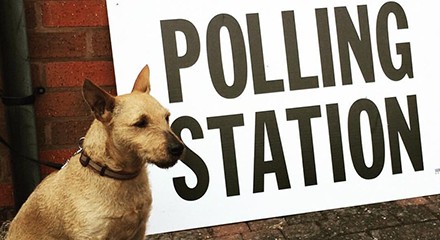
Makerfield was historic
Andy Burnham gained a sweeping victory, but it would be foolish to project the results onto the national picture. People were not only voting against Reform, but to get rid of a widely despised prime minister, writes Eddie Ford
When it comes to assessing the Makerfield results, it seems appropriate to begin with the hoary old phrase from Harold Wilson about how ‘a week is a long time in politics’. Well, what a week then! It has involved near endless speculation based on the outcome, such as ‘Labour is bound to win the next general election’, the ‘Polanski wave has gone into reverse’, or the ‘Tories are finished’
Andy Burnham, of course, secured a landslide victory with almost 25,000 votes and a majority of over 9,200 - certainly exceeding the expectations from the opinion polls, which projected a far narrower win over Reform. The latter considerably underperformed compared with its showing in May’s local elections that saw it win more than half the vote, with Labour way behind on 23%. This must worry Nigel Farage because, of the 90 seats where Reform finished second to Labour at the 2024 general election, Makerfield was the seventh closest result - exactly the sort of place he needs to win if Reform is to stand a serious chance of winning the next general election. No wonder he posted a video clip saying the party’s second-place finish was “disappointing”, adding that Burnham had won the contest with a “vote share that nobody could quite see coming”.1
With 54% of the vote, the former mayor of Greater Manchester finished 20 percentage points ahead of Reform, gaining comfortably more votes than Reform and Restore Britain combined - something of symbolic significance, because, even though Restore did split the far-right vote on the night, this did not make any material difference.2 In fact, Burnham won more than all the other parties combined, because the performance of the ‘legacy’ parties was so abysmal - with the Tories, Greens and Liberal Democrats losing their deposits, as their votes barely registered statistically. You can contrast the 6.8% for Restore - a brand new formation founded only last year - to the hapless Lib Dems and Greens on 0.4% and 0.7% respectively, and the Tories not much better on 2.2%.
One particularly remarkable feature of Makerfield was the 58.8% turnout - a rise of 6.3 points from the 52.5% in the 2024 general election. That bucked the usual pattern which sees quite a dip in turnout for by-elections. Not since the Liberals won Torrington in 1958 has turnout risen by more, and indeed it is the third highest rise on a general election since 1945, while the actual turnout figure was the highest for a parliamentary by-election since Brecon and Radnorshire in 2019 (59.7%).3
Anyway, Andy Burnham was sworn in as MP on June 22 and, of course, the Makerfield result created a vacancy in the Greater Manchester mayoralty, with an election set for July 30.
Tactical
Nigel Farage and the polls aside, the extent of Burnham’s victory is not especially surprising, as there was clearly a personal factor in a by-election which was historic - a much over-used word that, for once, justifies the term. People were not just voting for an MP: they were also voting for a prime minister, which people were conscious of when they entered the polling booth. They clearly did not want more of Sir Keir.
It is worth adding that with by-elections like Makerfield - though we are still guessing with this particular constituency, which sometimes can be a dangerous business - we saw significant tactical voting. All you need do is look at the first couple of polls for Makerfield. What you had to begin with was a narrow lead for Burnham of one to three points. But, as the weeks went by, there developed a more solid lead for Burnham - up to 10 points - and a draining of Tory, Green and Lib Dem votes. You can reasonably guess that a good slice of Tory votes would have gone to Reform (but, of course, there is room for doubt, as a section of the Tory vote might have possibly gone to Burnham on the basis that he was the only serious challenger to Reform). But that was almost certainly the case with the Green and Lib Dem votes, which defected en masse (or so it seems) to Andy Burnham.
Whether expected or not, not only did Restore Britain consistently come third in the polls throughout this campaign: its vote actually held up and it got what had been predicted. Hence, for example, an Opinium poll published on June 13 had Restore on 7%, as did a Survation poll earlier - which it got on the day.4 There was some speculation before the election that Restore voters who wanted to stop Labour might tactically vote for Reform, but that did not happen. Presumably they could not stomach supporting Nigel Farage - a figure despised by Rupert Lowe, founder of Restore Britain.
Of course, Restore is challenging Reform from the right - for instance, in its proposals around the death penalty and ‘rule by referendum’.5 But there is also its policy for mass deportations, which seems to be on the level of millions of people, in which case we should not be too surprised if they could not even envisage voting Reform - too soft by half! As we saw from the polls and then the election results, there were three parties in the running and one of them did not stand a chance. Therefore, in reality, there were only two - with King Andy reigning supreme on June 18.
Reportedly, the population of Makerfield got sick and tired of canvassers, pollsters and journalists constantly knocking on their doors - not to mention film crews coming into the pubs and local shops. Apparently, Burnham’s campaign team actually knocked on the door of residents four times, showing you the intensity of the election. Indeed journalists complained that they sometimes did not actually meet ordinary people - rather, fellow journalists who had come to Makerfield to cover the story! In that sense, it was a really freaky and interesting by-election.
It is also undoubtedly true that, irrespective of the result, Keir Starmer was the loser. If Burnham had lost it, you can confidently surmise that Labour MPs who fear for their jobs at the next general election would have blamed Starmer for his defeat - not Burnham himself. But, on the other hand, Burnham’s actual victory was clearly not a victory for Keir Starmer. Rather, a victory for Burnham and his leadership ambitions, as we saw in the rolling coverage on June 22 of Starmer’s resignation and timetable for departure.
Strategy
We have already established the importance of tactical voting. Just as importantly, if not more so, Morgan McSweeney, the departed chief of staff at No10, was actually banking on this strategy for the next general election, talking up Reform and sidelining the Tories - corralling the so-called middle ground, maybe the left as well, into voting Labour in order to stop Reform before it becomes a juggernaut. Therefore, in a certain way, what happened in Makerfield represented a crowning success for the McSweeney strategy.
We saw a similar phenomenon last October in the Caerphilly by-election. Basically, Labour, Green and Lib Dem supporters lined up to vote Plaid Cymru in order to stop the Reform candidate, Llŷr Powell.6 This ensured that Lindsay Whittle won with 47% of the vote, ending Labour domination in Caerphilly, overcoming expectations of a closer race between Plaid and Reform - the latter getting 36.0%.
We also saw what you could call a deflected version of the ‘McSweeney strategy’ in the recent Gorton and Denton by-election. Initially the Labour Party was just ahead of the Greens in the polls. Inevitably, a lot of the Labour left was arguing that, if you want to stop Reform, then logically - at least at the very early phase of the campaign - the thing to have done was to vote Labour. But, of course, the Greens subsequently opened up a lead and eventually romped home.
If you are a strategist for Reform, this is something that ought to trouble you - that there is a big potential anti-Reform vote in many constituencies, where a lot of people are now not voting positively for a party, but rather on a negative basis. Caerphilly, Gordon and Denton, and now Makerfield - ominous names for any Reform strategist.
The main lesson we can draw from Gordon and Denton, Caerphilly, Makerfield - not to mention Aberdeen and Arbroath - is that they threw up radically different results. There is no clear pattern, except that things continue to move to the right.